The oldest confirmed regurgitalite (fossilized vomit) was found at the Bromacker Permian site in Germany and dated to about 290 million years ago. CT scans of specimen MNG 17001 revealed partially digested bones from Thuringothyris mahlendorffae, Eudibamus cursoris, and a diadectid—evidence that the predator consumed large herbivores. Chemical and morphological data rule out a coprolite, and researchers conclude this is the first confirmed vomit from a fully terrestrial Paleozoic predator, providing rare insight into ancient diet and behavior.
290-Million-Year-Old Fossilized Vomit Reveals Predator–Prey Drama in Germany
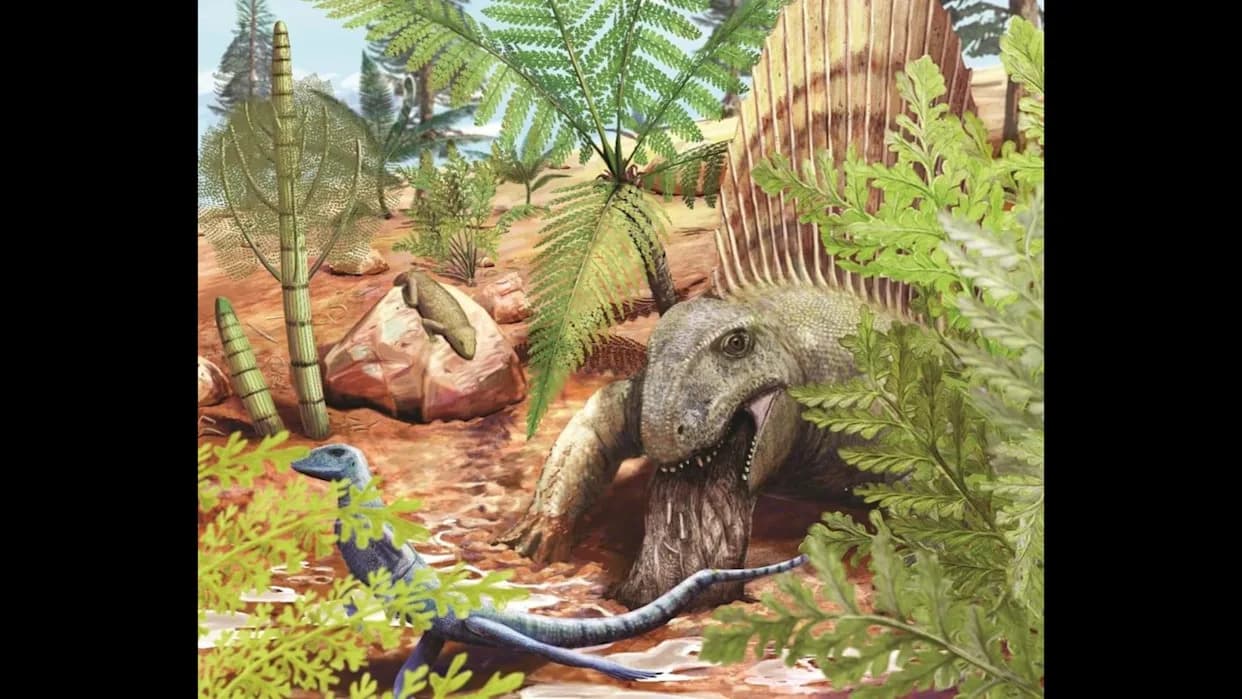
The vomit likely came from one of two potential carnivorous dinosaur species.
About 290 million years ago a large terrestrial predator roaming what is now central Germany suffered an upset stomach and regurgitated partially digested prey. That expelled material—an unusual mix of bone fragments and digestive microbes—was unusually well preserved and is now identified as a regurgitalite, or fossilized vomit.
Discovered in 2021 at the Bromacker Permian excavation roughly 155 miles southwest of Berlin, the specimen (catalogued as MNG 17001) was described in a study published 30 January in Scientific Reports. This find is the oldest confirmed regurgitalite from a fully terrestrial Paleozoic predator and offers a rare, direct snapshot of ancient predator–prey interactions.
Why Not A Coprolite?
At first the research team suspected MNG 17001 might be a coprolite (fossilized feces). However, detailed morphological and chemical analyses disagreed. Coprolites typically form regular cylindrical or conical shapes, contain bone fragments suspended in an organic sedimentary matrix, and are chemically high in phosphorus because bacteria concentrate phosphorus while digesting bone. MNG 17001 lacks an enclosing sedimentary matrix around the bones and shows very low phosphorus—characteristics more consistent with regurgitation than feces. Preservation is thought to have been aided by the Bromacker site's origin as a wet floodplain, which favored rapid burial and mineralization.
What Was Inside The Regurgitalite?
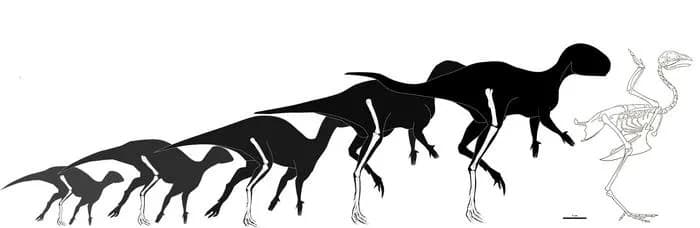
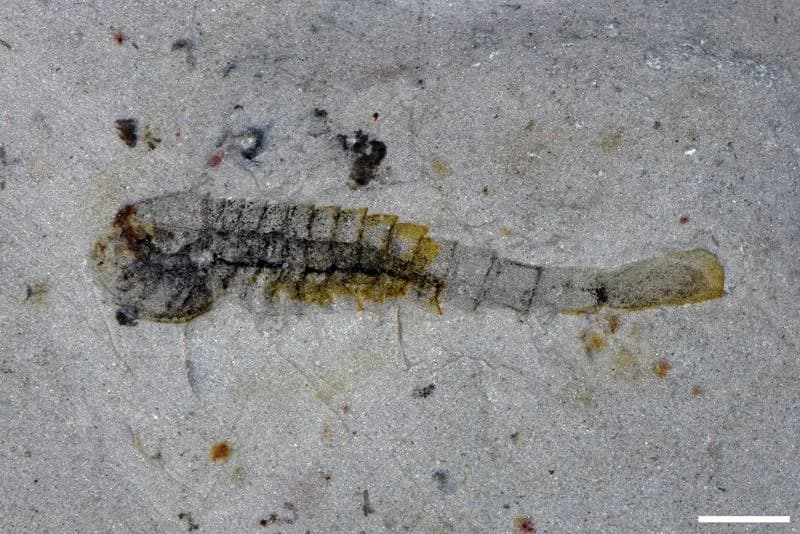
High-resolution computed tomography (CT) scans allowed researchers to reconstruct dozens of partially digested bones in three dimensions and compare them with known taxa. Identifiable elements include a nearly complete maxilla (upper jawbone) of the small reptile ancestor Thuringothyris mahlendorffae and a humerus attributable to the early bipedal bolosaurid Eudibamus cursoris. Crucially, the specimen also contains a bone from a diadectid.
Diadectids were among the first fully herbivorous tetrapods and one of the earliest groups of truly large land animals; genera such as Diadectes could reach around 3 meters (about 10 feet) in length. The presence of a diadectid bone indicates the vomit came from a predator large enough to subdue sizable herbivores.
Who Might The Predator Be?
Within the Bromacker fauna, only two known predators are large enough to be plausible producers of the regurgitalite. One is Tambacarnifex unguifalcatus, a less familiar species that may have resembled a very large monitor lizard. The other is Dimetrodon teutonis, recognizable for its sail-like dorsal fin. While the precise identity of the sick predator cannot yet be confirmed, either candidate would represent an apex terrestrial hunter of the Permian landscape.
Significance: MNG 17001 provides direct evidence that opportunistic feeding strategies—such as regurgitating indigestible parts like bones—were already in use among land predators deep in Earth’s history. The specimen complements skeletal records by revealing diet, foraging behavior, and trophic relationships that bones alone cannot show.
Note: Although early news versions referred to “dinosaur vomit,” these animals predate true dinosaurs. The find documents behavior in Paleozoic terrestrial predators, not Mesozoic dinosaurs.
Help us improve.