Researchers at RIKEN found that the protein Poc5 is essential for building the sperm tail in mice: males lacking the Poc5 gene produced no viable sperm because their tails were malformed. Using ultrastructure expansion microscopy, the team visualized centrioles and a strengthening internal scaffold during sperm development and linked Poc5 to that structure. Further work is needed to determine whether Poc5 plays the same role in human infertility.
Poc5 Protein Crucial for Sperm Tail Formation — New Study Links It to Male Infertility

Researchers at Japan’s RIKEN Center for Biosystems Dynamics Research have identified a protein called Poc5 as essential for correct sperm-tail formation in mice. Male mice engineered to lack the Poc5 gene produced sperm with malformed or disintegrating tails, resulting in no viable sperm.
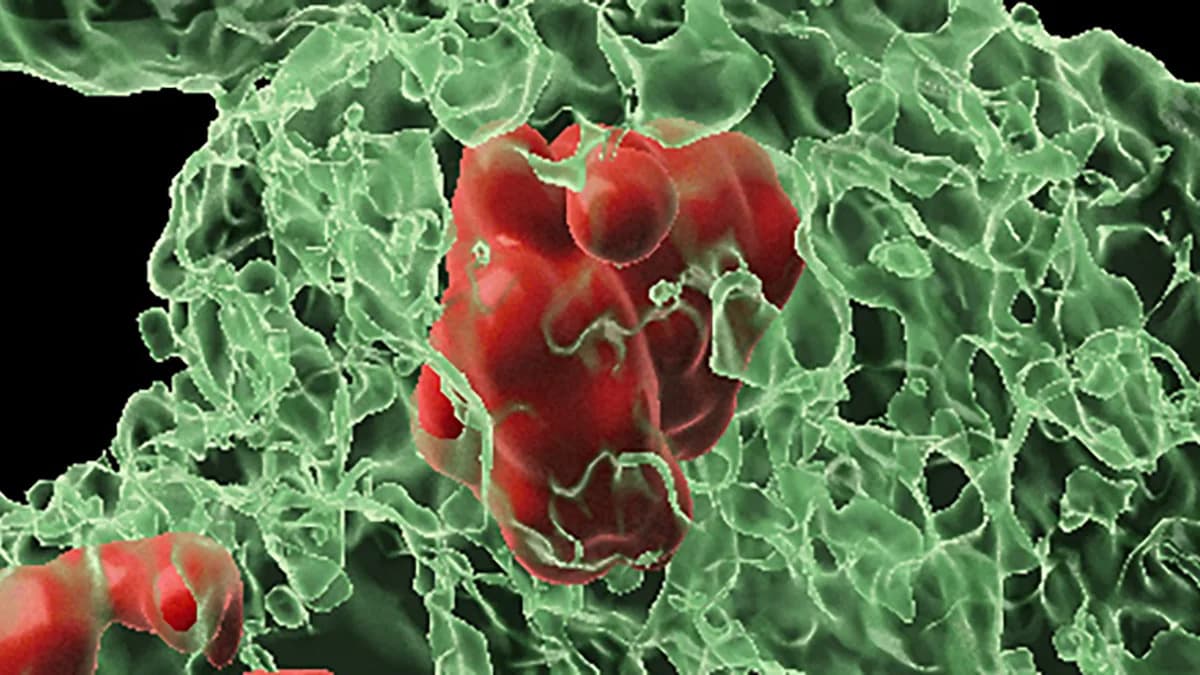
The team used ultrastructure expansion microscopy, a technique that physically enlarges cells and organelles to reveal nanoscale architecture, to visualize centrioles—the pair of tiny cylinders at the base of the sperm tail—during development. For the first time, they observed a scaffold inside one centriole that strengthens as spermatids mature and found that Poc5 is crucial for that scaffold’s integrity.
“This discovery directly advances our understanding of how the human sperm tail is formed,” said study co-author Hiroki Shibuya, noting that mouse and human sperm share important structural features.
The World Health Organization estimates that one in six people worldwide experience infertility, and roughly half of infertility cases involve male factors. Despite this prevalence, the biological causes of male infertility remain poorly understood and many diagnostics and treatments emphasize female reproductive issues. Cell biologist Tomer Aviador-Reiss (University of Toledo), who was not involved in the study, observes that when a male is infertile the burden often falls on female partners.
Geneticist Susan Dutcher (Washington University in St. Louis), also unaffiliated with the research, said identifying genes tied to structural defects is an important step toward better diagnosis and potential treatments. She highlighted expansion microscopy as a valuable tool for reproductive biology.
Shibuya’s group is working to reproduce the findings across other species—including lizards, hamsters, marsupials, marmosets and macaques—to assess how conserved Poc5’s role is. Those results are pending. Shibuya added that the microscopy method has few technical barriers to application in human spermatids, but emphasized that further research is required to confirm whether Poc5 mutations contribute to human male infertility and how the finding might inform clinical care.
The study was published in Science Advances.
Help us improve.