Researchers found that a topical gel made from the DNA sugar deoxyribose produced rapid, robust hair regrowth in male mice with testosterone-driven baldness, matching results from minoxidil in a 20-day trial. Treated areas showed increased blood vessels and skin cells, which may support larger hair bulbs and greater hair growth. The study, published in June 2024, is early-stage and limited to male mice; human trials are needed to confirm safety and effectiveness.
DNA Sugar Gel Triggers Strong Hair Regrowth in Mice — Could It Rival Rogaine?

Surprise Hair Loss Breakthrough: A DNA Sugar Gel Sparks Robust Regrowth
In 2024, researchers reported that a gel containing the DNA sugar deoxyribose produced striking hair regrowth in male mice with testosterone-driven, hereditary-pattern baldness.
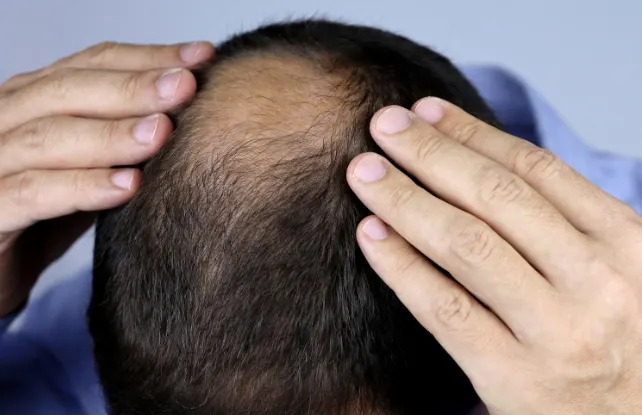
Hereditary-patterned baldness presents differently in men and women. (Oleg Elkov/Canva)
How the discovery happened
The finding began when teams from the University of Sheffield and COMSATS University in Pakistan were testing whether topical deoxyribose could aid wound healing in mice. Scientists noticed that fur around treated wounds regrew faster than in untreated animals, prompting a focused study on hair loss.
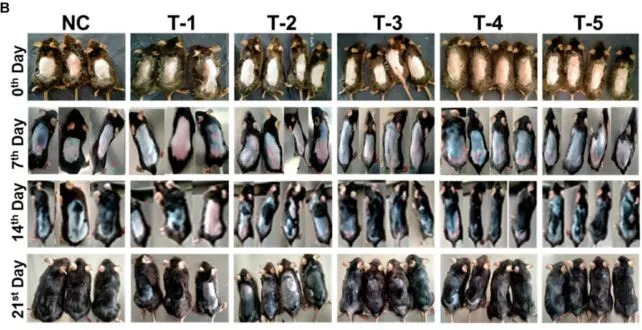
Photographs of mice with male pattern baldness at different time intervals, including mice without any treatment (NC), mouse models of male pattern baldness (T-1), gel without medicine (T-2), gel with deoxyribose sugars (T-3), minoxidil (T-4), deoxyribose sugar and minoxidil gel (T-5). (Anjum et al.,Front. Pharmacol., 2024).
The experiment
Published in June 2024 in Frontiers in Pharmacology, the experiment used male mice with testosterone-driven hair loss. Investigators shaved the animals' backs and applied a small daily dose of a biodegradable, nontoxic deoxyribose gel to the exposed skin. Over a 20-day period, treated areas developed long, thick hairs and researchers documented visible improvement with photographs taken at multiple time points.
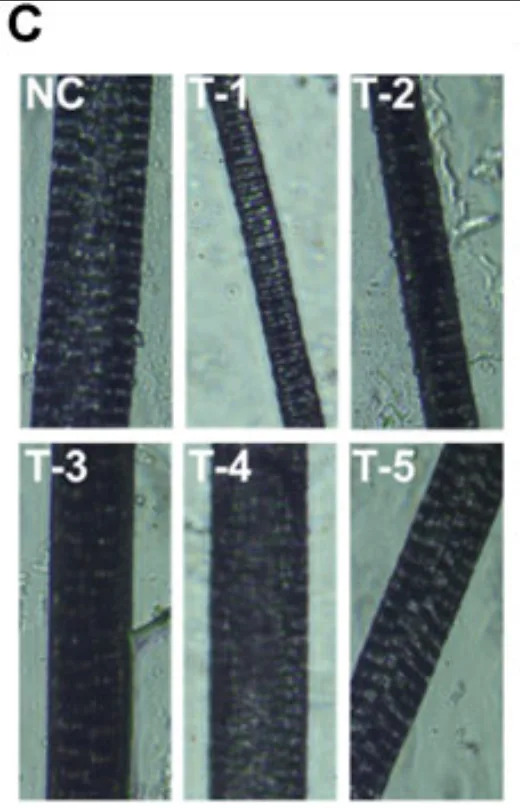
Photographs of hair shafts from different treatment groups. (Anjum et al.,Front. Pharmacol., 2024).
Results and comparison with existing treatment
The deoxyribose gel produced hair regrowth comparable to topical minoxidil (commonly sold as Rogaine), with both treatments yielding roughly 80–90% regrowth in these mouse models. Combining the sugar gel and minoxidil produced little additional benefit. Around treated sites, investigators observed increased blood vessel formation and more skin cells, changes the team suggests may enlarge hair bulbs and support growth.
Implications and limitations
Researchers — including tissue engineer Sheila MacNeil (University of Sheffield) and biomaterials specialist Muhammad Anjum (COMSATS) — emphasize the work is early stage. The experiments were performed only in male mice with testosterone-driven alopecia, and the exact mechanism by which deoxyribose stimulates hair growth remains unclear. Human safety and efficacy studies are needed before any clinical use is possible.
Context: current treatments
Hereditary-pattern baldness (androgenetic alopecia) affects up to about 40% of people and is influenced by genetics, hormones and aging. The U.S. Food and Drug Administration has approved two treatments: topical minoxidil and the oral drug finasteride (Propecia), the latter for men. Finasteride can slow hair loss in roughly 80–90% of treated men but requires ongoing use and can cause sexual side effects and mood changes in some patients, highlighting the need for new approaches.
"The research we have done is very much early stage," MacNeil said. "But the results are promising and warrant further investigation."
If subsequent studies confirm safety and efficacy in humans, a deoxyribose-based topical could one day be explored to treat various forms of alopecia or to help restore hair, eyebrows and eyelashes after chemotherapy. For now, the finding is an encouraging preclinical development that deserves follow-up.
Help us improve.