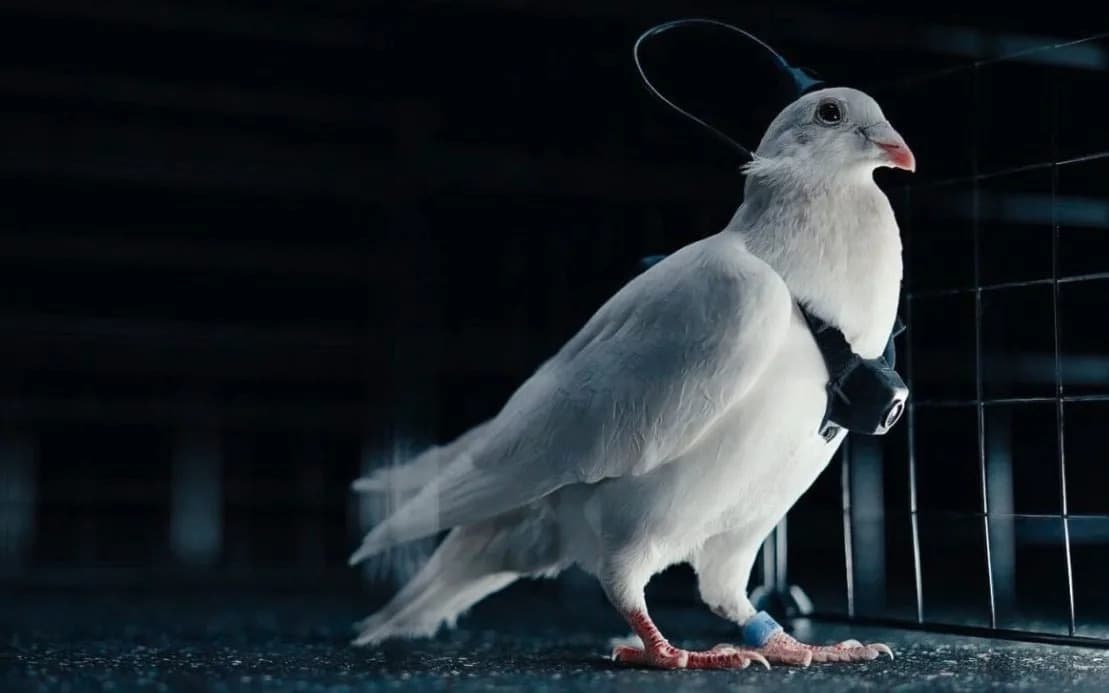
The study published in Science reports that pigeons have specialized inner-ear cells that convert magnetic signals into electrical cues used for navigation. Advanced microscopy revealed neural circuits and candidate sensor locations, and the authors note conceptual parallels with electromagnetic principles used in wireless charging. The findings suggest a ‘dark compass’ in the inner ear, but the researchers say further experiments are needed to map sensors and clarify the underlying mechanisms.
Pigeons’ Inner Ear Contains an Electric ‘Dark Compass’—A Surprising Parallel with Sharks

Researchers report that pigeons possess specialized cells in their inner ears that detect magnetic cues and convert them into electrical signals used for navigation. A peer-reviewed study published in Science used advanced microscopy to reveal neural circuits and sensor structures that help birds process magnetic information, providing fresh insight into how pigeons navigate long distances.
What the researchers found
The team identified inner-ear tissue in pigeons containing cells with exceptionally sensitive electric properties. These cells form circuits that appear tuned to magnetic inputs, enabling the birds to extract directional and positional information much like a biological GPS. High-resolution imaging helped the researchers locate candidate primary sensors and map the pathways that carry magnetic information into the bird’s nervous system.
Biophysical parallels and open questions
Investigation of the pigeons’ sensory apparatus revealed intriguing biophysical parallels with technologies such as wireless phone charging. The authors suggest that comparable electromagnetic and electrical coupling principles may underlie part of the sensing mechanism, though the comparison is conceptual rather than literal—pigeons are not literally being charged like devices.
Zoologist Camille Viguier originally proposed that an inner-ear magnetic sense might exist in animals, an idea that has gained renewed attention thanks to modern imaging and molecular tools. Professor David Keays, the study’s lead author, emphasized that while the new findings point to a “dark compass” in the inner ear, other organisms appear to rely on light-dependent magnetic systems in the visual pathway. The researchers caution that much more experimental work is required to map the sensors precisely and to understand the molecular and biophysical mechanisms that transform magnetic inputs into navigational signals.
“State-of-the-art microscopy allowed us to identify specialized circuits that process magnetic information,” said Professor David Keays. “This provides a critical clue to the likely location of the primary magnetic sensors.”
Overall, the study supports the idea that magnetoreception may have evolved convergently across different animal groups, and it opens several avenues for future research into how animals sense Earth’s magnetic field.
Help us improve.