Researchers from Aarhus University show that many birds’ inner retinas operate without direct oxygen, relying instead on anaerobic glycolysis. The vascularized pecten oculi delivers glucose and removes lactic acid, preventing toxic buildup and enabling retinal cells to tolerate anoxia. This adaptation may improve visual acuity by avoiding vessels in the visual field and help high-flying or migrating birds. The eight-year, multidisciplinary study appears in Nature.
How Birds' Retinas Work Without Blood: The Pecten Oculi’s Secret
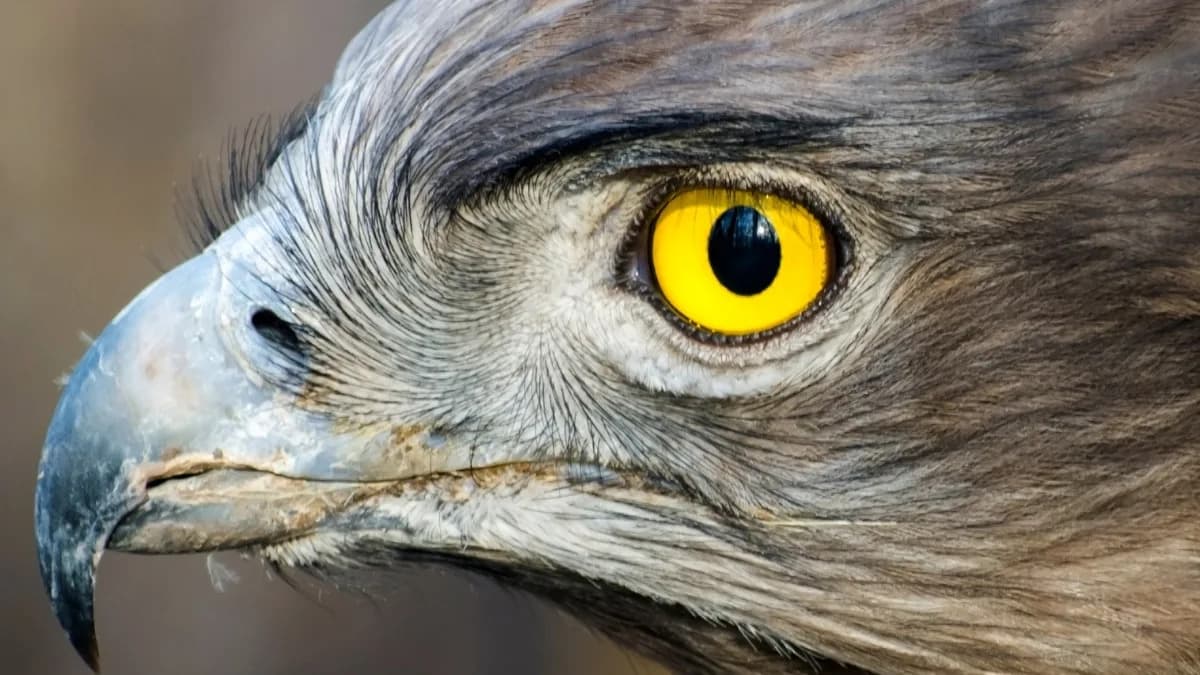
short-toed eagle eye
Here’s surprising biology: unlike the inner retinas of most vertebrates, many birds’ inner retinas function without a direct oxygen supply. A multidisciplinary team led from Aarhus University in Denmark has uncovered how birds keep those retinal cells alive and working.
Oxygen-Free Vision
In most vertebrates, red blood cells in retinal blood vessels deliver the oxygen that helps convert glucose into cellular energy. Birds, however, lack blood vessels in the retina itself, so oxygen can only diffuse in from the eye’s surface. That leaves much of the inner bird retina effectively anoxic (without oxygen).
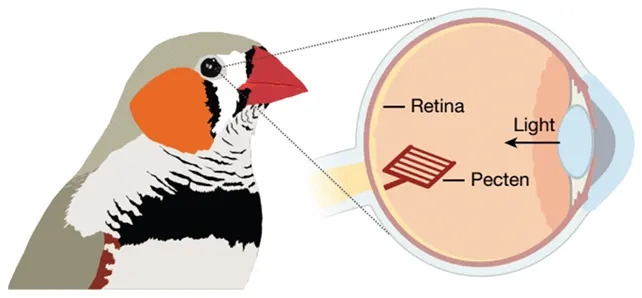
The pecten oculi is a crucial part of the bird's eye. (Damsgaard et al.,Nature, 2026)
Energy Without Oxygen: Anaerobic Glycolysis
Retinal cells can still generate energy by anaerobic glycolysis, a set of reactions that converts glucose into small amounts of usable energy without oxygen. The trade-off is inefficiency and production of lactic acid, which can damage tissue if it accumulates.
The Pecten Oculi: A Specialized Plumbing System
The new study shows birds evolved a long-mysterious anatomical solution: the pecten oculi, a folded, highly vascularized structure sitting beside the retina and first described in the 17th century. By studying live zebra finches (Taeniopygia guttata) the researchers directly measured oxygen levels, tracked nutrient flow, and analyzed gene activity in the eye.

Audition now for ScienceAlert's Casting Call
They confirmed that the inner retina operates without oxygen and relies on anaerobic glycolysis. Crucially, the pecten supplies large quantities of glucose and simultaneously clears lactic acid, preventing toxic buildup. In effect, the pecten acts as a specialised plumbing and metabolic-clearance system that makes retinal anoxia tolerable.
"Our study reveals an impressive anoxia tolerance in the inner bird retina," the authors write, noting that this tolerance is surprising because warm-blooded neural tissues are usually highly vulnerable to oxygen deprivation.
Why This Might Have Evolved
Removing blood vessels from the retina may reduce visual obstruction and improve acuity. It may also help species that fly at high altitude, where ambient oxygen is limited. For example, short-toed snake eagles (Circaetus gallicus) have retinas more than four times thicker than the usual oxygen-diffusion limit observed in mammals; these birds soar about 500 meters (more than 1,500 feet) and benefit from exceptional visual acuity.
Broader Implications
The researchers report the retina consumes roughly 2.5 times the glucose uptake of the bird’s brain to maintain function. Understanding how retinal neurons survive and remain active without oxygen could inform research into anoxia tolerance in other tissues — potentially offering insights relevant to conditions such as stroke, where nerve cells are deprived of oxygen.
This paper represents eight years of collaborative work across multiple fields and is published in Nature.
Help us improve.