2 August 2027: A total solar eclipse will cross North Africa, with the greatest point of totality near Luxor, Egypt. The eclipse is expected to produce roughly 6 minutes 23 seconds of totality at its maximum — the longest sustained total eclipse since 2000. Observers should plan ahead and follow strict eye-safety rules; only look with the naked eye during complete totality.
Why the 2 August 2027 Solar Eclipse Is Being Called the 'Eclipse of the Century'

A total solar eclipse will cross parts of North Africa on 2 August 2027. This event has drawn exceptional attention from astronomers and skywatchers because of its unusually long period of totality and the historically significant regions it will traverse — including an area near Luxor, Egypt, which will be close to the point of maximum eclipse.
What is a solar eclipse?
A solar eclipse occurs when the Moon passes between the Sun and Earth, blocking some or all of the Sun's disk for observers along the Moon's shadow. Astronomers can predict eclipses decades or centuries in advance by calculating the motions and relative positions of the Sun, Moon and Earth. As NASA explains, scientists input current positions and velocities into orbital equations and use computers to integrate those equations forward and backward in time to determine how the Sun and Moon will appear from Earth.
Why this eclipse stands out
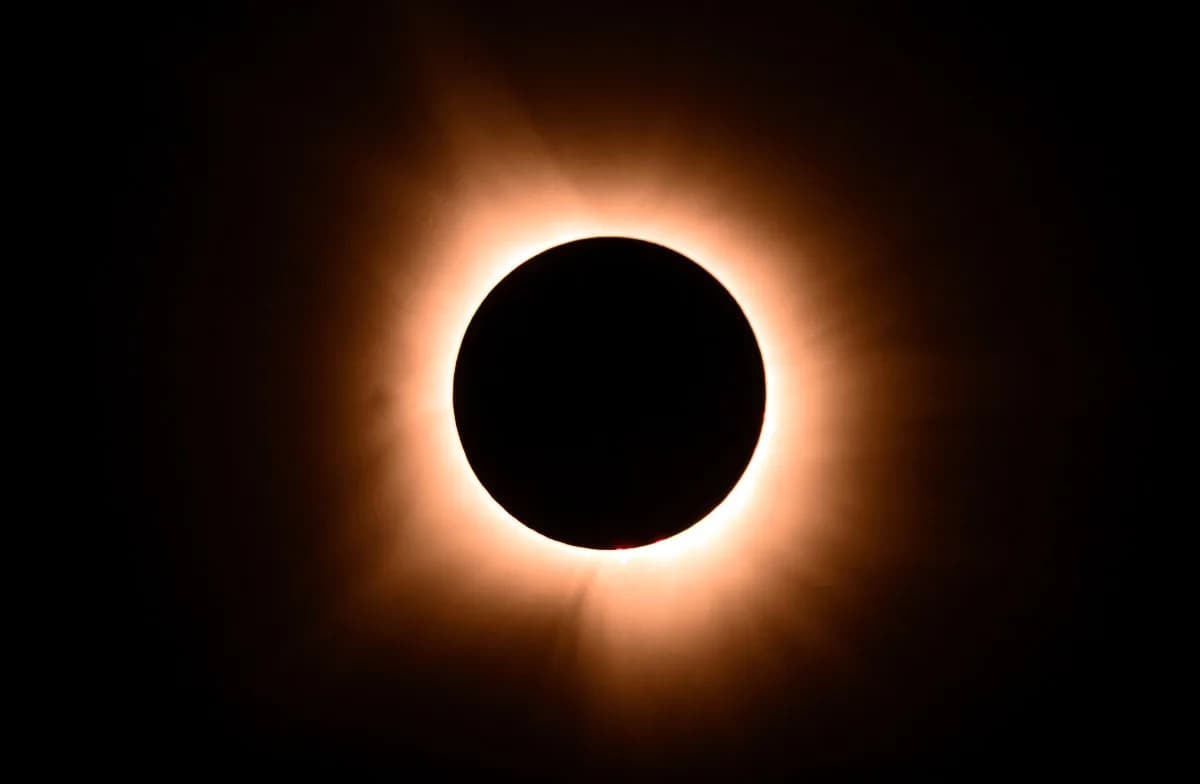
The 2 August 2027 event is a total solar eclipse, the most dramatic eclipse type because it briefly plunges locations within the Moon's umbra into darkness and reveals the Sun's corona. During the 21st century there will be 224 solar eclipses in total, but only about 68 of those will be total eclipses — the ones that produce full daytime darkness for observers on the central path.
What makes the 2027 eclipse notable is the length of totality along its central path. Theoretical maximum totality for any eclipse is about 7 minutes 32 seconds, according to the Natural History Museum. In July 1991, a total solar eclipse reached 6 minutes 52 seconds. The 2027 eclipse is projected to have a maximum totality of roughly 6 minutes 23 seconds at its greatest point, making it the longest sustained total eclipse since the turn of the millennium and an exceptional opportunity for observation and research.
Where to see it
The path of totality will cross parts of North Africa and nearby regions. The point of maximum eclipse — where totality lasts longest — will be near Luxor, Egypt, which means cities and sites in that area will experience some of the most dramatic views. Outside the path of totality observers will see partial phases, where only part of the Sun is covered.
Safety and planning
Never look directly at the Sun without proper protection except during the brief instant of complete totality when the Sun is fully covered. For all other phases use certified solar filters (eclipse glasses) or indirect viewing methods such as pinhole projectors or solar filters for cameras and telescopes. If you plan to travel to see the eclipse, book transport and accommodations well in advance — major viewing locations tend to fill up quickly. Photographers and scientists often use longer totalities to study the solar corona, take high-resolution imagery, and measure atmospheric effects.
Quick facts: 2 August 2027 • Total solar eclipse • Maximum totality ≈ 6m 23s • Greatest point near Luxor, Egypt • Path crosses North Africa
This long-duration total eclipse promises to be one of the most memorable astronomical events of the century for both casual observers and researchers. With careful planning and proper eye safety, it will be an extraordinary chance to witness the Sun's outer atmosphere and the brief twilight of totality.
Help us improve.