Vientiane is unusually lively as Laos marks 50 years since the Pathet Lao established the Lao People's Democratic Republic in 1975. While official commemorations recall that history, many young Laotians feel disconnected and focus on practical opportunities rather than politics. Social media, migration and Chinese infrastructure investment are driving gradual social and economic change, even as Laos faces economic headwinds including low GDP per capita (~$2,100) and high US tariffs on some exports.
Laos at 50: “Please Don’t Rush” — Slow Political Change, Rapid Social Shifts

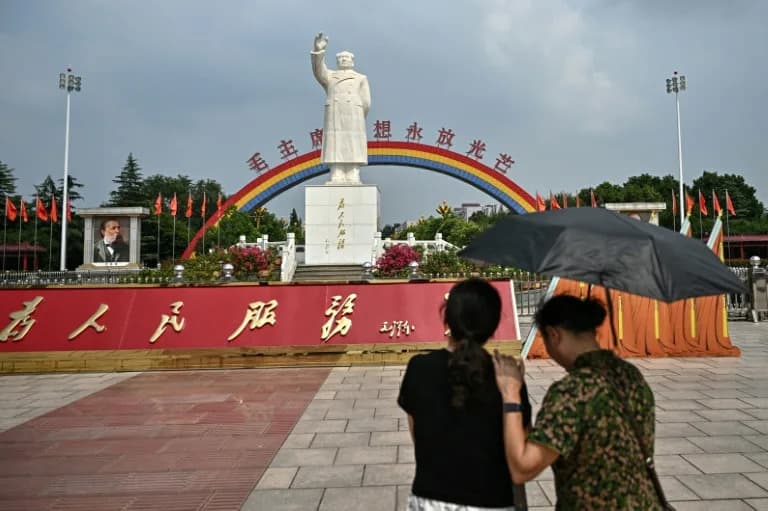
The usually quiet capital, Vientiane, has taken on an unusual energy as Laos prepares to mark 50 years since the Pathet Lao established the Lao People's Democratic Republic on December 2, 1975. Official commemorations — including a large military parade — recall a dramatic political turning point, but for many young Laotians the milestone already feels distant.
Fifty years since 1975
After decades of civil conflict and the regional upheaval that followed the fall of a US-backed government in South Vietnam, the Pathet Lao created a one-party communist state. The new regime imposed centralised economic planning and the landlocked country became more isolated. In later decades authorities introduced market-oriented reforms, but Laos remains among Asia’s poorer nations.
Youth, social media and changing language
Many young people say history taught in school does not strongly shape their everyday priorities. "We do study history at school, but it's not a topic we discuss much," said Thiradeth Khamhoung, 19, an economics student and co-founder of PrepPath, a platform that helps Laotian high-school students explore careers. "When we create something, we don't let politics stop us. My advice: just begin. Don't let politics, which we can't control, hold you back."
Political discussion remains sensitive in Laos, and open criticism of government policies is uncommon; some youth speak anonymously online to avoid potential repercussions. A running joke among young people is that "Lao PDR" stands for "Lao Please Don't Rush." As one young activist, Bart, put it: "Please don't rush doesn't mean we can't develop. It means finding our strengths and building from there."
Social media platforms such as TikTok are changing tastes, language and aspirations. "My grandfather used many French words; I sometimes didn't understand him," said a student. "Now many of those terms are being replaced by Thai words because of media and social platforms." For students like Tony, 21, TikTok is "a window to the world," shaping fashion, ideas and a broader outlook.
Migration, education and outlook
Movement to neighbouring Thailand for work is common, and thousands of Laotian students study overseas each year, seeking broader education and improved job prospects. "It's easier for us than for our grandparents," said a Laotian master's student in Australia. "You can just use Google to learn what you want. In 10 or 20 years, people will speak up more and enjoy greater freedoms."
Economy and regional ties
China is Laos' dominant economic partner, investing heavily in infrastructure such as the railway linking Vientiane and Kunming in Yunnan province and supporting a broader regional corridor. Hydropower exports have become an important revenue source while garment factories, electronics assemblers and other light manufacturers have depended on markets like the United States.
However, growth is cooling and inflation is rising. GDP per capita is roughly $2,100 by the World Bank's most recent figures, and Laos faces high US tariffs on some goods (around 40% in recent measures), a pressure that complicates export-led strategies.
Those economic strains and greater exposure to regional markets are shifting younger generations' priorities. "When I compare my views to my grandparents', politically and economically they're very different," said Namfon Sirithirath, 30, a communications officer. "Youth engagement is being encouraged, which is positive. It would be better if engagement increased and policymakers listened more so that policies match today’s realities."
Looking forward
Fifty years after 1975, change in Laos appears incremental rather than sudden. Young people are adopting new languages, ideas and career paths, while the state balances political continuity with selective economic opening. For many Laotians the future will likely be defined by gradual social shifts, deeper regional integration and mounting economic pressures that will test how rapidly policy adapts to a new generation's expectations.
Help us improve.