China hosted the foreign ministers of Cambodia and Thailand in Yunnan to bolster a newly signed ceasefire after weeks of deadly fighting that displaced hundreds of thousands. Officials agreed to sustain the truce, rebuild dialogue, step up cooperation against transnational crime and allow Chinese humanitarian assistance. A key confidence‑building measure calls for Thailand to repatriate 18 Cambodian soldiers if the ceasefire holds for 72 hours.
China Hosts Thai and Cambodian Foreign Ministers in Yunnan to Cement Ceasefire
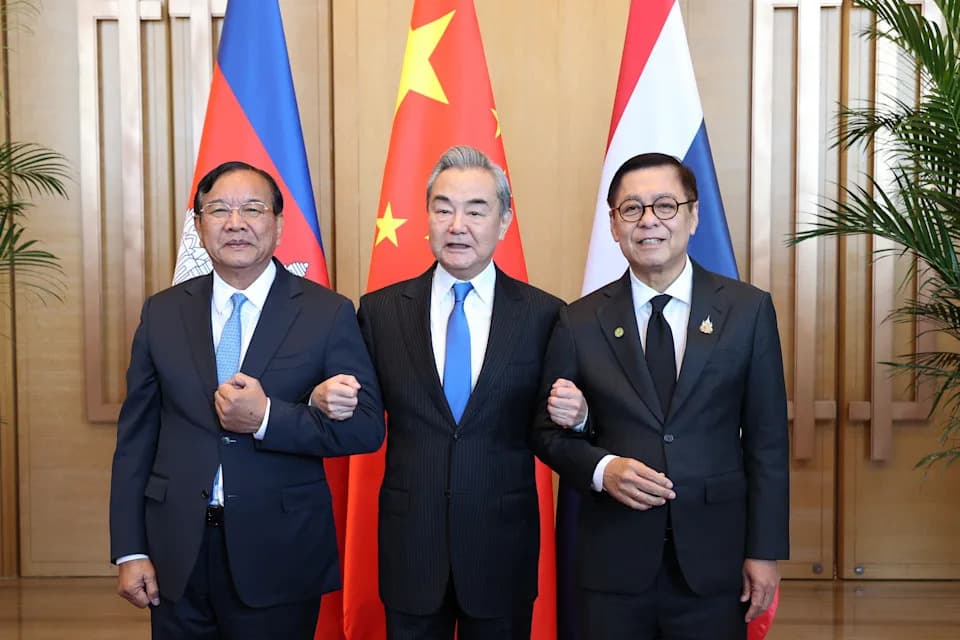
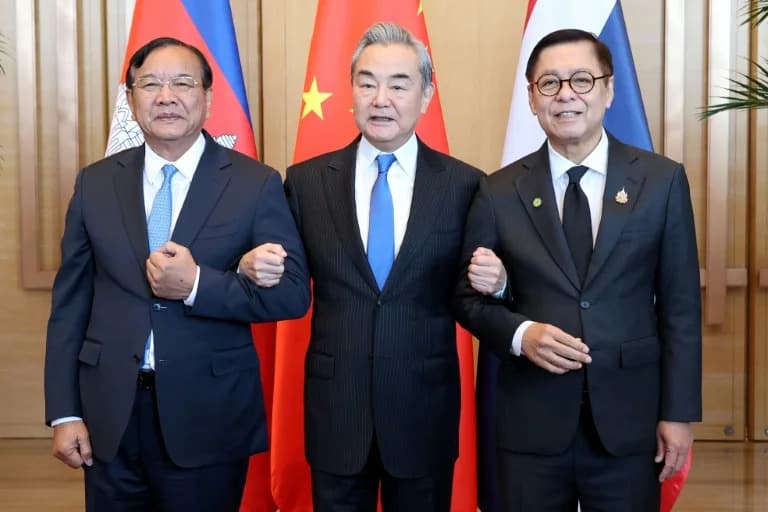
In this photo released by Agence Kampuchea Press (AKP), Cambodia's Foreign Minister Prak Sokhonn, left, Thai counterpart Sihasak Phuangketkeow, right, and Chinese counterpart Wang Yi pose for a photograph in Yunnan province, China, Monday, Dec. 29, 2025. (AKP via AP)(ASSOCIATED PRESS)
China convened foreign ministers from Cambodia and Thailand in Yunnan province on Monday as Beijing pressed to deepen its role as a mediator in a violent border dispute between the two Southeast Asian neighbours. The meeting came two days after the countries signed a fresh ceasefire aimed at ending weeks of fighting that left more than 100 people dead and displaced hundreds of thousands on both sides of the border.
Held in southwestern China close to the flashpoint, the trilateral talks signalled Beijing’s interest in playing a more visible, hands‑on role in regional conflict resolution — and in bolstering its diplomatic clout in Asia.
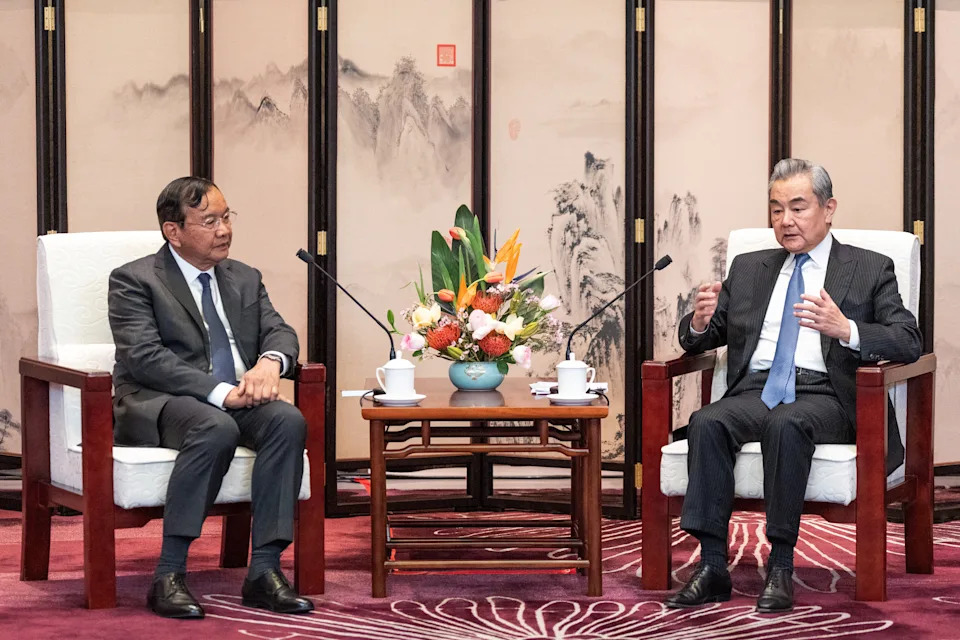
In this photo released by Xinhua News Agency, China's Foreign Minister Wang Yi, right, talks to his Cambodia counterpart Prak Sokhonn during a meeting in Yuxi in southwest China's Yunnan province on Sunday, Dec. 28, 2025. (Wang Guansen/Xinhua via AP)(ASSOCIATED PRESS)
Key Commitments and Diplomatic Messages
Chinese Foreign Minister Wang Yi urged the three countries to work together to promote "regional peace, stability and development," a standard formulation from Beijing in such situations. He stressed that reigniting conflict would be unacceptable to the people of both countries and to China as a regional partner.
“Allowing the flames of war to be reignited is absolutely not what the people of the two countries want and not what China, as your friend, wants to see. Therefore, we should resolutely look ahead and move forward,” Wang said.
Thailand’s Foreign Minister Sihasak Phuangketkeow said the meeting made constructive progress and that priorities now are to sustain the ceasefire and rebuild trust. Cambodia’s Foreign Minister Prak Sokhonn told state media he believed the ceasefire would hold and create space to resume previously agreed mechanisms for settling disputes.
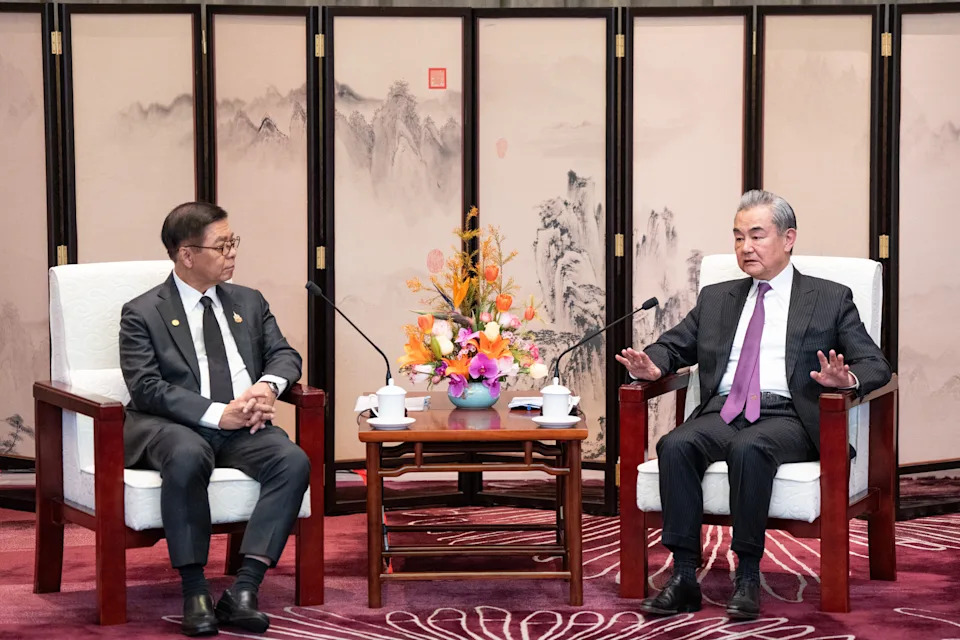
In this photo released by Xinhua News Agency, China's Foreign Minister Wang Yi, right, talks to his Thailand counterpart Sihasak Phuangketkeow during their meeting in Yuxi in southwest China's Yunnan province on Sunday, Dec. 28, 2025. (Wang Guansen/Xinhua via AP)(ASSOCIATED PRESS)
Practical Steps Agreed
According to a joint statement issued by China’s Xinhua agency, Cambodian state media Agence Kampuchea Presse and the Thai Foreign Ministry, the three sides held detailed talks on maintaining the ceasefire, agreed to restore normal exchanges step by step and pledged to step up cooperation against transnational crime — notably telecom and online scams. China also offered to provide immediate humanitarian assistance for displaced residents.
The Saturday agreement includes a specific confidence‑building measure: if the ceasefire holds for 72 hours without incidents, Thailand will begin repatriating 18 Cambodian soldiers taken prisoner during earlier clashes. The pact also calls on both parties to adhere to international agreements that prohibit the deployment of land mines.
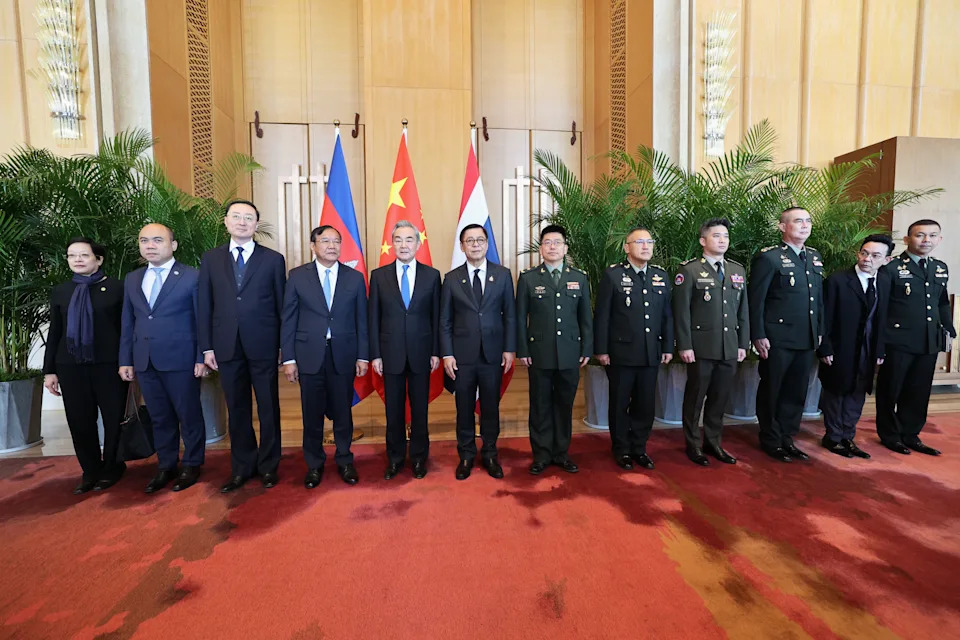
In this photo released by Agence Kampuchea Press (AKP), Cambodia's Foreign Minister Prak Sokhonn, fourth from left, poses for photographs together with his counterparts, China's Wang Yi, fifth from left, and Thailand's Sihasak Phuangketkeow, sixth from left, as accompanied by meeting delegation members in Yunnan province of China, Monday, Dec. 29, 2025. (AKP via AP)(ASSOCIATED PRESS)
Background And Continuing Risks
This latest truce follows earlier efforts: an initial July ceasefire brokered by Malaysia and reportedly influenced by pressure from the U.S. administration at the time, followed by a more detailed October agreement. Despite those accords, tensions persisted in the form of propaganda campaigns and sporadic cross‑border incidents, which escalated into heavy fighting in early December.
On Monday, Cambodian Prime Minister Hun Manet appealed directly to combatants along the border, saying that while fighting was still possible, prolonging conflict would gain little for his country.
As the three countries move to implement the ceasefire and follow‑up measures, observers say the Yunnan talks illustrate Beijing’s willingness to take on a more prominent mediating role in regional disputes — a development that could reshape diplomatic dynamics in Southeast Asia.
Help us improve.