China abandoned its one-child policy a decade ago, but births have not rebounded. High childcare and housing costs, youth unemployment and unequal caregiving burdens on women are major obstacles. Despite cash bonuses, free preschool pilots and other incentives, experts say the demographic shift is likely to persist and will have wide economic and social consequences.
China Wants More Babies — A Decade After the One‑Child Rule, Young People Aren’t Convinced
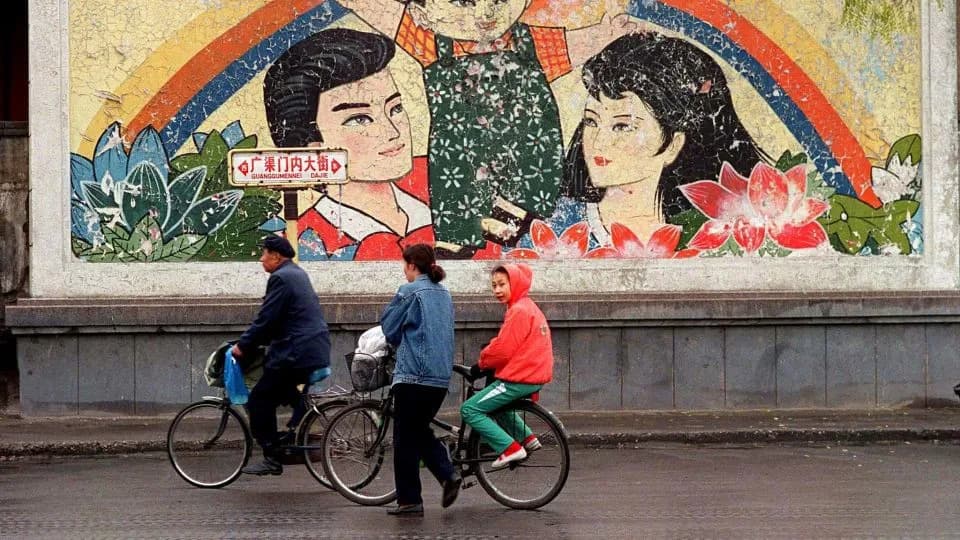
People cycle past a mural promoting the "one-child" policy on a Beijing street in 1996. - Will Burgess/Reuters
Welkin Lei, a 30-year-old financial-sector employee in Beijing, spends spare moments doing arithmetic on napkins as he and his wife weigh whether to have a second child. Their three-year-old already requires paid childcare while both parents work, and—both being only children themselves—they worry about balancing parenting with the time and cost of caring for aging parents.
That private calculation lies at the heart of one of China’s most consequential long-term challenges: persuading a generation shaped by decades of strict, state-enforced population control to reverse a sustained decline in births.

Medical workers take care of new-born babies at a hospital in Guizhou province's Tongren City on New Year's day last year. - VCG/Getty Images
Policy Shift and the Big Picture
On January 1, China marked 10 years since it formally abandoned the notorious one-child policy, which had been in force since 1980. Officials relaxed family-size rules after recognizing that falling birth rates threatened future economic growth for the world’s second-largest economy.
But the high-profile policy reversal and a stream of incentives have not stopped the demographic slide. China’s population fell across the three years to 2024. Although births ticked up slightly in 2024, that increase did not outpace deaths and is not expected to herald a sustained reversal.
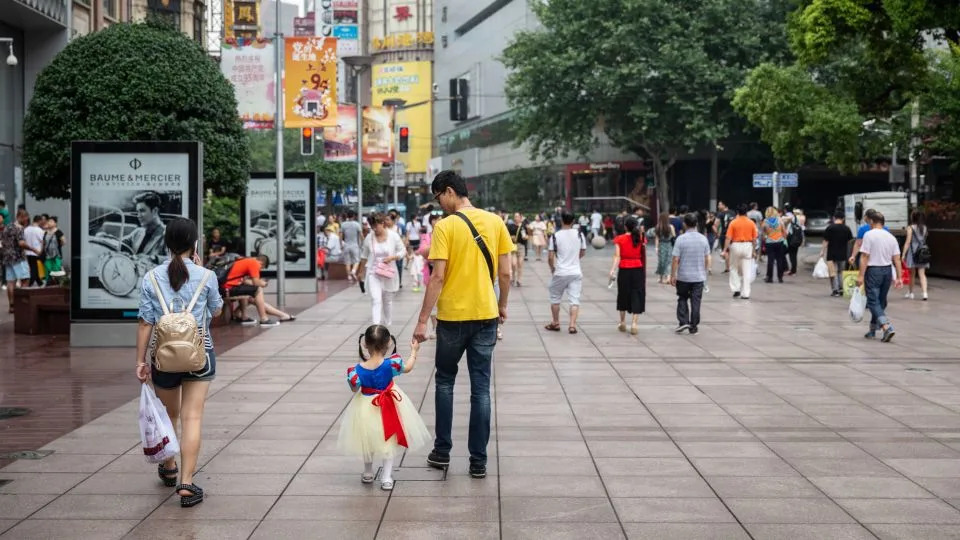
A family walks through the Nanjing Road shopping district in Shanghai in 2016. - Qilai Shen/In Pictures/Getty Images
People aged 60 and over already account for more than 20% of China’s roughly 1.4 billion people, and United Nations projections suggest that share could approach half of the population by 2100. That shift carries deep implications for China’s economy, public finances and long-term strategic ambitions.
What the Government Is Doing
Under President Xi Jinping, Beijing has framed the situation in terms of “population security” and prioritized developing a “high-quality population.” Central and local authorities have rolled out measures including:

A man checks a job advertisement at a job fair in Hebei province's Shijiazhuang in 2024. - Florence Lo/Reuters
- Annual cash bonuses of 3,600 yuan (about $500) for families with children under three;
- Plans to eliminate out-of-pocket costs for hospital deliveries by 2026;
- Free public preschool pilots and a draft law to better regulate childcare services;
- Streamlined marriage registration and other pro-marriage administrative steps;
- Trials of tax breaks, housing subsidies and extended maternity leave at the local level.
In a symbolic policy shift, the state began applying value-added tax to condoms and some contraceptives—underscoring a new pronatalist tone in official messaging.
Why Incentives Haven’t Moved the Needle
Many young Chinese say the measures are too small and fail to tackle the root problems. Key barriers include:
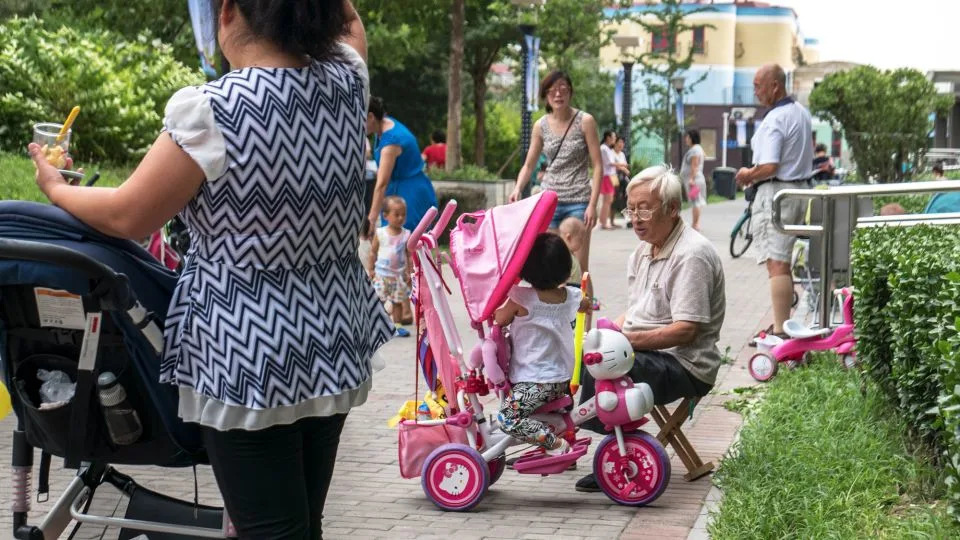
Children play in a residential community in Beijing in 2015. - Zhang Peng/LightRocket/Getty Images
- High Cost Of Childcare And Education: Studies and parents in major cities say subsidies barely offset expensive childcare, housing and competitive schooling.
- Youth Unemployment And Economic Insecurity: Record numbers of college graduates face a weak job market; many young adults delay marriage and family formation while struggling to earn a stable income.
- Uneven Social Safety Nets: A generation of only children often faces the prospect of being sole carers for elderly parents where public support is limited.
- Gendered Burdens: Women often shoulder disproportionate child-rearing and domestic responsibilities, making the prospect of more children less attractive.
- Changed Social Norms: After decades of the one-child era, single-child households and smaller families have become socially acceptable life choices.
“The cost of raising kids in large urban areas is just too high and the subsidies feel like a drop in the bucket,” said Mi Ya, 34, who is raising her nine-year-old son in Shanghai. “They don’t spark the desire to have a baby.”
Economic And Strategic Consequences
Experts warn the demographic shift could be profound. A smaller workforce and shrinking consumer base will strain public finances and could slow economic growth. Beijing is pursuing partial offsets—pension reform including a gradual increase in retirement age, and faster automation in factories to substitute labor with robots—but analysts say these measures do not resolve the social and economic drivers of low fertility.
“So far, policies to boost births have been performative at best,” said Yanzhong Huang, a senior fellow for global health at the Council on Foreign Relations. “They haven’t addressed fundamental issues like high childrearing costs and weak social protection.”
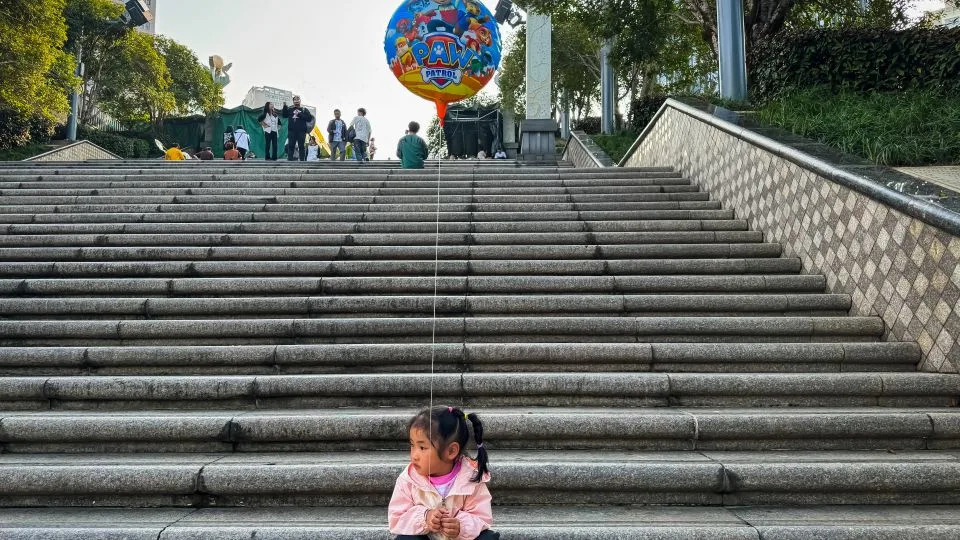
A young girl sits alone on a set of steps in the megacity of Chongqing in 2024. - Cheng Xin/Getty Images
Outlook
Some economists argue the decline is already entrenched. “If we changed the one-child policy 20 years ago, it would be much better. Now it’s too late,” said Yao Yang of Shanghai University of Finance and Economics, predicting that long-term birth-rate decline is largely irreversible though policy may produce short-term fluctuations.
For many Chinese, the debate is also personal and retrospective. Those who grew up under the one-child rule sometimes say they would have made different family choices if given the freedom.
The coming years will test whether Beijing’s efforts can overcome deep economic and social barriers—or whether China’s demographic trajectory will continue toward an older, smaller population despite a decade of official pronatalist moves.
Help us improve.