The James Webb Space Telescope has detected unexpected ultraviolet radiation around five protostars in the Ophiuchus molecular cloud, a finding that may prompt updates to early star-formation models. JWST's MIRI instrument measured molecular hydrogen emission and revealed UV-processed gas near each protostar. After modelling external illumination from nearby B-type stars and dust absorption, the researchers concluded the UV is produced locally, likely by shocks from accretion or protostellar jets. The team will continue JWST observations of gas, dust and ices to pinpoint the source and effects of this UV.
JWST Reveals Mysterious Ultraviolet Glow Around Infant Stars, Challenging Star-Formation Models

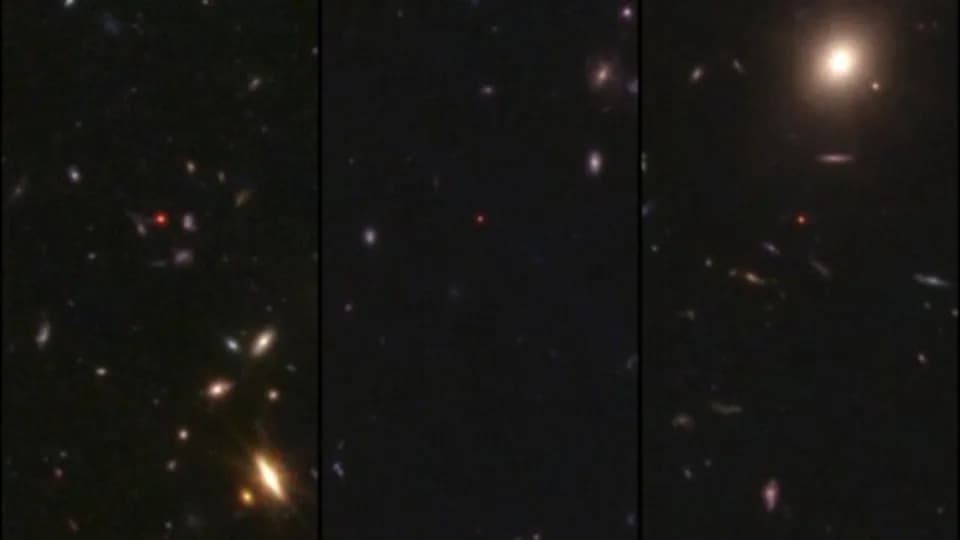
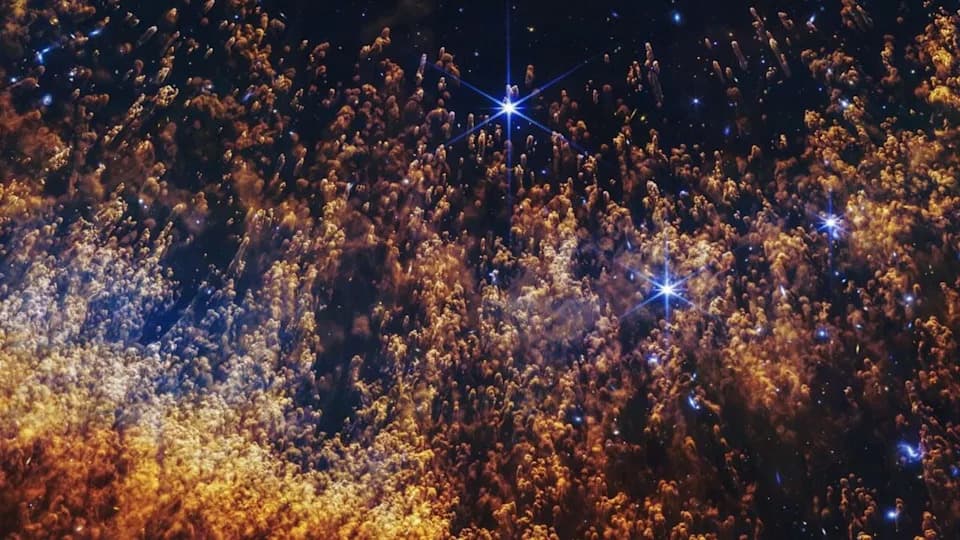
A team using the James Webb Space Telescope (JWST) has detected unexpected high-energy ultraviolet (UV) radiation in the immediate surroundings of five protostars in the Ophiuchus star-forming cloud. The discovery, reported in Astronomy & Astrophysics on Nov. 13, suggests that current models of the earliest stages of stellar evolution may need revision.
Protostars are nascent stars formed when dense pockets of gas and dust within molecular clouds collapse under gravity. Still embedded in envelopes of material they accrete from, protostars grow until their cores become hot and dense enough to ignite hydrogen fusion and join the main sequence.
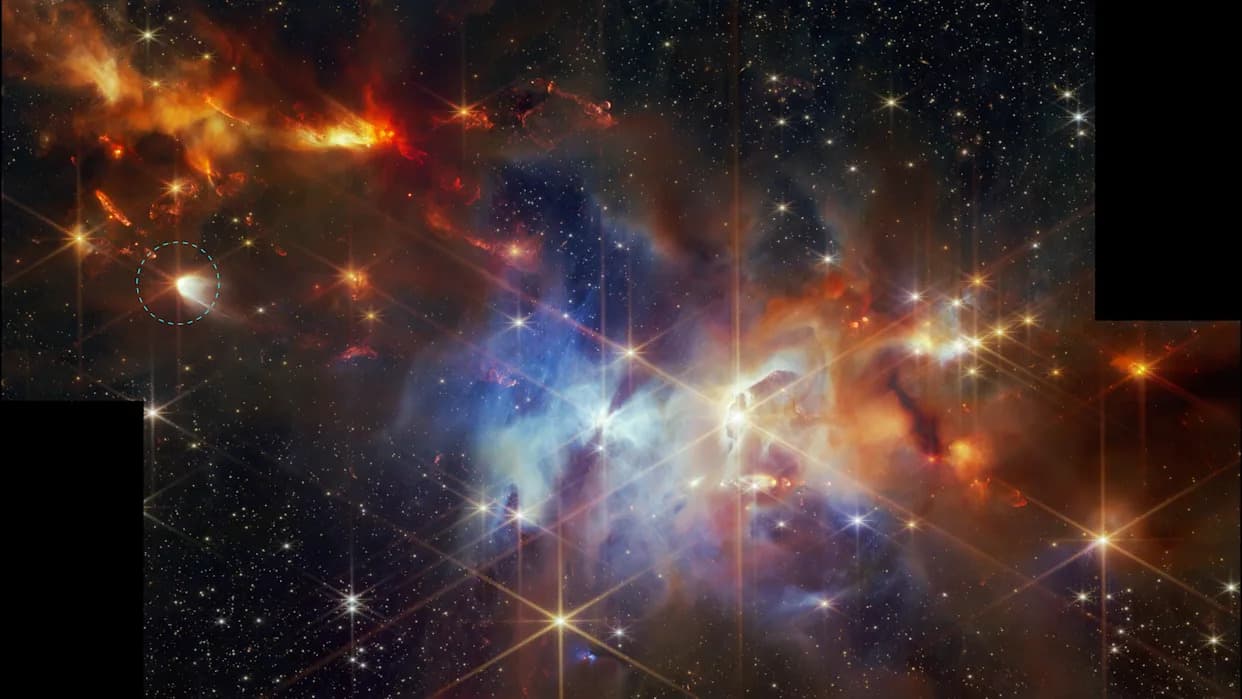
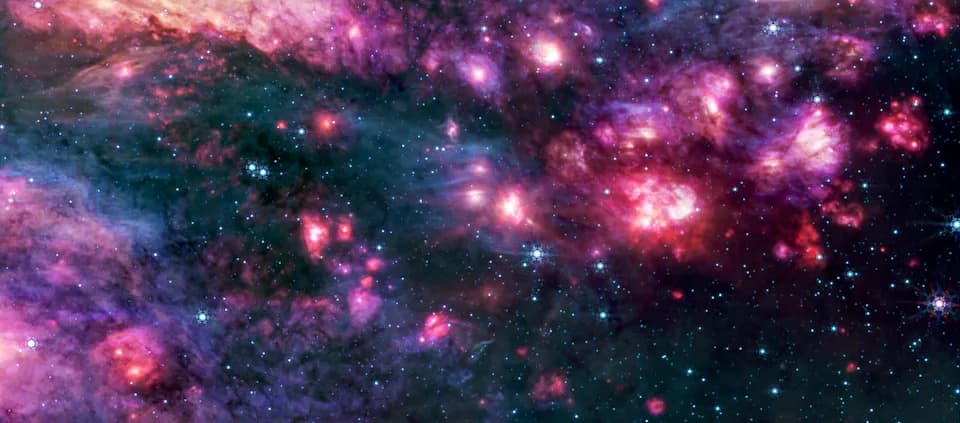
The team — including Iason Skretas (Max Planck Institute for Radio Astronomy) and Agata Karska (Center for Modern Interdisciplinary Technologies, Nicolaus Copernicus University) — used JWST's Mid-Infrared Instrument (MIRI) to obtain sensitive observations of molecular hydrogen (H2) emission lines in the Ophiuchus cloud, roughly 450 light-years away. Ophiuchus also hosts nearby hot B-type stars that produce strong external UV, allowing the researchers to compare protostars at a range of distances from these massive neighbors.
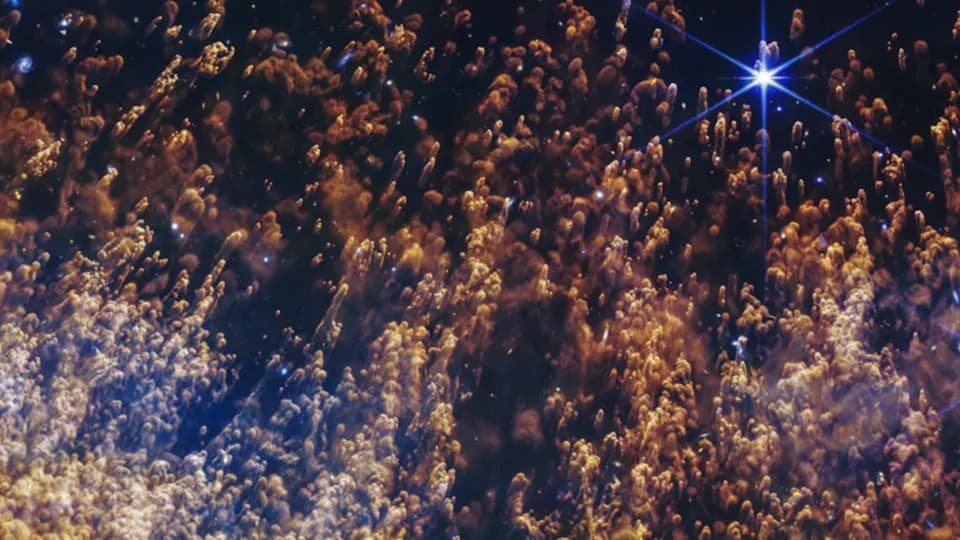
Molecular hydrogen is the universe's most abundant molecule, but its emission is hard to detect from cold molecular clouds and from the ground because Earth's atmosphere blocks key lines. When fast protostellar jets and outflows slam into surrounding gas, they create shocks that heat material and excite H2, producing infrared emission lines that MIRI can detect.
Surprisingly, the JWST data show clear signatures of UV-processed gas in the immediate vicinity of all five protostars studied. That raised a critical question: is the UV coming from external illumination by nearby massive stars, or is it being produced locally near the protostars themselves?
Ruling out outside illumination
To test the external-illumination hypothesis, the team evaluated the radiation fields produced by neighboring B-type stars and calculated the distances between those stars and each protostar. They also modelled how effectively dust in the protostellar envelopes would absorb incoming UV and re-emit it at longer wavelengths. If external UV were dominant, the strength and character of molecular emission should vary with the external UV field strength.
"Using these two methods, we showed that ultraviolet radiation, in terms of external conditions, varies significantly between our protostars, and therefore we should see differences in molecular emission. As it turns out, we don't see them," said Iason Skretas.
Because the molecular emission did not correlate with the expected external UV exposure, the researchers rejected neighboring massive stars as the primary source of the observed UV signatures.
Internal sources: shocks and jets
With external illumination unlikely, the team concluded the UV must arise from processes local to each protostar. Plausible internal mechanisms include shocks where infalling material strikes the protostar during accretion, or shocks formed along the high-speed jets and outflows launched by the young stars. Such shocks can heat gas to temperatures high enough to produce UV photons and alter the surrounding chemistry.
"We can say with certainty that UV radiation is present in the vicinity of the protostar, as it undoubtedly affects the observed molecular lines. Therefore, its origin has to be internal," said Agata Karska.
The team plans follow-up JWST observations to study the region's gas, dust and ices in greater detail to better constrain where and how the UV is produced and how it influences early stellar evolution and planet-forming material.
Reference: Team results published Nov. 13 in Astronomy & Astrophysics.
Help us improve.