JWST's infrared images penetrate dust to reveal dozens of massive young stars, warm dust, and 12+ previously unseen ionized regions in Sagittarius B2, the Milky Way's largest nearby star-forming complex. At ~27,000 light-years, Sgr B2 produces nearly half of the Central Molecular Zone's stars, forming about 4 solar masses of stars per century (≈8–10 stars). Dense cloud cores and a sharp eastern boundary—possibly from a supernova shock—may explain the recent burst of activity. These findings inform studies of star formation both locally and in distant, early galaxies.
JWST Reveals Hidden Massive Stars in Sagittarius B2 — A New Burst of Star Formation at the Galactic Center
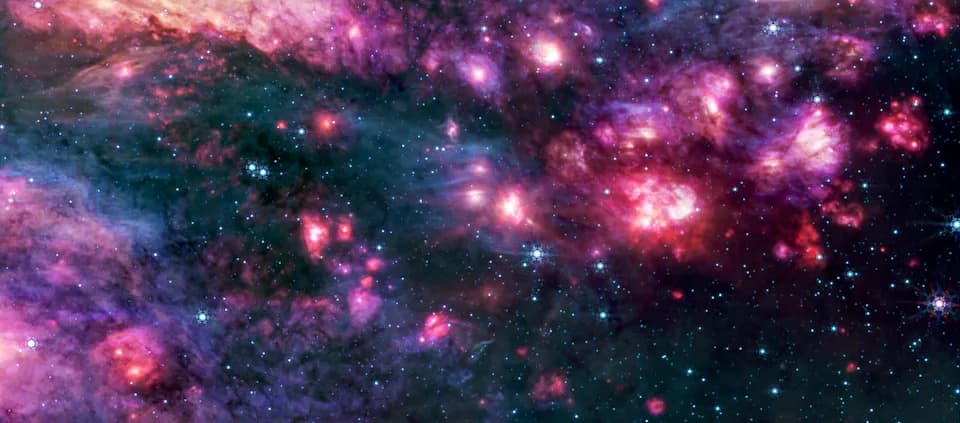
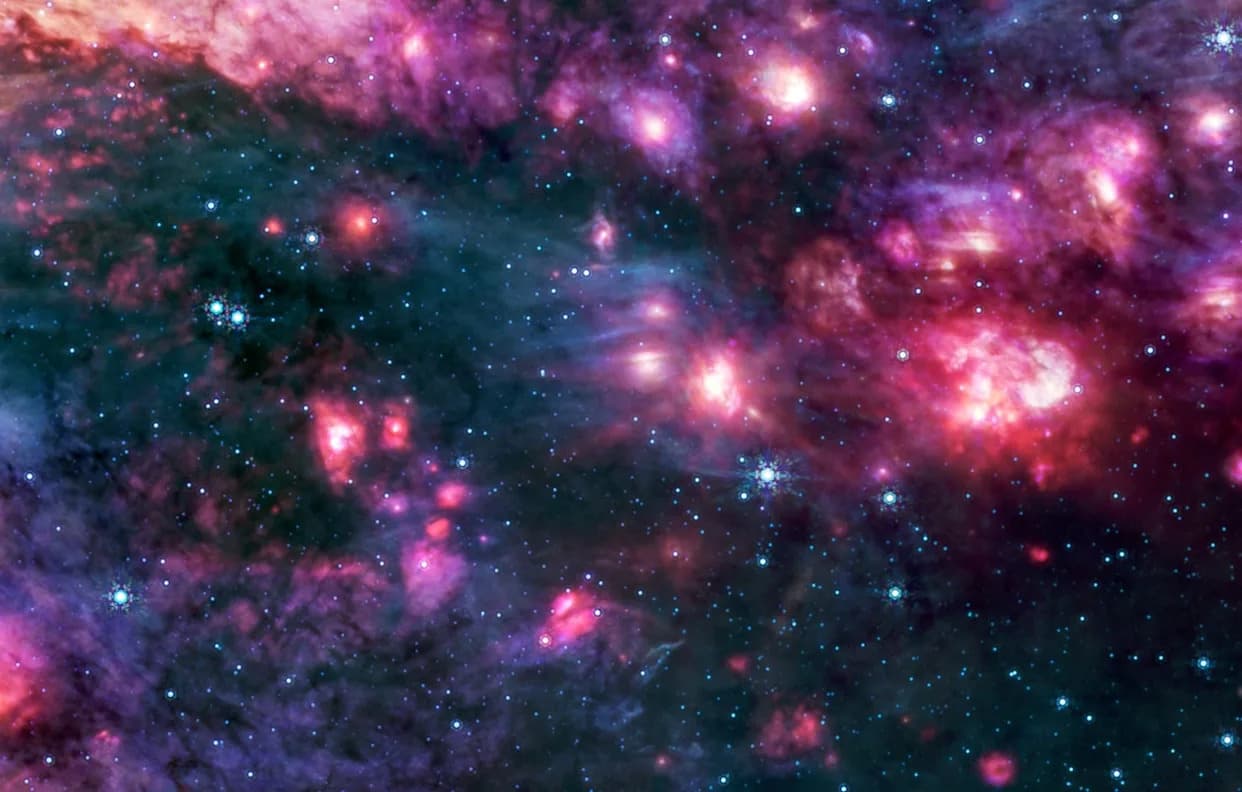
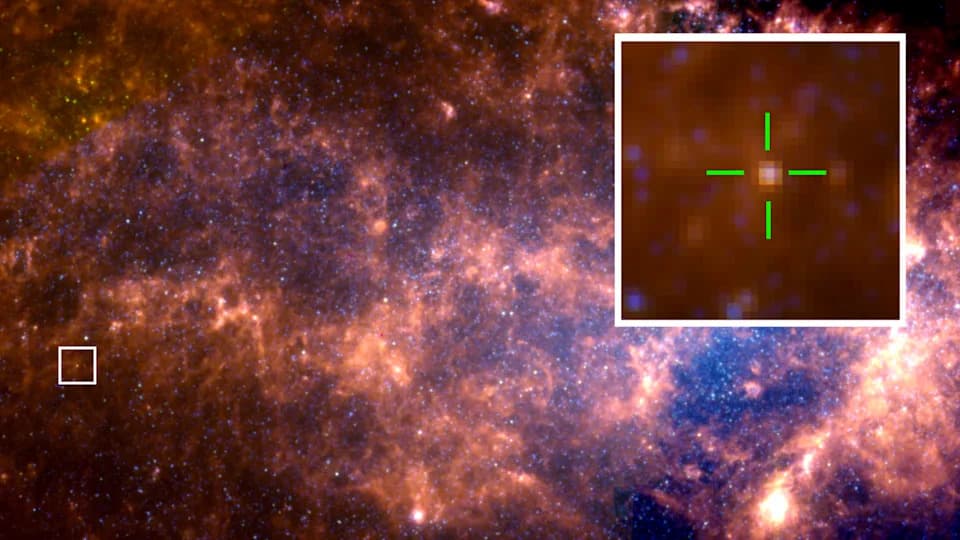
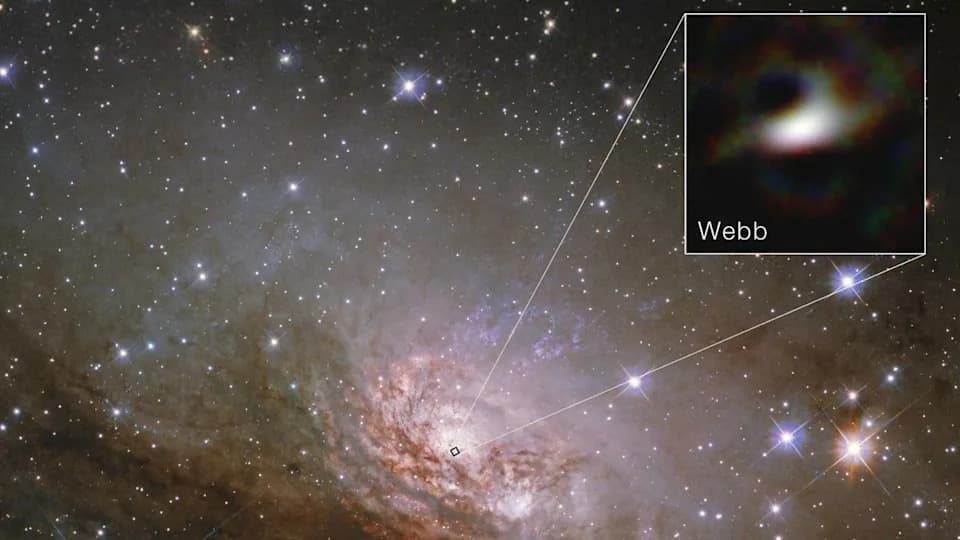
At mid-infrared wavelengths, JWST reveals glowing clouds of warm dust. Many fewer stars appear in this image because fainter ones emit little long-wavelength radiation. Credit: NASA, ESA, CSA, STScI, A. Ginsburg (University of Florida), N. Budaiev (University of Florida), T. Yoo (University of Florida)
Massive stars have outsized effects on their surroundings and on the evolution of galaxies. These gargantuan suns reach the highest surface temperatures of ordinary stars, emitting intense ultraviolet radiation that ionizes nearby gas and driving powerful stellar winds that sculpt their environments. Because they burn through nuclear fuel so rapidly, massive stars live short lives and are comparatively rare.
Recently, astronomers trained the James Webb Space Telescope (JWST) on Sagittarius B2 (Sgr B2), the Milky Way's largest and most active nearby star-forming complex. Located roughly 27,000 light-years from Earth and a few hundred light-years from the central supermassive black hole Sagittarius A*, Sgr B2 is a vast reservoir of cold gas and dust where massive stars are being born.
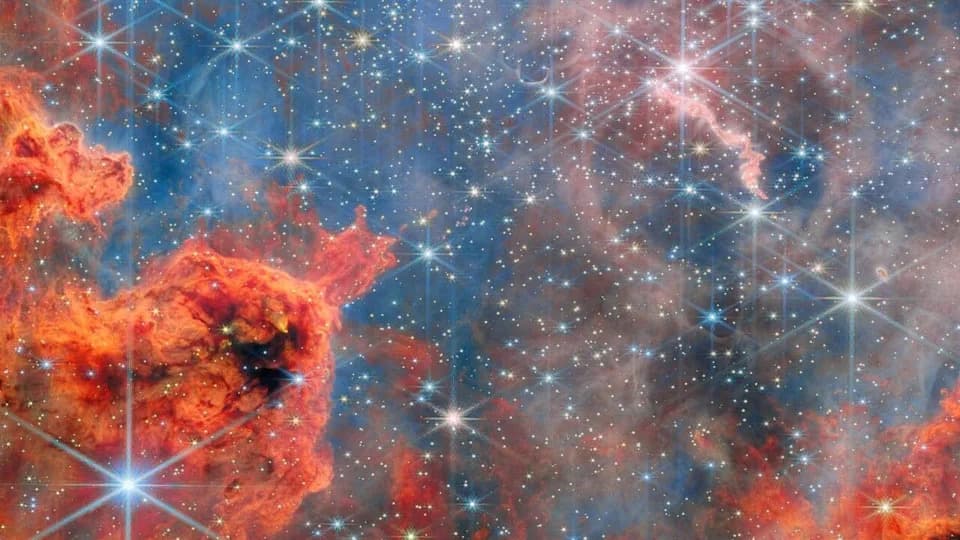
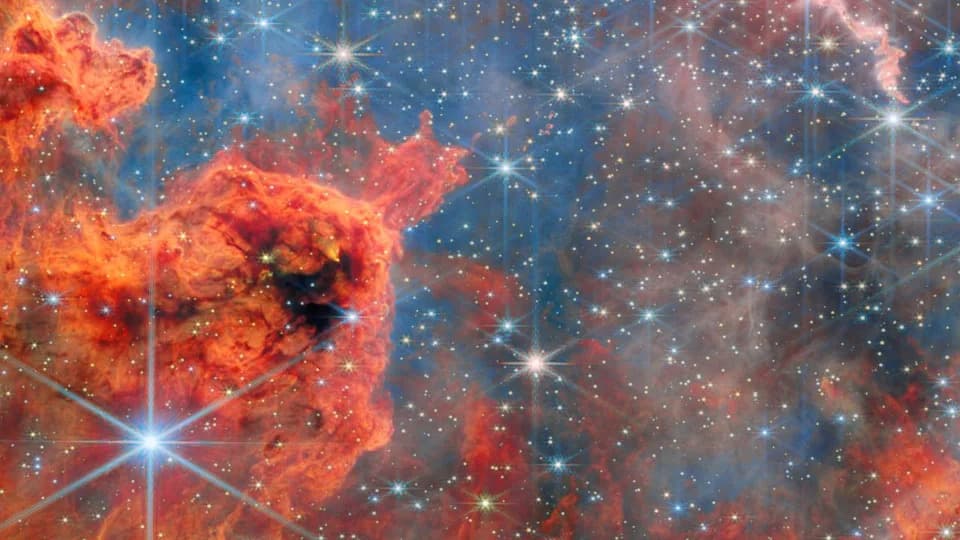
Dust in the Galactic disk obscures most optical light from this region, but Webb's infrared instruments penetrate that dust to reveal details previously hidden from view. The new images show many massive young stars, the warm dust cocoons around them, and more than a dozen previously unseen regions of ionized hydrogen.
What the Images Reveal
Webb's sensitivity and resolution in the infrared reveal structure on scales inaccessible to earlier telescopes. University of Florida astronomer Adam Ginsburg, the project's principal investigator, said in a press release:
"Webb's powerful infrared instruments provide detail we've never been able to see before. It will help us unravel mysteries of massive star formation and why Sagittarius B2 is so active."
The images provide several clues to Sgr B2's exceptional activity. The densest cloud cores — the birthplaces of the most massive stars — appear unusually compact and resistant to disruption by radiation and winds. In addition, a sharp boundary along the cloud's eastern edge (visible in the images) suggests an external trigger, such as a shockwave from a nearby supernova, may have ignited a recent burst of star formation.
Sgr B2 In Context
The Central Molecular Zone (CMZ) spans more than 1,500 light-years across the Galactic center and contains roughly 80% of the Milky Way's dense gas. Yet the CMZ forms only about 10% of the galaxy's stars, far below theoretical expectations. Sgr B2 stands out: within its roughly 150-light-year-wide volume it produces nearly half of the CMZ's stars.
Researchers estimate Sgr B2's star-formation output at about 4 solar masses per century, roughly equivalent to forming eight to ten stars in that time. The team suggests the region may have only recently entered this heightened phase of activity, widening its lead over other CMZ star-forming sites.
Lead author Nazar Budaiev (University of Florida) emphasized the discovery's dual value: understanding massive star formation locally helps astronomers interpret conditions in distant galaxies at earlier cosmic times — around 3.5 billion years after the Big Bang — when the universal star-formation rate was near its peak.
These Webb observations therefore shed light not only on the Milky Way's most active stellar nursery, but also on how giant stars shaped galaxies during the Universe's more vigorous youth.
Help us improve.