New forensic and historical analyses identify Tomb I at Vergina as the burial place of Philip II of Macedon. The international study assigns Tomb I to Philip II, his wife Cleopatra and their infant; Tomb II to King Arrhidaeus and Adea Eurydice; and Tomb III to Alexander IV. Researchers combined osteology, dissection, radiography and historical sources to resolve a long-standing controversy stemming from the 1977 discoveries at Aigai.
Philip II's Tomb Finally Identified at Vergina — New Study Reassigns Royal Burials

A new international study has resolved a decades-long debate by confirming that Tomb I at Aigai (modern Vergina, Greece) holds the remains of Philip II of Macedon, father of Alexander the Great. Using a combination of forensic, anatomical and historical methods, researchers have reassigned the occupants of the three principal royal tombs discovered at Vergina in 1977.
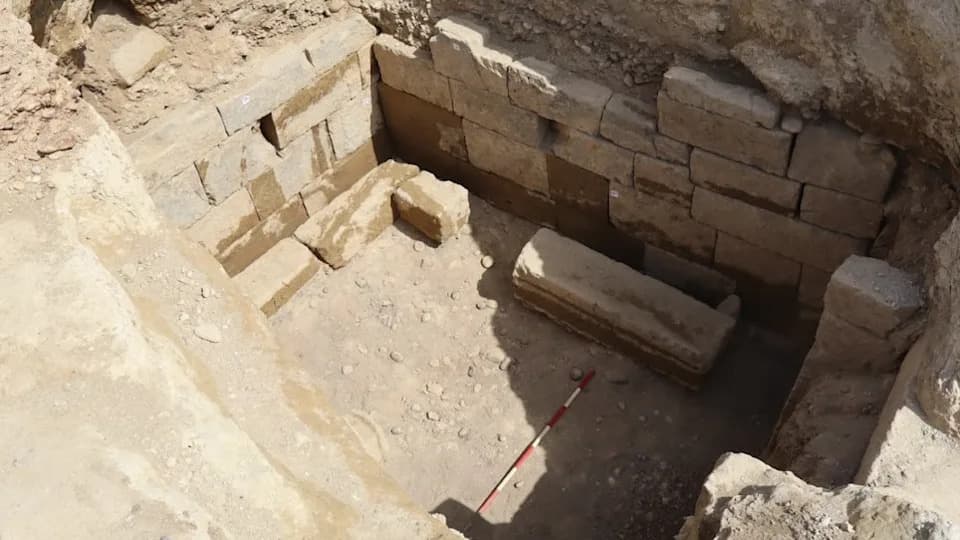
Manolis Andronikos first uncovered the royal burial complex at Aigai in 1977; the site became a UNESCO World Heritage Site in 1996. Scholars have long disputed which of the tombs contained Philip II after the original discoveries prompted competing interpretations.
Methods and evidence
The multidisciplinary team, with members from the United States, Spain and Greece, published its results in the Journal of Archaeological Science: Reports. Researchers combined osteological analysis, anatomical dissection, radiography (X-rays), and a careful comparison of skeletal injuries with contemporary historical accounts to test competing identifications.
Who was buried where
The study concludes that:
- Tomb I contains Philip II, his wife Cleopatra (not the well-known later Egyptian queen), and their infant son — both of whom appear to have died in the violent aftermath of Philip's assassination in 336 BCE.
- Tomb II is attributed to King Arrhidaeus (Alexander's half-brother) and his wife Adea Eurydice, overturning prior suggestions that Tomb II belonged to Philip II.
- Tomb III holds Alexander IV, the teenage son of Alexander the Great.
Researchers note they 'evaluated the hypothesis of Philip II in Tomb II and demonstrated why it cannot be supported, based on a full review of the available evidence,' while also calling for the publication of remaining excavation records, especially the diaries from Tomb I.
Why this matters
Confirming the identities of these burials provides a clearer picture of the final chapter of the Argead dynasty and strengthens the link between archaeological remains and historical narratives from the fourth century BCE. The study demonstrates how modern forensic techniques can resolve long-standing questions in ancient history and archaeology.
Although some records and excavation notes are still awaited, the new consensus offers a major step forward in understanding the Vergina burials and the fates of several central figures from the era of Philip II and Alexander the Great.
Help us improve.