The Karaağaç Tumulus in northwest Turkey is a monumental Phrygian burial mound more than 100 miles west of Gordion that contains a wooden-chambered tomb, inscribed ceramics and bronze situlas. Researchers date the primary burial to c. 740–690 B.C., within the late eighth century commonly associated with King Midas. While the tomb’s architecture and grave goods resemble elite burials at Gordion, scholars caution the artifacts could reflect high-status gift exchange rather than direct royal interment. The site’s human remains span nearly three millennia, complicating interpretation and underscoring the need for further study.
Monumental Phrygian Tomb in Turkey May Belong to Royal Circle of King Midas
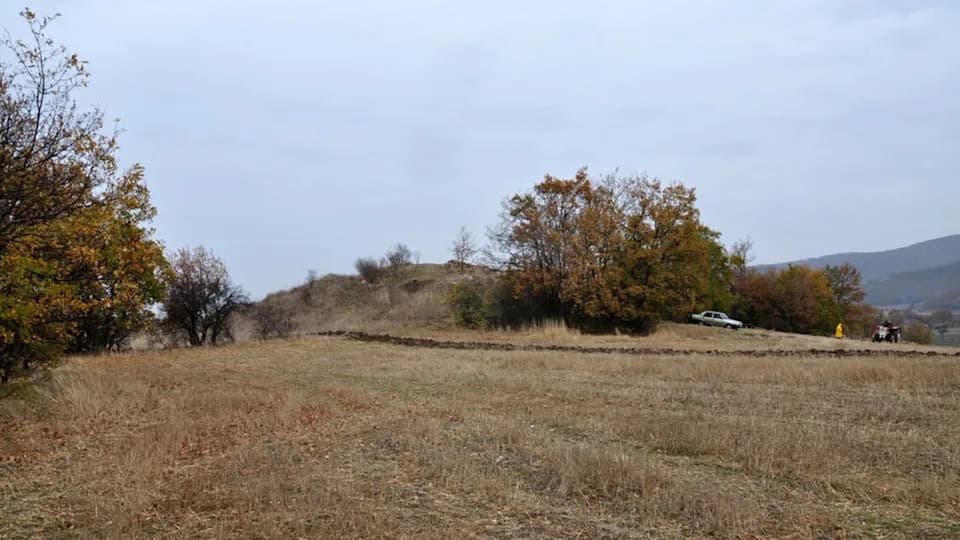
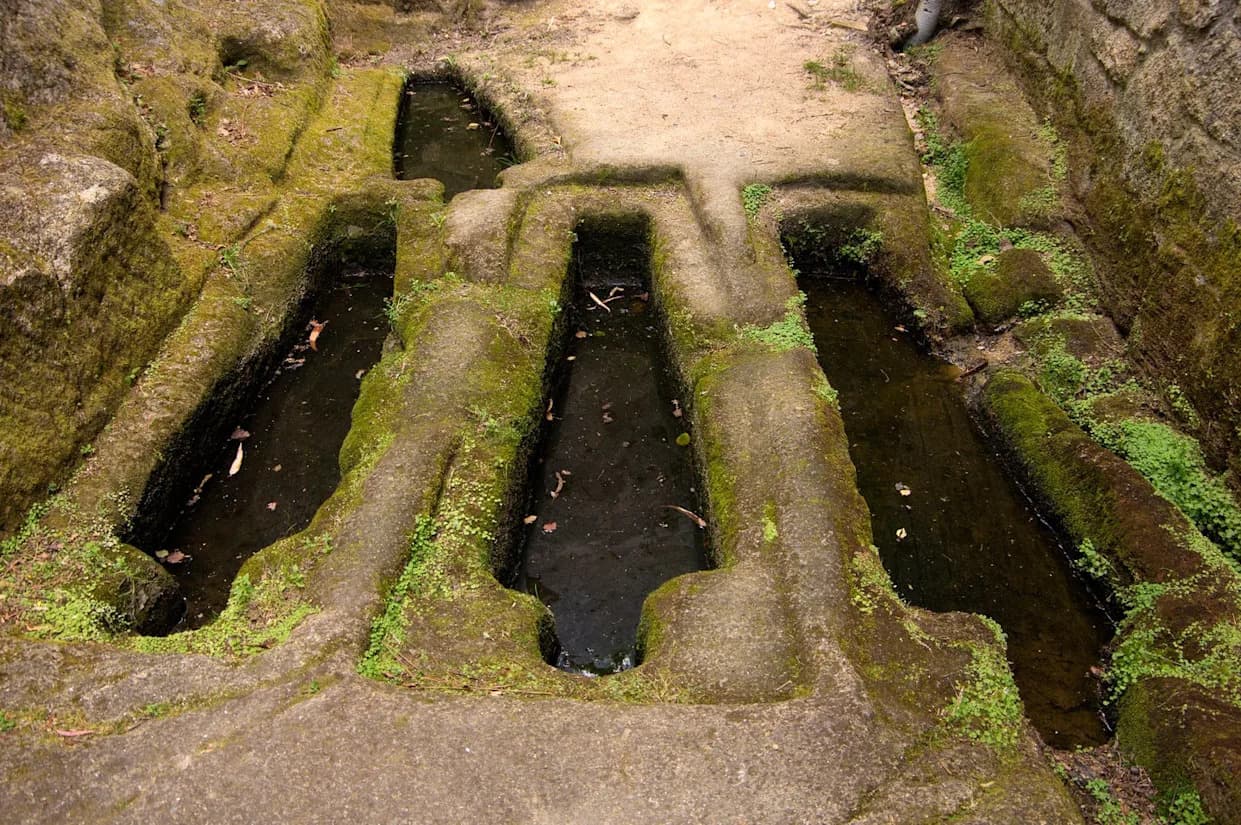
The Karaağaç Tumulus (burial mound) stands atop a natural hillock and more than 100 feet (30 meters) above the surrounding plain. | Credit: Hüseyin Erpehlivan
An imposing burial mound unearthed in northwest Turkey may represent an elite—or perhaps royal—interment connected to the circle of the legendary Phrygian king Midas, who ruled in the eighth century B.C. and is best known in later tradition for the myth of the "golden touch." The discovery gives new evidence about political organization and elite networks across Phrygia.
The tumulus, known as the Karaağaç Tumulus, lies more than 100 miles (over 160 km) west of Gordion, the ancient Phrygian capital in central Anatolia. The mound now rises roughly 26 feet (8 m) above a natural hillock and more than 100 feet (30 m) above the surrounding plain, with a diameter near 110 feet (60 m). Satellite imagery first revealed looter damage in 2010, and professional excavations have been underway since 2013.
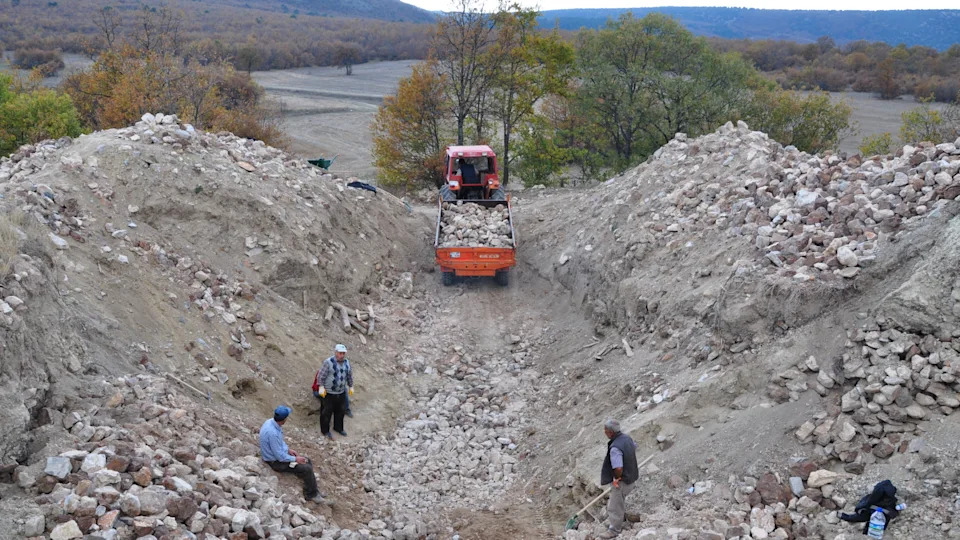
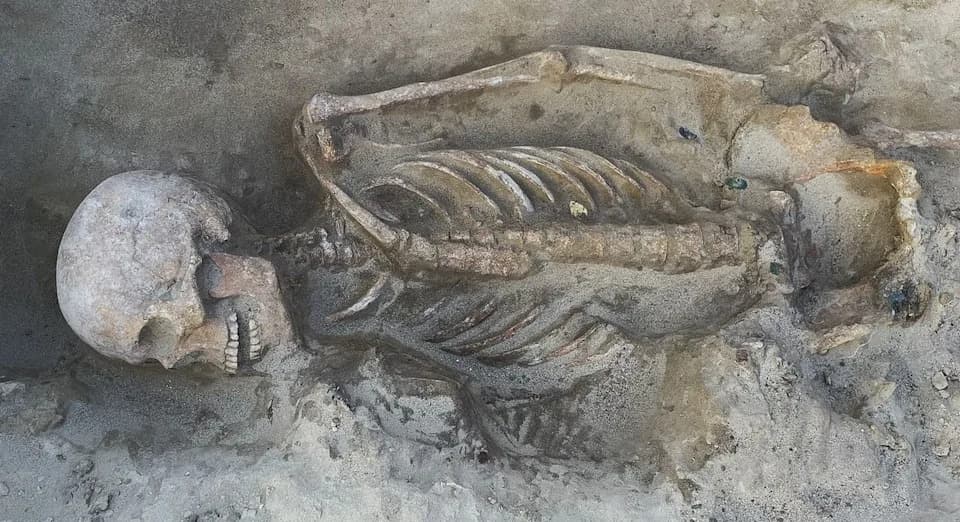
Archaeologists from Bilecik University have excavated parts of the burial mound over more than a decade. | Credit: Hüseyin Erpehlivan
Finds and Dating
In a study published in the American Journal of Archaeology, archaeologist Hüseyin Erpehlivan (Bilecik University) describes a monumental wooden-chambered tomb within the tumulus. The chamber’s architecture closely resembles elite burials near Gordion. Grave goods recovered include numerous ceramic jars (one inscribed with a Phrygian name) and several bronze situlas—elaborately made ritual or prestige vessels often decorated with battle, hunt and procession scenes.
Erpehlivan and colleagues date the burial to roughly 740–690 B.C., placing it in the late eighth century B.C., a time commonly associated with Midas’ reign. The presence of situlas is especially noteworthy because, prior to this find, documented situlas in the region had been reported mainly from the so-called "Midas Mound" at Gordion, a tomb often linked to Gordias (sometimes identified as Midas’ father).
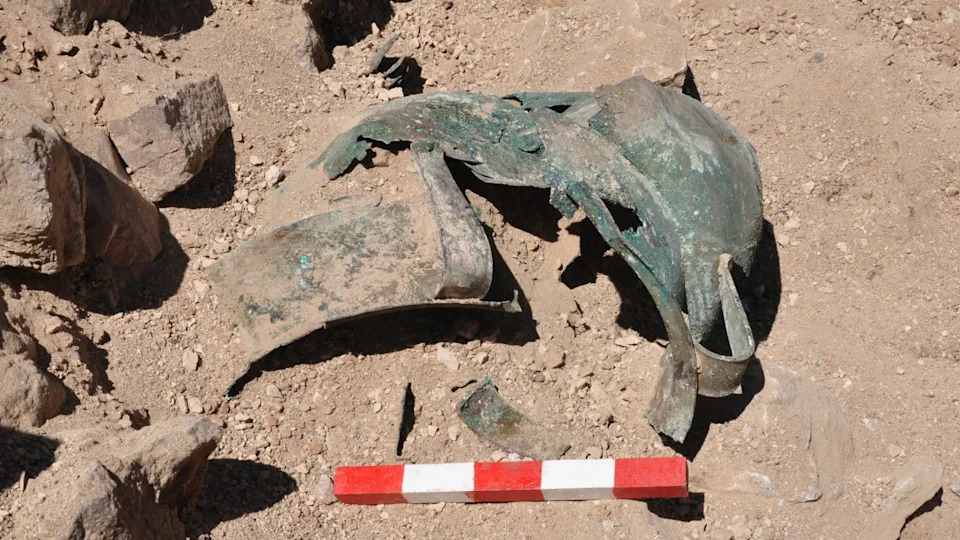
The ornate grave goods found in the ancient tomb include valuable bronze vessels, which are a distinctive feature of Phrygian tombs. | Credit: Hüseyin Erpehlivan
Interpretation and Scholarly Debate
Erpehlivan argues that the combination of monumental architecture and high-status grave goods "exceed what would be expected for a purely local, non-elite individual," and instead point to a person embedded in Phrygian power structures. The tumulus’ remote location suggests that political influence in Phrygia may have been more dispersed across the landscape than previously thought, rather than strictly centralized at Gordion.
“Historically, Phrygia was often viewed as a centralized kingdom similar to the Assyrian or Urartian empires,” Erpehlivan told Live Science. The Karaağaç burial, he says, challenges that model.
However, some specialists urge caution. Maya Vassileva (New Bulgarian University) told Live Science that situla fragments alone do not prove local royal rank; she considers the alternative explanation—that the objects represent high-status gift exchange between the royal court and an important provincial official—more plausible. Brian Rose (University of Pennsylvania), an experienced Gordion excavator who was not part of the new study, emphasized the tumulus’ long use-life: the site preserves graves spanning nearly three millennia, complicating interpretation of all the human remains found there.
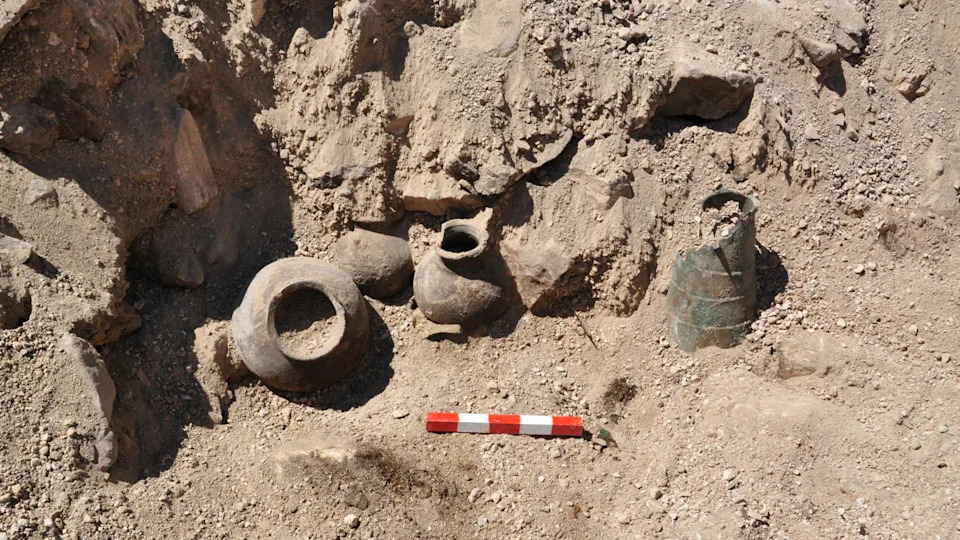
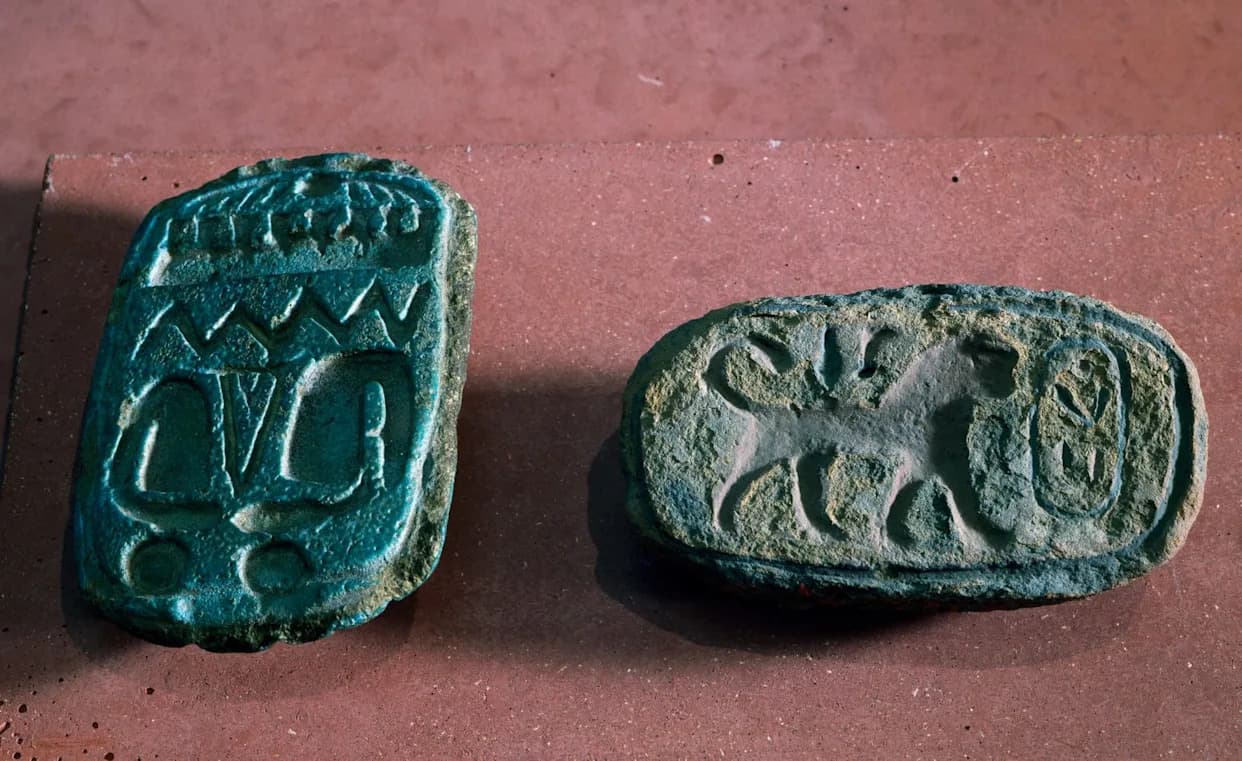
Archaeologists also found jars and pots made from fine clay, including one inscribed with a Phrygian name. | Credit: Hüseyin Erpehlivan
Human Remains and Long-Term Use
Human bones recovered at Karaağaç include remains that are not original to the Phrygian tomb. Some derive from an earlier cemetery that predated the tumulus; others are later interments placed after the mound was built. This long sequence of use—ancient to medieval and beyond—makes Karaağaç archaeologically rich but also requires careful stratigraphic and radiocarbon analysis to separate contexts.
Why It Matters
Whether or not the Karaağaç burial belongs to a member of Midas’ immediate family, the site expands our understanding of Phrygian elite display, regional networks and the reach of royal influence in the late eighth century B.C. Future analyses—detailed artifact study, inscriptions, and secure dating—will be needed to clarify the occupant’s identity and the relationship between provincial elites and the central court at Gordion.
Key sources: Erpehlivan et al., American Journal of Archaeology (January issue); reporting by Live Science; commentary from Brian Rose and Maya Vassileva.
Help us improve.