The James Webb Space Telescope captured mid‑infrared flares from Sagittarius A* for the first time, filling a spectral gap between near‑infrared and radio observations. Simultaneous measurements at four wavelengths using JWST’s MIRI/MRS allowed the first direct measurement of the mid‑infrared spectral index during a flare. The changing spectral index indicates synchrotron cooling, enabling a cleaner estimate of the magnetic field strength near the black hole. Results were first disclosed in January 2025 and are available on arXiv with two companion papers.
JWST Detects Mid‑Infrared Flares from the Milky Way’s Central Black Hole

Summary: For the first time, the James Webb Space Telescope (JWST) has captured flares from Sagittarius A* (Sgr A*), the supermassive black hole at the center of the Milky Way, in the mid‑infrared. New multiwavelength measurements and modeling show evolving spectral behavior consistent with synchrotron cooling and provide a cleaner estimate of the magnetic field strength near the black hole.
Mid‑infrared flares fill a missing piece of the spectrum
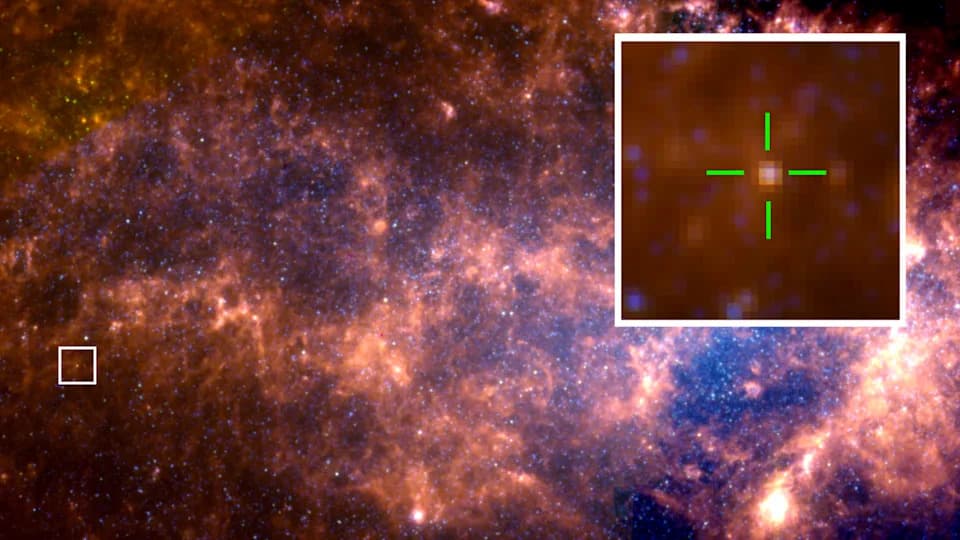
A team led by Sebastiano von Fellenberg of the Max Planck Institute for Radio Astronomy used JWST’s Mid‑Infrared Instrument (MIRI) in Medium‑Resolution Spectrometer (MRS) mode to observe a flare from Sgr A* simultaneously at four mid‑infrared wavelengths. This is the first robust detection of Sgr A* flaring activity in the mid‑infrared, bridging a longtime gap between near‑infrared and radio observations.
Why the new data matter
Flares from Sgr A* have been seen previously at near‑infrared and radio wavelengths, but not in the mid‑infrared with this sensitivity and spectral coverage. Because different wavelengths probe different phases and physical processes of a flare, adding mid‑infrared measurements gives a more complete picture of how flares evolve and what powers them.
Evidence for synchrotron cooling and magnetic activity
The team measured the mid‑infrared spectral index throughout the outburst and found it changed as the flare progressed. That evolution matches the expectations for synchrotron cooling, where relativistic electrons lose energy by emitting synchrotron radiation. Simulations of black‑hole environments indicate magnetic reconnection—when magnetic field lines reconfigure—can rapidly accelerate electrons and trigger such emission.
Because the synchrotron cooling timescale depends on the magnetic field strength, the observed spectral evolution allows a relatively direct estimate of the local magnetic field. Von Fellenberg notes that this mid‑infrared method is cleaner than previous near‑infrared approaches, which required stronger assumptions about electron populations and other parameters.
Why JWST was essential
Mid‑infrared observations of Sgr A* are difficult from the ground because Earth’s atmosphere severely limits sensitivity at those wavelengths. JWST’s MIRI/MRS provides both the required sensitivity and broad simultaneous wavelength coverage to derive a spectral index in a single observation—a capability that made this analysis possible.
Implications and next steps
The results, first disclosed in January 2025 and posted on arXiv with two companion papers, give theorists improved constraints on particle cooling and magnetic‑field strength near our galaxy’s central black hole. Continued JWST monitoring and coordinated multiwavelength campaigns (infrared, radio, X‑ray) will refine models of how magnetic processes generate these intermittent flares.
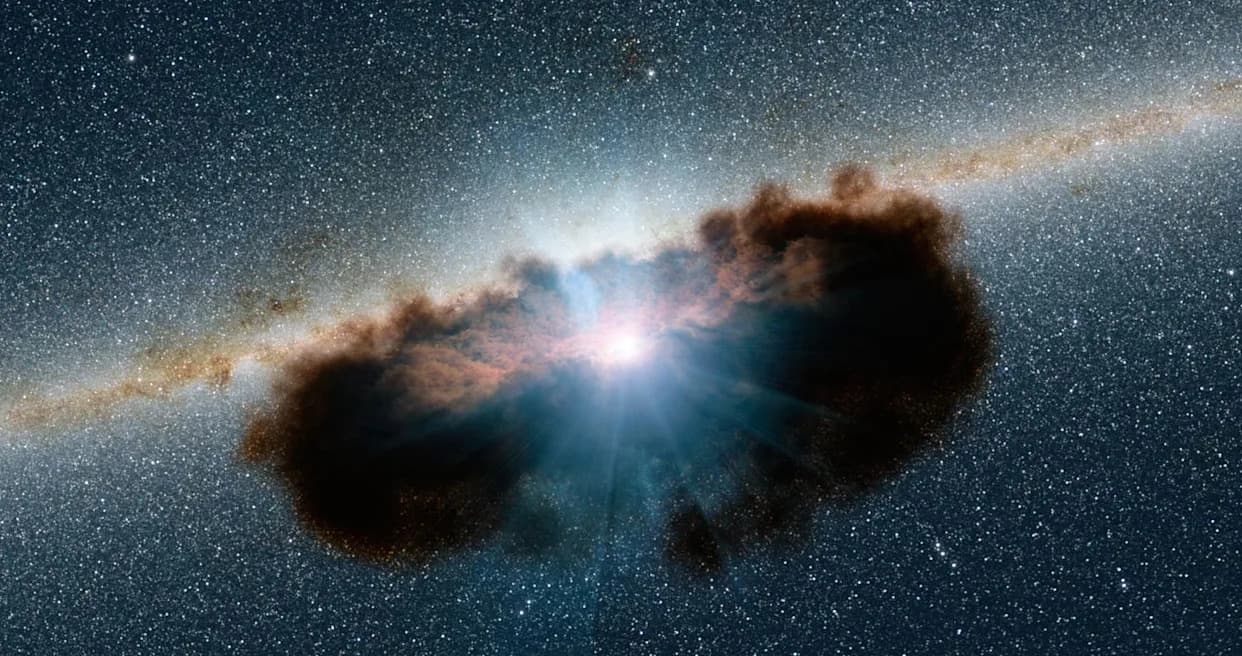
Note: Sgr A* has a mass of more than four million suns and, while the black hole itself emits no light, the surrounding gas and magnetic fields produce variable, sometimes powerful flares. The team’s analyses were led by Sebastiano von Fellenberg and colleagues; the data and modeling details are available on the preprint server arXiv.
Help us improve.