The Moon reaches first quarter at 1:59 a.m. EST (06:59 GMT) on Nov. 28, creating a striking half‑illuminated disk among the stars of Aquarius. U.S. observers will have the best chance to see it after sunset on Nov. 27, when the Moon sits above the eastern horizon. Binoculars (10x50) or a small telescope will highlight crater shadows along the terminator and reveal lunar maria; Saturn will appear just upper‑left, its rings seen nearly edge‑on through a telescope.
Half‑Illuminated Moon in Aquarius: First Quarter Nov. 28 — Best Viewed After Sunset Nov. 27 (U.S.)

The Moon reaches its first quarter phase at 1:59 a.m. EST (06:59 GMT) on Nov. 28, offering a prime opportunity to see the half‑illuminated lunar disk among the stars of Aquarius. From Earth's perspective the Moon's right‑hand hemisphere will be lit by direct sunlight while the left side remains in shadow, producing a sharp terminator that enhances surface relief.
Where and when to look
The first quarter Moon typically rises near noon and sets close to midnight. For viewers across the United States, the best viewing window will be during the evening of Thursday, Nov. 27: look toward the eastern horizon after sunset to see the half‑lit Moon before it dips lower later in the night.
What you'll see
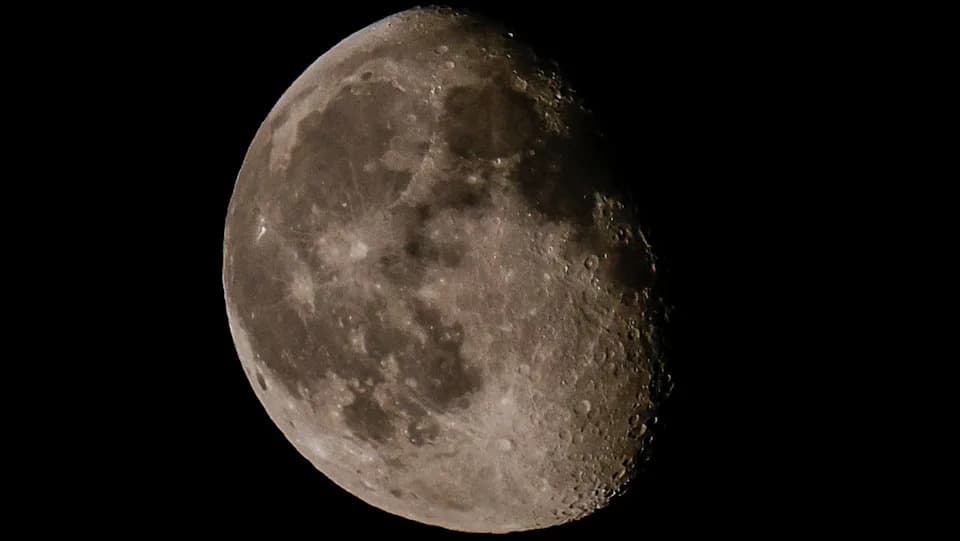
Along the terminator — the line between lunar day and night — crater walls and mountain shadows appear especially dramatic, giving a pronounced three‑dimensional effect. A pair of 10x50 binoculars or a small backyard telescope will reveal many shadow‑filled craters clustered along the lower portion of the Moon's Earth‑facing side. Even the unaided eye should pick out the darker basaltic plains called lunar maria, ancient lava‑flooded basins that contrast with the brighter highlands.
Bonus: Saturn nearby
Enhancing the scene, Saturn will be visible to the Moon's upper left at sunset on Nov. 27, located below the stars of Pisces. Because the planet's rings are currently viewed nearly edge‑on from Earth, a telescope will show them as a thin line rather than broad bands.
Observing tips
Equipment: 10x50 binoculars are ideal for beginners; a small refractor or reflector telescope will bring crater shadows and Saturn's ring line into clearer view. Timing: Aim for the hour or two after local sunset for the best contrast. Location: Find a dark or suburban sky free of low horizon obstructions.
Share your view: If you'd like to share a photo of the first quarter Moon, consider submitting it to the editor along with your name, location and a brief caption describing your shot.
Help us improve.