The Nemesis hypothesis proposes a distant brown dwarf around 95,000 AU could periodically disturb the Oort Cloud and trigger mass extinctions roughly every 26 million years. Major infrared surveys including WISE, 2MASS and IRAS have found no convincing evidence for such a companion. Odd orbits of distant objects like Sedna keep the idea alive, but future surveys (for example the Vera C. Rubin Observatory) will be needed to confirm or rule out Nemesis.
Nemesis: Could a Hidden 'Death Star' Explain Earth's Periodic Mass Extinctions?

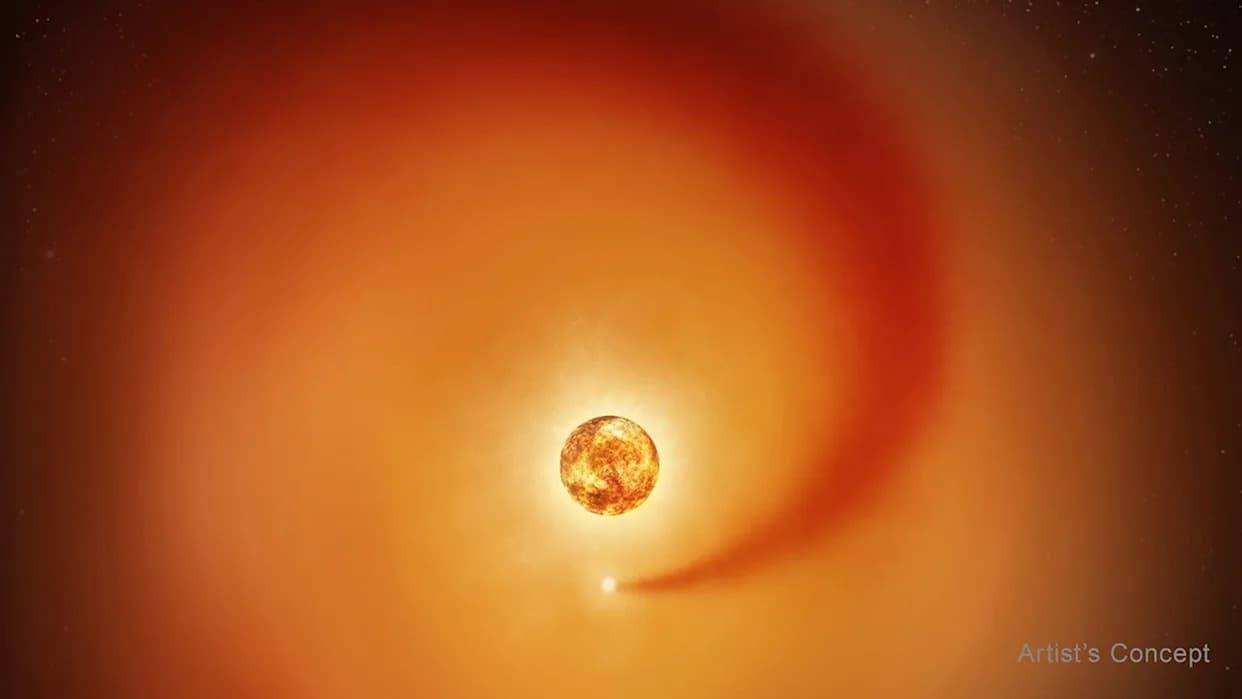
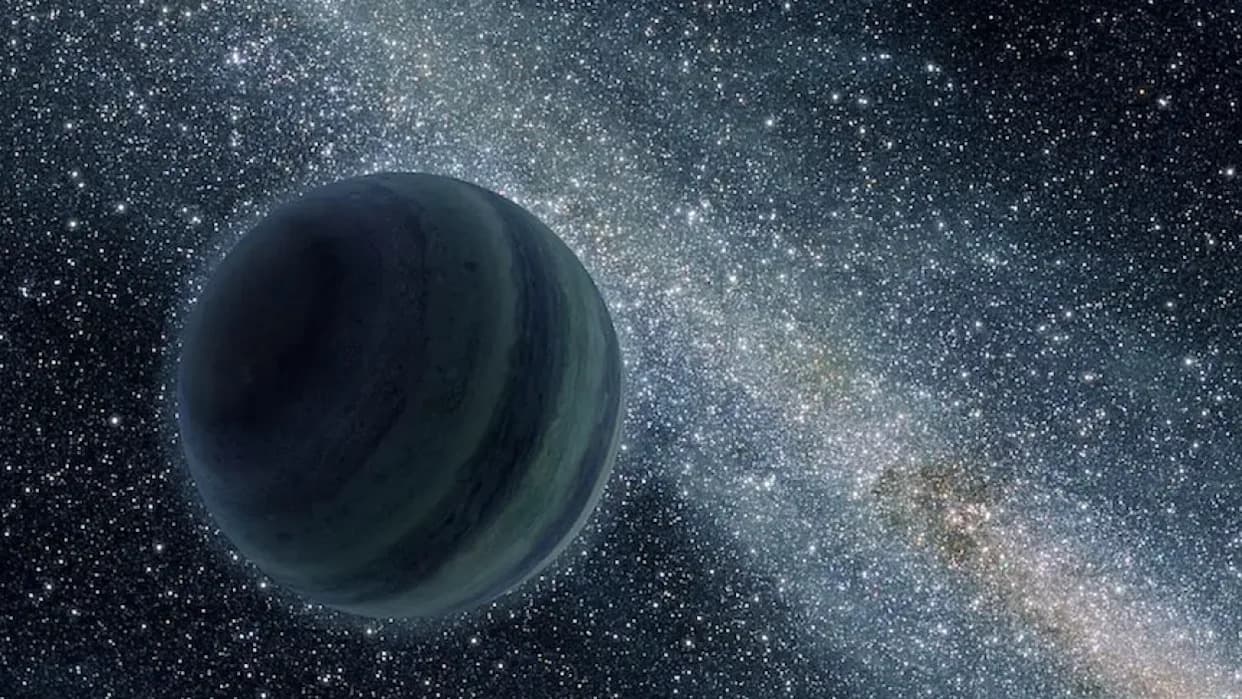
Some researchers have proposed a provocative idea: roughly every 26 million years, something disturbs the outer Solar System and leads to pulses of impacts and extinctions on Earth. The hypothetical culprit, nicknamed Nemesis, is usually imagined as a distant brown dwarf — a substellar object too massive to be a planet but too small to sustain hydrogen fusion — orbiting at an extreme distance of roughly 95,000 astronomical units (AU).
How Nemesis is supposed to work
The proposed mechanism is straightforward: if a distant companion periodically swings through or perturbs the outer Solar System, its gravity could jostle objects in the Oort Cloud. That disturbance could send a shower of comets inward, temporarily increasing the impact risk for planets, including Earth. To some observers, the apparent regularity of extinction events in the geological record suggested such an external driver might be worth investigating.
What searches have found — and not found
Over the past decades astronomers have used powerful infrared surveys to search for cold, faint objects in the distant Solar System. Space- and ground-based projects including WISE, 2MASS and IRAS were specifically sensitive to the thermal signatures of brown dwarfs and other cool bodies; so far, none has produced a convincing detection of a Nemesis-like companion in the volumes those surveys probed.
“The Sun is not part of a binary star system. There has never been any evidence to suggest a companion,” says NASA scientist David Morrison.
Planetary scientist Mike Brown — who discovered the dwarf planet Eris — points to persistent puzzles among distant objects: “There’s no way to put Sedna where it is. It never comes close enough to be affected by the Sun, but it never goes far enough away to be affected by other stars.”
Why some interest persists
Unusual orbits of trans-Neptunian objects (TNOs) such as Sedna, and apparent clustering in orbital parameters for some distant bodies, keep speculation alive. Proponents argue that gaps in observational coverage or particular orbital phases could hide a dim companion from current surveys. Skeptics counter that decades of increasingly sensitive infrared and optical surveys make a nearby stellar-mass companion progressively less likely.
What's next
Absence of evidence is not absolute disproof: future instruments and deeper, wider surveys will tighten constraints. Facilities such as the Vera C. Rubin Observatory (LSST), continued infrared programs, and improved data analysis methods for existing survey archives may either reveal previously unseen objects or place stronger limits that effectively rule out a Nemesis at those distances. For now, the hypothesis remains an intriguing, unresolved possibility rather than an established explanation for mass extinctions.
Bottom line: Nemesis is an interesting idea that connects geology and astronomy, but modern surveys have found no convincing companion. Outstanding puzzles in the outer Solar System keep scientific inquiry active, and upcoming observations should provide clearer answers.
Help us improve.