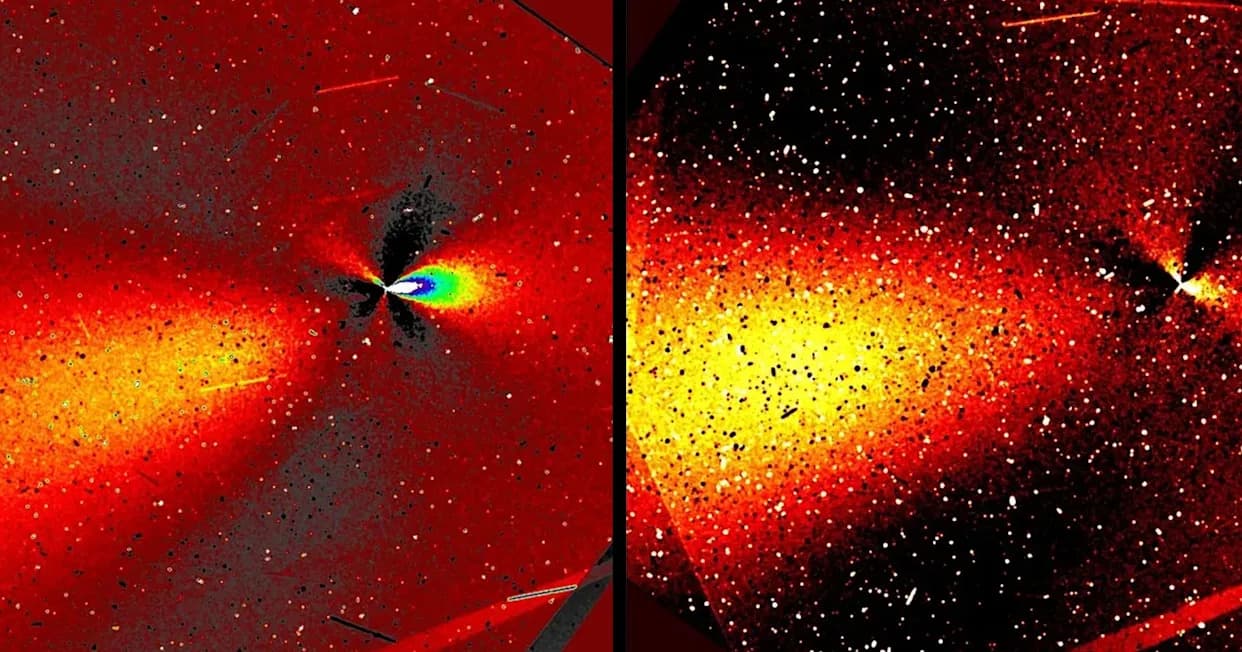
Astronomers analyzing nearly eight years of Hubble and ground-based data detected patterns in Betelgeuse’s light that point to an unseen companion crossing the star’s outer atmosphere and leaving a measurable wake. The companion appears to transit roughly every six years, a pattern that could explain the dramatic 2020 “Great Dimming.” The finding, presented at the American Astronomical Society and described in a preprint for the Astrophysical Journal, still requires follow-up observations to confirm the companion’s orbit and properties.
New Evidence Suggests Hidden Companion Caused Betelgeuse’s Strange Dimming
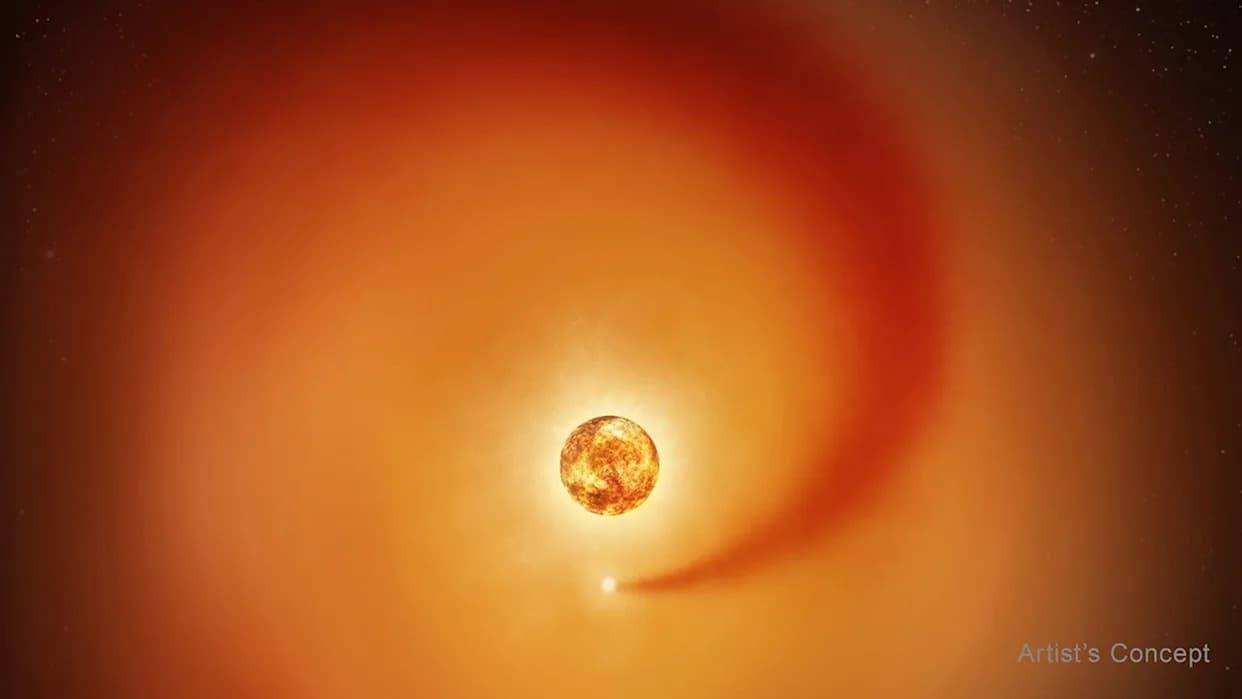
Astronomers say they may have finally solved one of the most puzzling behaviors of the night sky: why Betelgeuse, the red supergiant in Orion, sometimes fades dramatically and then brightens again. By analyzing nearly eight years of observations from the Hubble Space Telescope alongside ground-based data, researchers have found patterns in the star's light and atmosphere that point to an unseen companion crossing Betelgeuse’s outer layers and leaving a detectable wake.
The team reports the companion appears to transit across Betelgeuse roughly every six years, stirring the star’s tenuous atmosphere in a way that changes how it looks from Earth. If confirmed, this interaction would offer a natural explanation for episodes like the dramatic 2020 “Great Dimming,” when the star became unusually faint and prompted speculation that it might be about to explode as a supernova.
“It’s a bit like a boat moving through water. The companion star creates a ripple effect in Betelgeuse’s atmosphere that we can actually see in the data,” said Andrea Dupree, an astronomer at the Center for Astrophysics | Harvard & Smithsonian and lead author on a preprint of the study that is expected to appear in the Astrophysical Journal.
Researchers had previously predicted the existence of a companion—sometimes referred to in preliminary work as Siwarha—based on indirect clues, but direct evidence was limited. These new observations provide a stronger, more direct signal of a wake consistent with a companion moving through Betelgeuse’s outer layers, though follow-up observations are needed to confirm the orbit and properties of the secondary object.
Why this matters: Understanding this companion interaction helps scientists map how massive stars lose mass, how their outer atmospheres behave, and the processes that lead up to the final collapse and explosion as a supernova. The results were presented at the American Astronomical Society annual meeting and are described in a preprint to be published in the Astrophysical Journal.
Next steps: Astronomers will continue monitoring Betelgeuse across wavelengths and with high-resolution instruments to confirm the companion's orbit, measure its properties, and test whether similar wakes appear during future transits.
Help us improve.