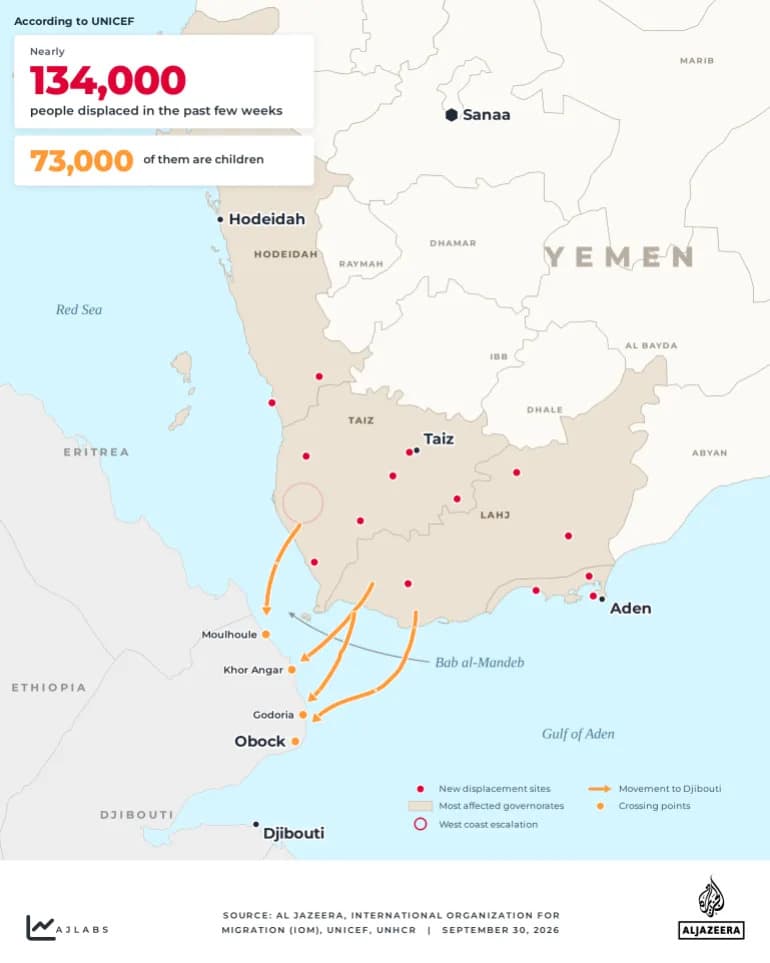
The Houthi offensive that began in early September has displaced almost 134,000 people and deepened an already severe humanitarian crisis across Yemen. Camps and makeshift shelters lack food, clean water, toilets and full medical care, leaving children at high risk of acute malnutrition and disease. UN agencies warn that more than 18 million Yemenis will face acute food insecurity in 2026, and aid access must increase urgently to prevent further loss of life.
‘We No Longer Eat Three Meals’: New Offensive Drives 134,000 From Homes and Deepens Hunger in Yemen
Interactive_Yemen_displacement_4x5 (5)-1790760141
Mohamed Saed's children still call him to the table: "Come on, Dad, come eat." More often than not he tells them he is already full — even after long hours without food. The 46-year-old teacher has not been paid for years and, displaced multiple times since Yemen's war began, now shares a single room in Taiz with his wife and five children while falling behind on rent.
Interactive_Yemen_Sept 30-05-1790760214
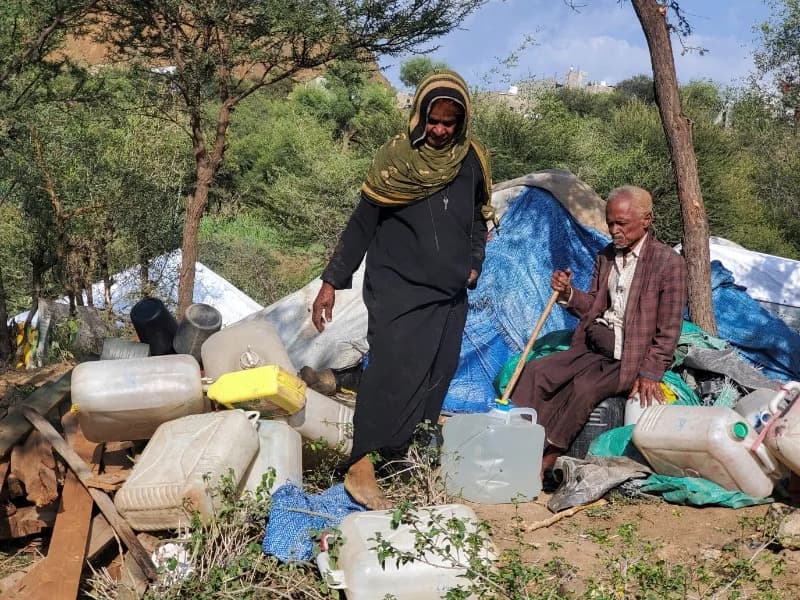
"We no longer eat three meals. Maybe two meals and sometimes one meal," he told Al Jazeera — a sentiment repeated across camps and makeshift shelters where families ration what little they have.
Front Lines, New Offensive
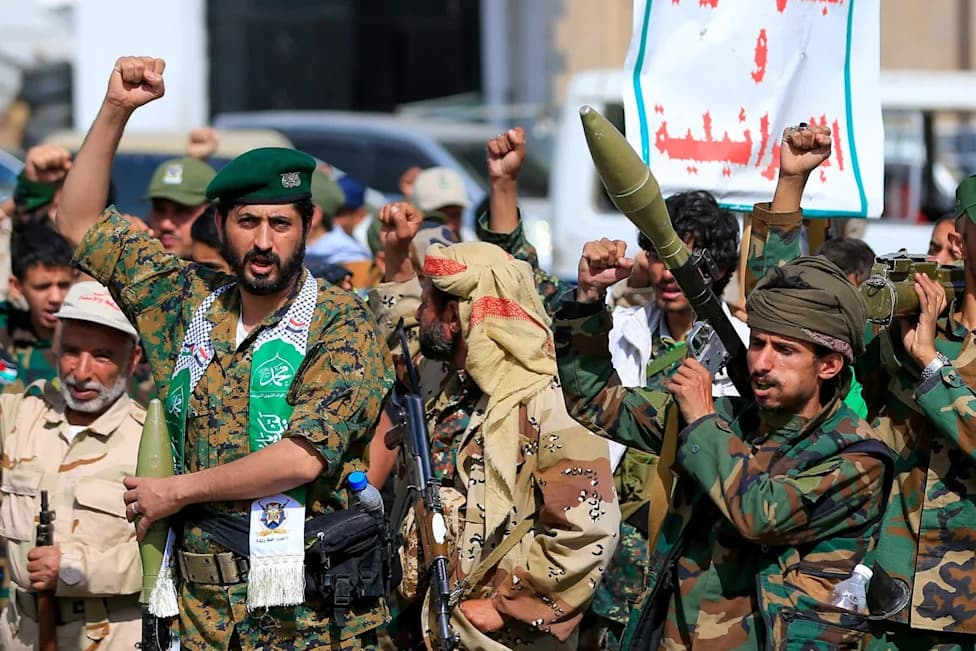
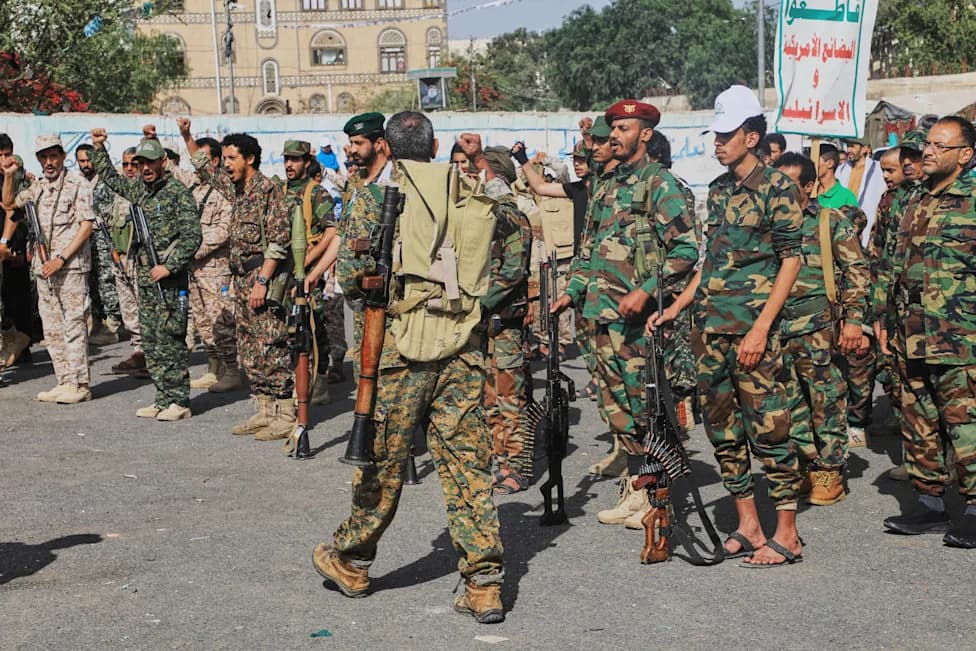
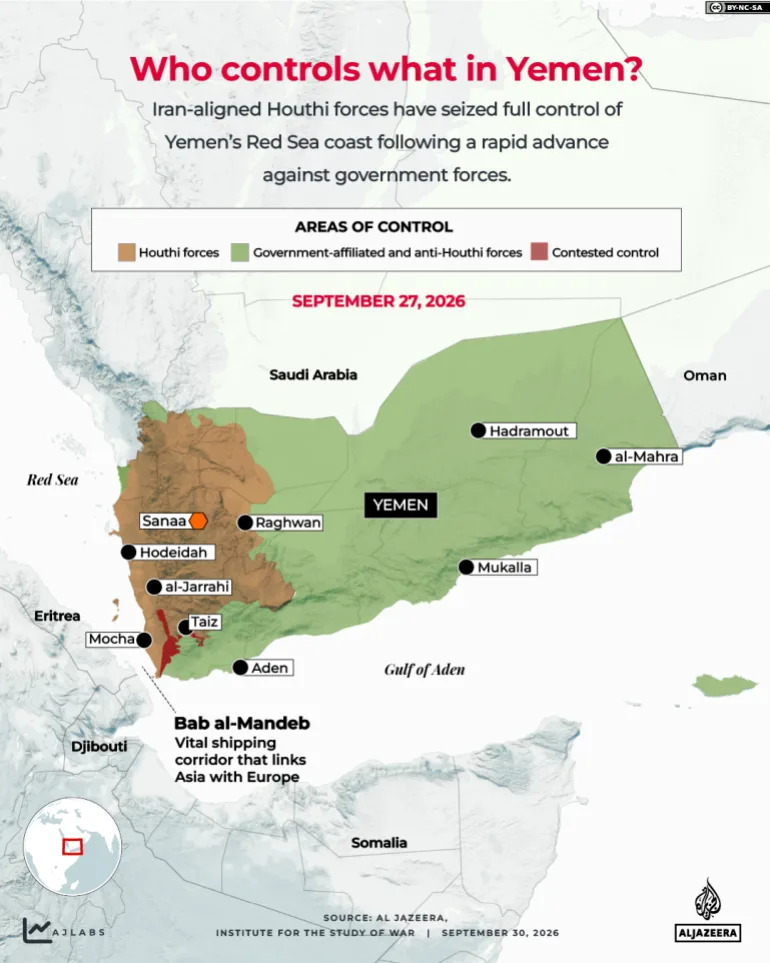
Since early September a major Houthi ground offensive west of Taiz has reshaped front lines after more than a decade of conflict. Houthi fighters captured large stretches of the Red Sea coastline down to the Bab al-Mandeb strait, a strategic global shipping chokepoint. Saudi Arabia has responded with air strikes, and the Houthis have mounted drone and missile attacks on Saudi territory.
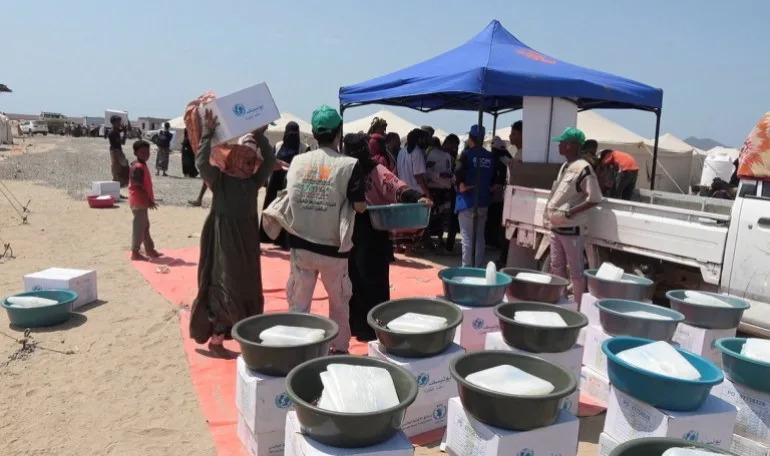
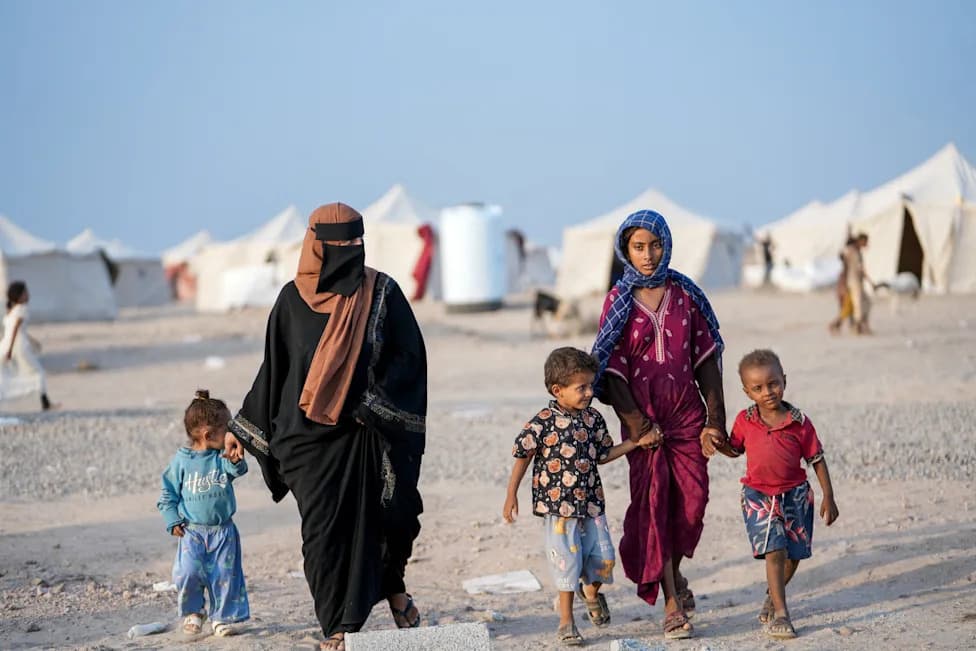
People who fled fighting between the Houthis and government forces in Red Sea coastal areas hold food they received at a camp for internally displaced people near Aden, Yemen, on September 23, 2026 [Reuters]
Human Cost and Displacement
The latest fighting has forced nearly 134,000 people from their homes, including an estimated 73,000 children, UNICEF reports. The World Health Organization says 838 people have been killed and more than 3,600 injured since early August, with most casualties occurring after the ground offensive began on September 3. UNICEF has verified at least 15 children killed and 14 injured since September 3; three more children are reported missing.
Interactive_Yemen_Sept 30-03-1790760290
Life in Camps and Shelters
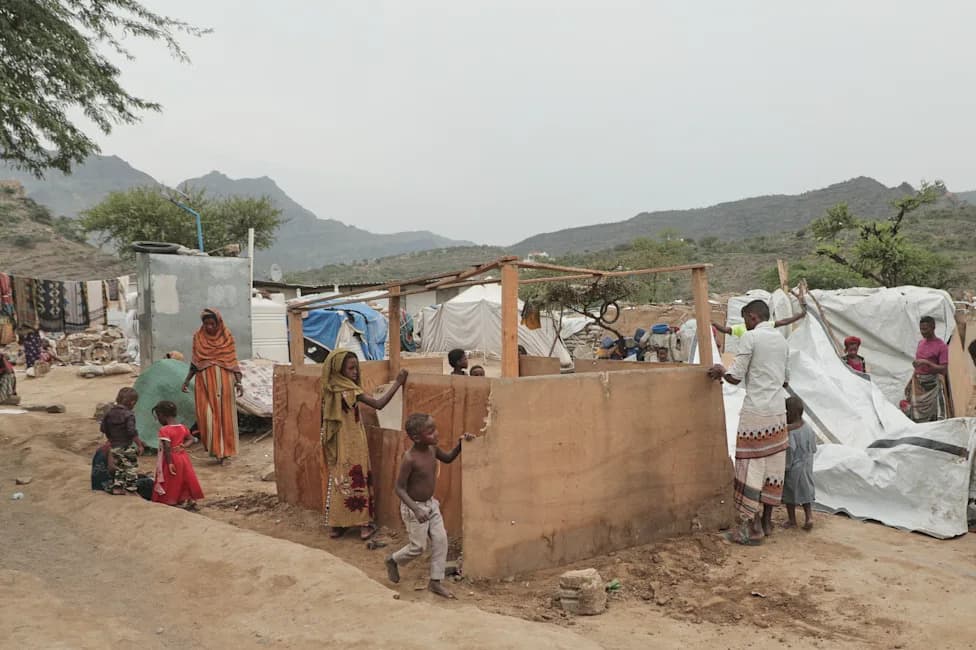
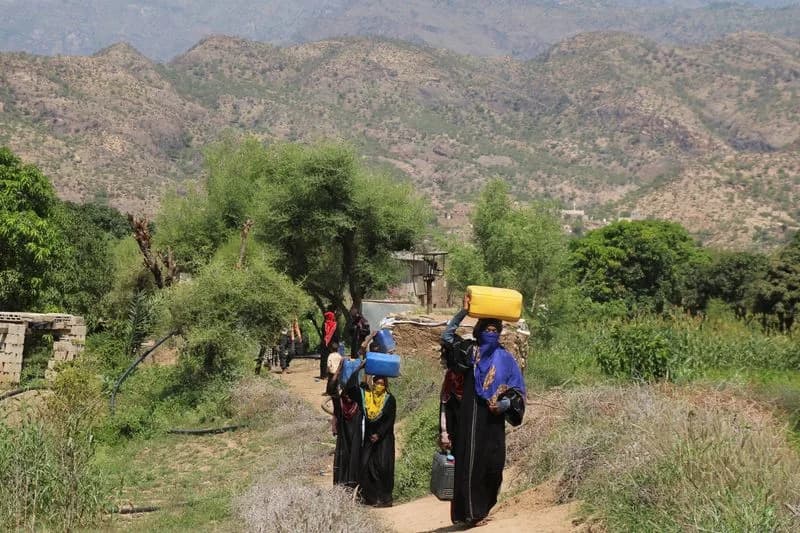
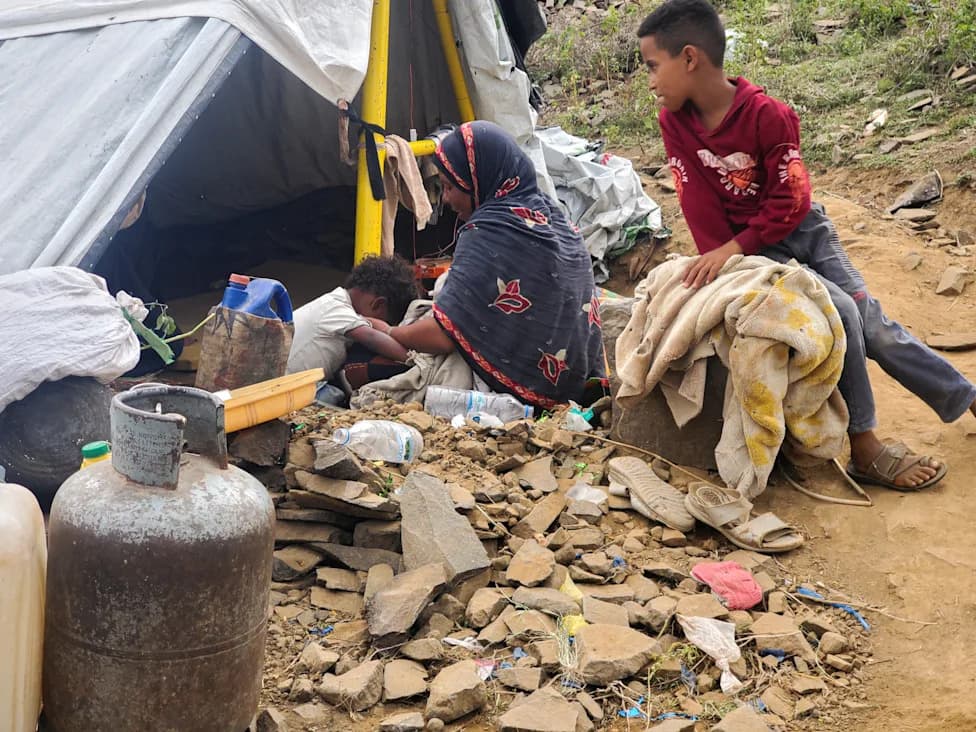
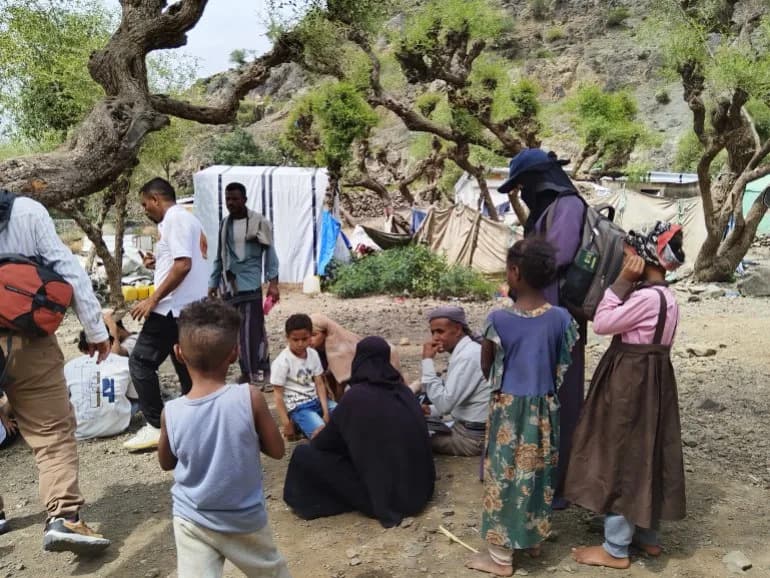
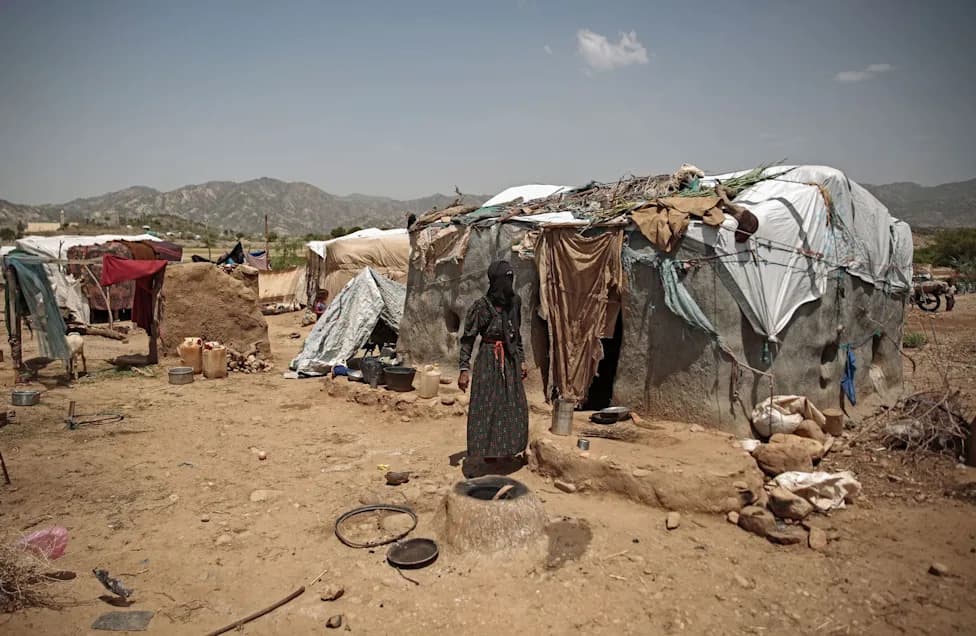
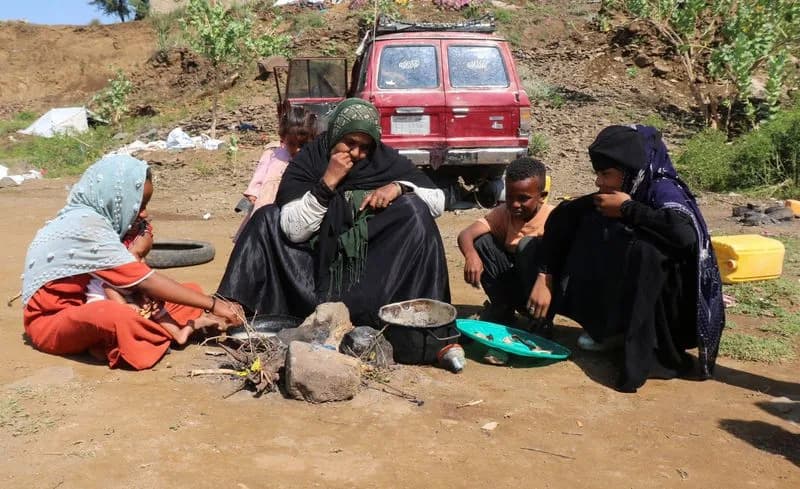
Displaced families describe overcrowded, unsanitary conditions. In al-Shaqadif camp near Taiz, Ruqqaya Saeed — a 25-year-old mother of eight — says no humanitarian agency has provided food to her household. They sleep under leaking tarpaulins, lack blankets and have no toilets: women often wait until night to go to isolated spots. Children are falling ill with diarrhoea, dysentery and respiratory infections, and families lack access to clean water and full medical treatment.
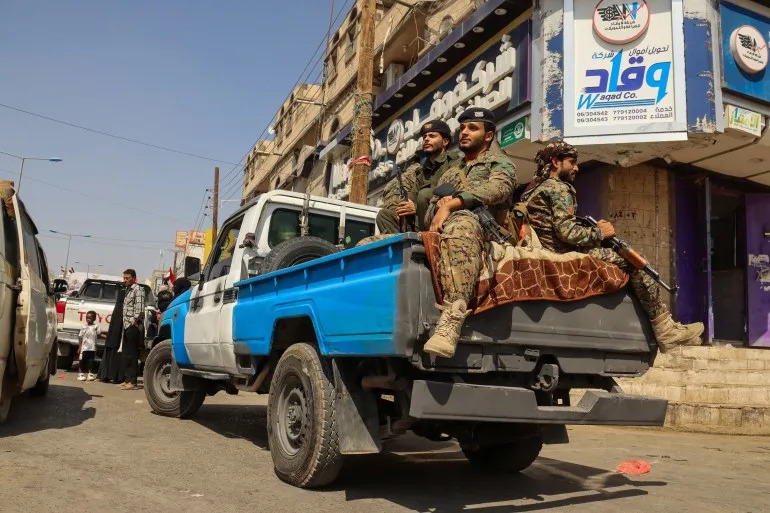
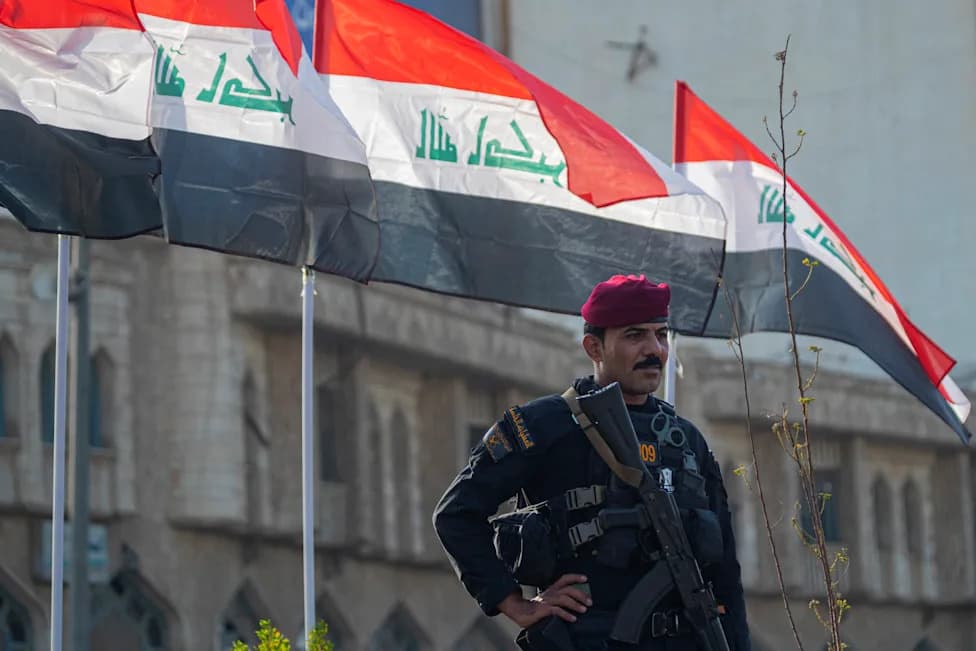
Police troopers patrol a street in the oil-rich city of Marib, Yemen, on September 24, 2026 [Ali Owidha/Reuters]
Enas Abdullah Abdo, 23, fled Hadhran with three children on the second day of the offensive. She and about 15 relatives now share a small, damaged house; they spent a modest cash gift from an aid group on essentials but remain short of food, bedding and medicines. Displacement has also interrupted schooling for several children who could not retrieve their records.
Hunger, Malnutrition and the Outlook
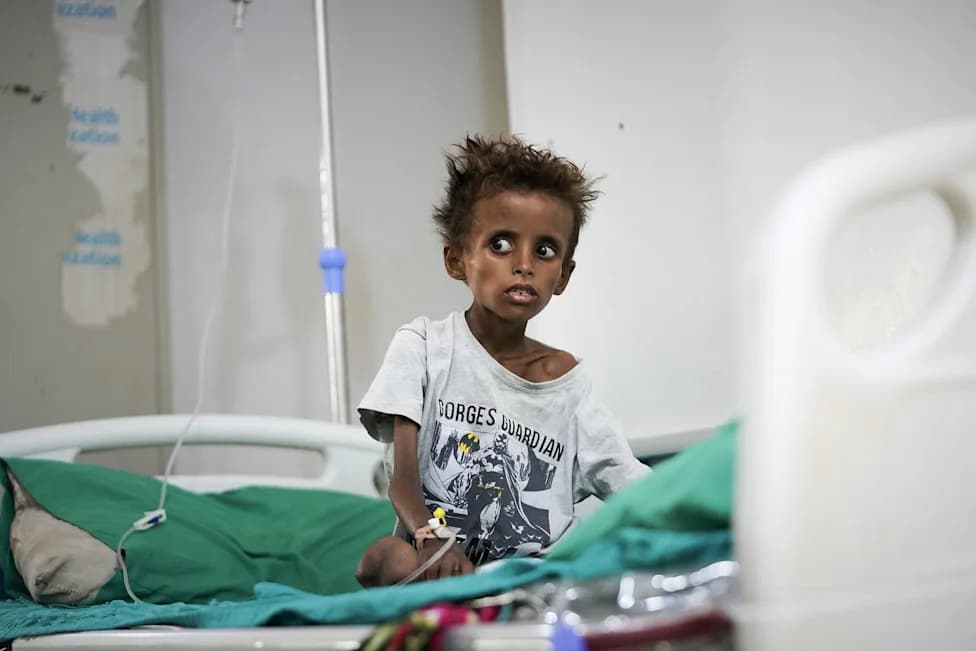
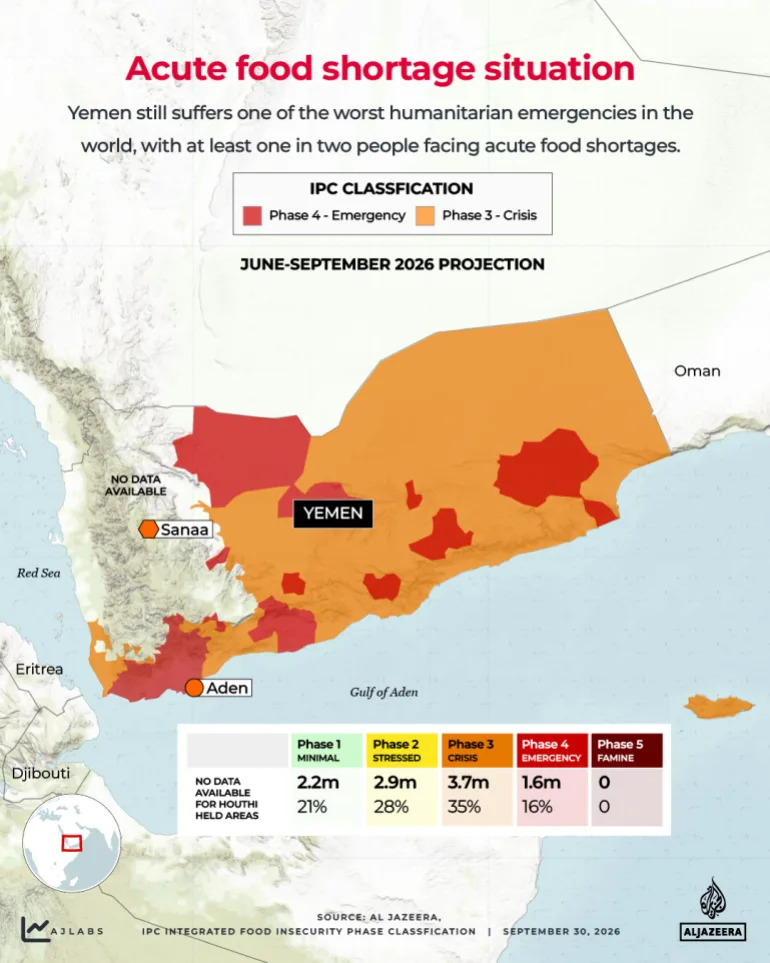
Yemen — a country of roughly 43 million people — faces a catastrophic hunger crisis. The United Nations estimates more than 18.3 million people will face acute food insecurity in 2026. Even before the recent escalation, more than 2.2 million children under five were projected to be acutely malnourished this year, with more than 500,000 expected to suffer severe acute malnutrition, UNICEF warns.
The Integrated Food Security Phase Classification (IPC) reported that nearly five million people in government-held areas faced crisis-level hunger or worse between March and May; it projected 5.3 million at crisis or worse during the June–September lean season and expects around 5.4 million to remain in crisis from October to December.
Gaps in Aid and Urgent Needs
Humanitarian response is struggling to keep pace. Displaced families need food, safe water, sanitation, warm shelter and complete medical care. Without a scaled-up, sustained response, malnutrition and disease will worsen, and children will become increasingly vulnerable to the long-term physical and psychological harms of conflict and deprivation.
What matters now: more secure access for aid organisations, emergency health and nutrition services for children, and shelter and sanitation support to limit disease outbreaks this winter.
Help us improve.