Most judges on the D.C. Circuit signaled they may allow Chief Judge James Boasberg to resume a criminal contempt probe into whether Trump administration officials defied his March 2025 order halting deportations of more than 100 men to El Salvador's CECOT prison. DOJ lawyers argued that criminal contempt investigations are for prosecutors and that verbal orders are not enforceable injunctions; several judges expressed skepticism. The en banc court must now decide whether limited fact-finding — or appointment of a special master — can proceed so prosecutors can determine whether to pursue charges.
Appeals Court May Allow Judge To Resume Criminal Contempt Probe Of Trump Officials Over Deportations

SAN VICENTE, EL SALVADOR - APRIL 23: Gang members listening to a virtual hearing during a massive court hearing for gang members of the 'Mara Salvatrucha' (MS-13), held at the Terrorism Confinement Center (CECOT), in the municipality of Tecoluca, in San Vicente, El Salvador on April 23, 2026. Anadolu via Getty Images
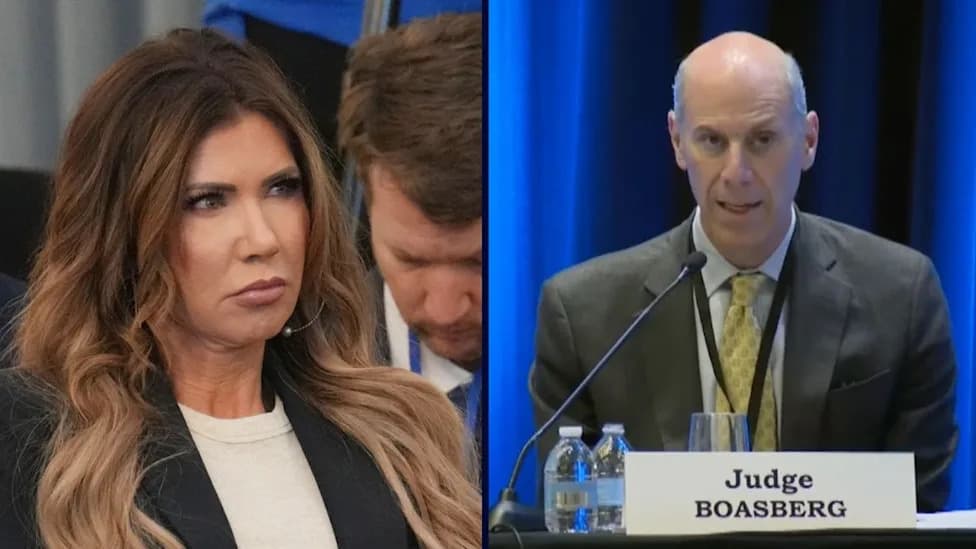
A majority of judges on the U.S. Court of Appeals for the D.C. Circuit signaled on Tuesday that they may permit Chief U.S. District Judge James Boasberg to resume a criminal contempt investigation into whether senior Trump administration officials defied his March 2025 orders when more than 100 men were deported to El Salvador's CECOT prison.
Background
The dispute centers on actions taken after President Trump invoked the Alien Enemies Act in the early hours of March 14, 2025 — a rarely used 18th-century statute that authorizes removal of noncitizens during an ongoing incursion. Although the invocation was not publicly disclosed until March 15, the government moved to detain and remove over 100 Venezuelan migrants and asylum seekers to El Salvador and Honduras. Civil-rights groups including the ACLU and Democracy Forward sued to block the removals, arguing the men were denied individualized habeas hearings and were labeled based on limited or generalized evidence.
What the Court Considered
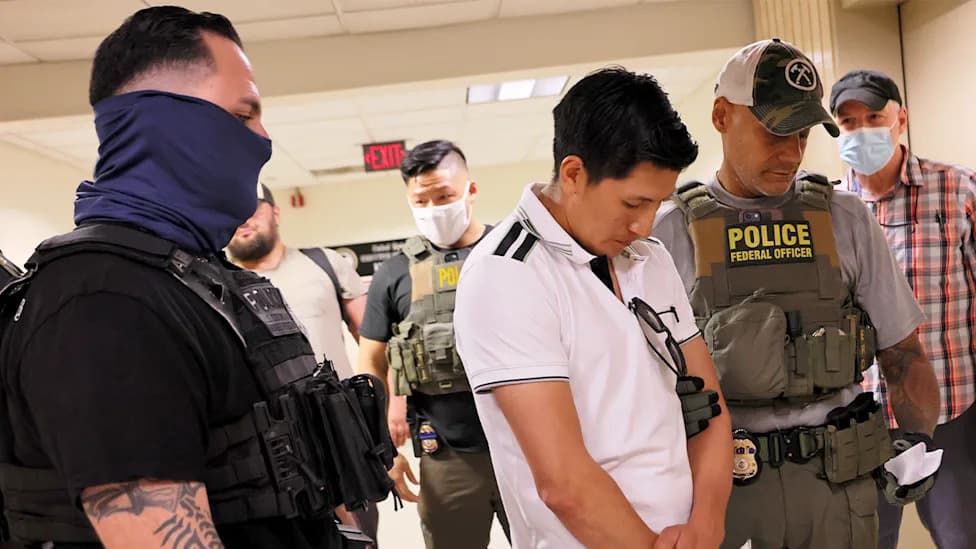
Boasberg issued an order at a March 15 hearing directing the government to halt further deportations under the Alien Enemies Act and to turn back any flights already en route. The government nevertheless completed the removals, and the men were processed at CECOT. Within 24 hours, El Salvador's president, Nayib Bukele, posted videos of prisoners and mocked the judge's order on X.
A three-judge panel of the D.C. Circuit previously split 2-1 in April and paused Boasberg's inquiry; the full 11-member court is now rehearing the case en banc. At Tuesday's argument, Justice Department attorney Brett Shumate argued that criminal contempt fact-finding and prosecutions are the province of prosecutors, not district judges, and that verbal court directives are not independently enforceable as injunctions. He also defended the department's limited declarations about who participated in removal decisions.
Judges' Concerns
Judge Michele Childs pushed back, noting that the district court's fact-finding was cut short and no referral to prosecutors had been made. Childs and Judge Patricia Millett questioned whether the narrow factual inquiries Boasberg sought—such as who was on relevant calls, who heard the judge's orders, and who supervised the removals—were appropriate to determine whether a prosecutor should pursue contempt charges.
Childs: Boasberg "was not probing the mental state" of then-Secretary Kristi Noem but sought basic facts that could inform a referral to prosecutors.
Millett also asked whether an attorney who advised a cabinet official to ignore a court order might themselves face contempt — a matter she said would be "an interesting question for prosecutors."
Arguments For The Challengers
ACLU attorney Lee Gelernt, representing the challengers, said Boasberg's requests were straightforward: the judge twice ordered the government to turn the planes around and not disembark the men, and he wanted to know who heard those orders and disregarded them. Gelernt urged that if the appellate court had concerns about procedure, it could allow limited fact-finding under clear parameters or appoint a special master to ensure independence from the Justice Department.
Why It Matters
At stake is the balance between executive authority over deportations and the judiciary's ability to enforce its orders and protect due process. The en banc court's decision will determine whether the district court can complete fact-finding that could lead to referrals for criminal contempt prosecutions, or whether prosecutors — not judges — must initiate any such inquiry.
The judges appeared skeptical of a blanket claim that the court must accept the government's word that no contempt occurred without more probing. The case now awaits the full court's ruling.
Photo caption: In San Vicente, El Salvador, a large hearing for alleged gang members was held at the Terrorism Confinement Center (CECOT) in Tecoluca on April 23, 2026. (Anadolu via Getty Images)
Help us improve.