Stanford researchers implanted human cortical organoids into neonatal mice engineered to lack much of their cortex, reporting the work in Nature on 16 September 2026. The grafts grew ~4.7× and filled about 92% of the available cortical cavity, integrated with mouse circuits, and produced primate-specific cell types. Behavioral tests showed functional contributions but no evidence of human-like consciousness; experts note structural irregularities and ethical questions. The model may enable testing patient-derived therapies in living human neural tissue while prompting calls for updated regulation.
Stanford Grows Human Cortical Tissue Inside Mice, Pushing Limits of Neuro-Chimeric Research
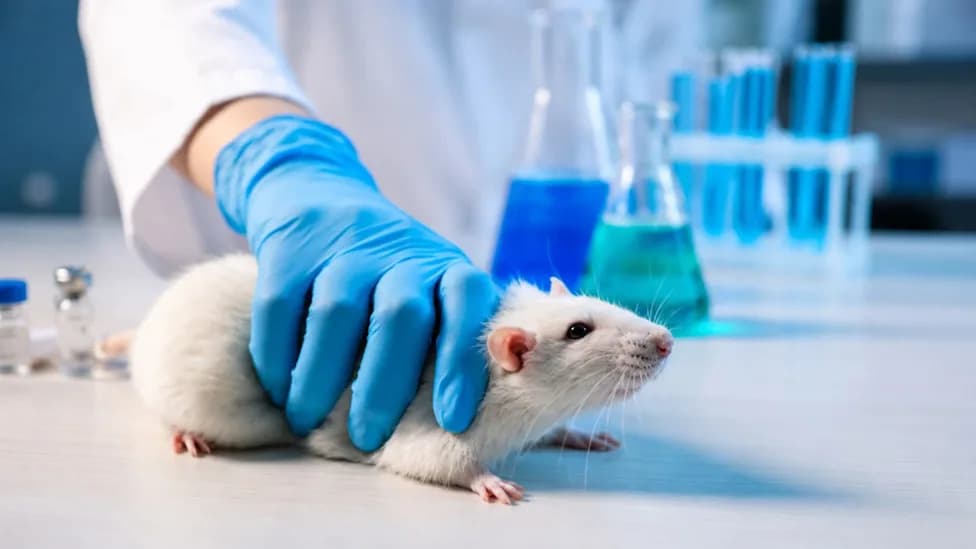
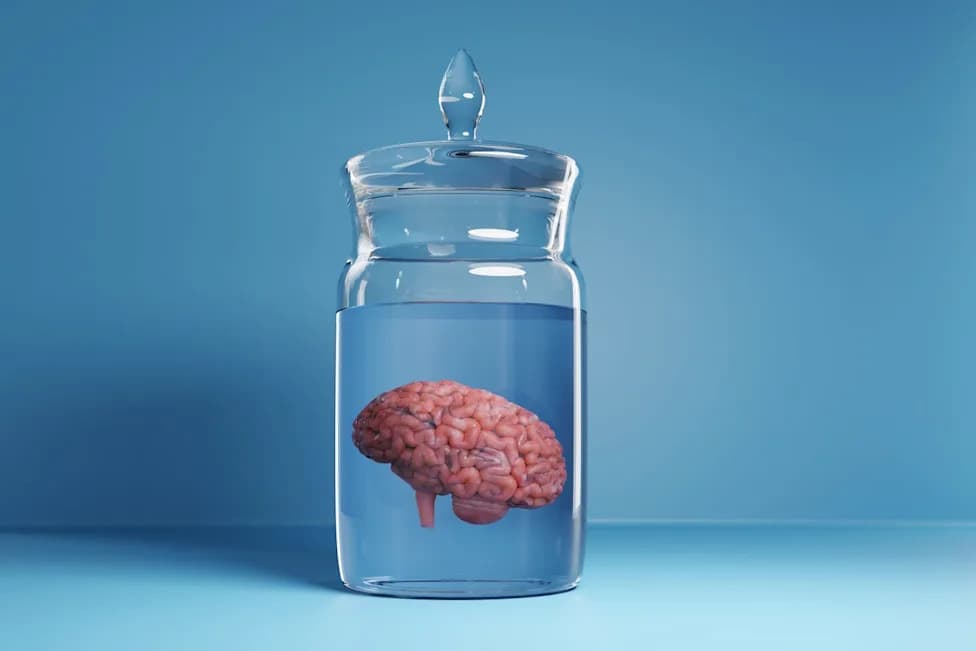
Image: Deposit Photos
Stanford University researchers led by Prof. Sergiu Pașcă report a major advance in neurobiology: human cortical organoids grown from patient cells were implanted into neonatal mice genetically engineered to lack much of their cerebral cortex. The study, published in Nature on 16 September 2026, describes how the grafted human tissue integrated with the host brain, produced primate-specific cell types, and sent projections into the animals' spinal cords.
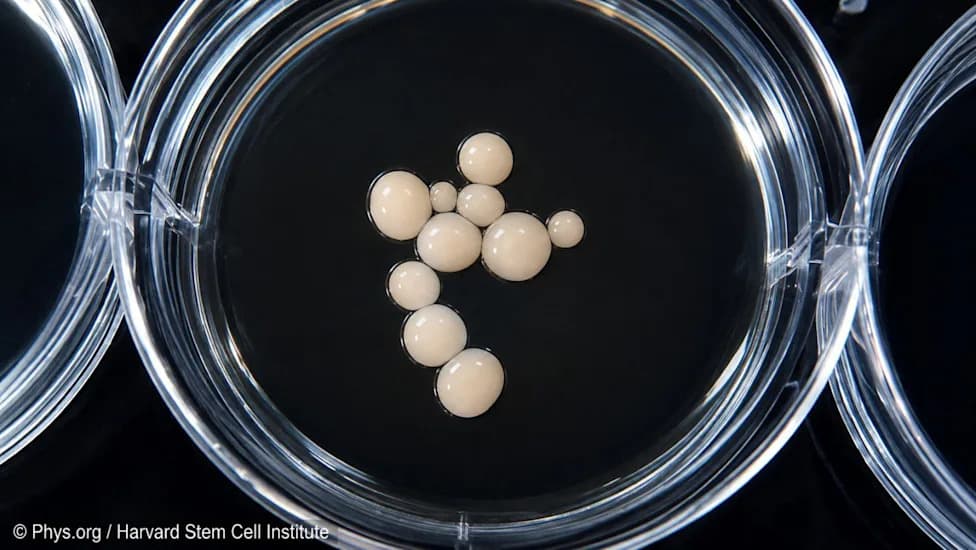
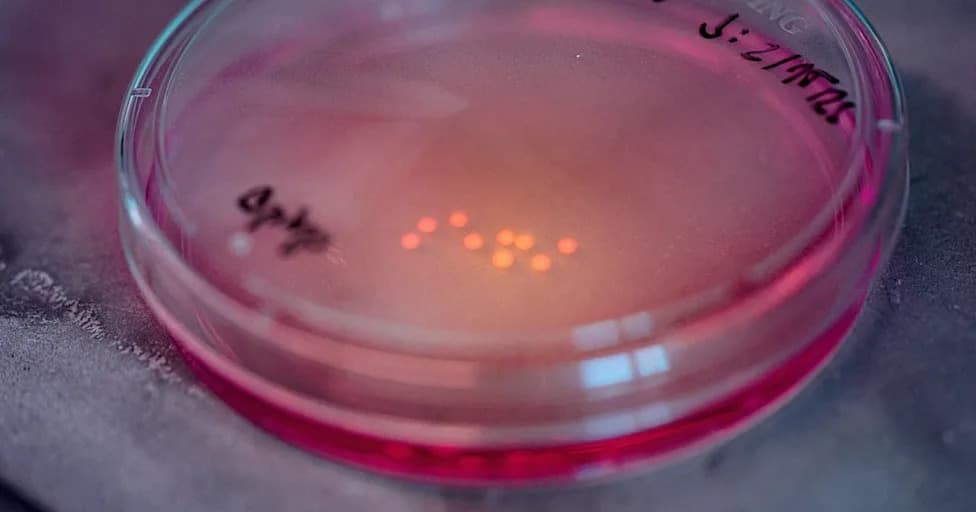
How the model was made. The team used genetic edits to prevent the survival of precursor cells that normally form the mouse cerebral cortex (and in some lines the hippocampus), leaving large cavities in the developing brain. Human skin cells were reprogrammed into induced pluripotent stem cells, differentiated into three-dimensional cortical organoids, and implanted into mice aged 5–17 days.
Growth and integration. According to the Nature paper, the human grafts expanded roughly 4.7-fold in volume over two to three months and ultimately occupied about 92% of the available cortical space in the engineered cavities. The human cells formed synaptic connections with surrounding rodent circuitry and extended long-range projections, including axons that reached the spinal cord.
Human-specific development preserved. Crucially, the transplanted tissue produced cell types reported only in human and other primate brains, not in normal mice. That finding suggests the human developmental program remained active and species-specific even within a rodent neural environment.
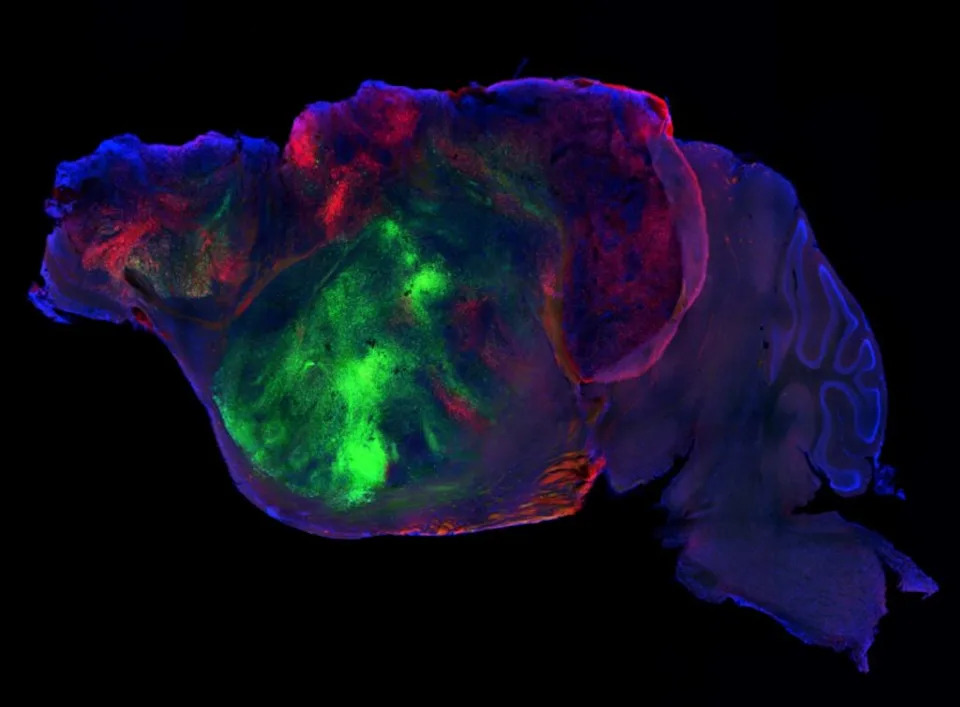
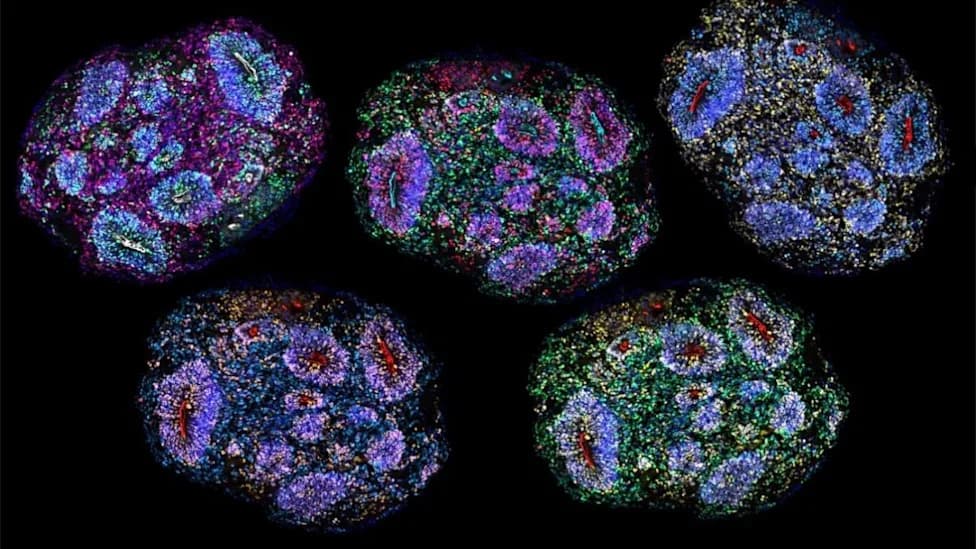
Transplanted human brain tissue extends nerve fibres (green and red) into a mouse brain (blue) that lacks a cerebral cortex. Credit: S. Pașca lab, Stanford University
Numbers and caveats. Media coverage and commentary include additional metrics: reporting in The Guardian noted the graft replaced an estimated ~14 million missing mouse neurons with roughly 4 million human neurons and occupied around half the brain by overall volume in some animals. Experts emphasize that these figures reflect different measurement approaches and that the model has structural irregularities—researchers described the emergent human cortex as "a bit messy," lacking the tidy laminar architecture of a typical human cortex.
Behavior and ethics. In standard behavioral assays these animals largely behaved like typical mice. In maze tests, mice with implanted human tissue outperformed cortex-depleted animals that received no graft, suggesting functional contributions from the human tissue; independent ethicists reported no evidence of human-like consciousness or self-awareness. The work proceeded under independent ethical oversight and welfare protocols, and ethicists and neuroscientists caution that advancing neuro-chimeric models will require updated regulatory frameworks.
Scientific and clinical implications. The model creates the possibility of testing therapies in living human neural tissue in an in vivo context, including patient-derived organoids that may capture individual genetic and developmental features—potentially improving preclinical tests for disorders such as epilepsy, autism, cerebral palsy and schizophrenia. At the same time, multiple experts predict the approach will be useful for targeted questions in specialized labs rather than serving as a universal replacement for conventional models.
Outlook: As neuro-chimeric models become more sophisticated, research communities and regulators will face concrete decisions about permissible boundaries and oversight for human-animal brain integration.
Help us improve.