Researchers analyzing DNA and health data from more than 3.3 million 23andMe participants identified a rare inherited EGFR variant (T790M) that sharply raises lung cancer risk, including among lifelong nonsmokers. Nonsmoking carriers were about 62 times more likely to develop lung cancer than nonsmoking noncarriers, and overall carriers had roughly 25-fold higher odds. The variant is uncommon nationally but concentrated in parts of the U.S. Southeast, carriers tend to develop cancer about five years earlier, and a CT-screening trial for carriers is now under way.
Rare Inherited EGFR Variant Dramatically Raises Lung Cancer Risk in Nonsmokers, Study Finds
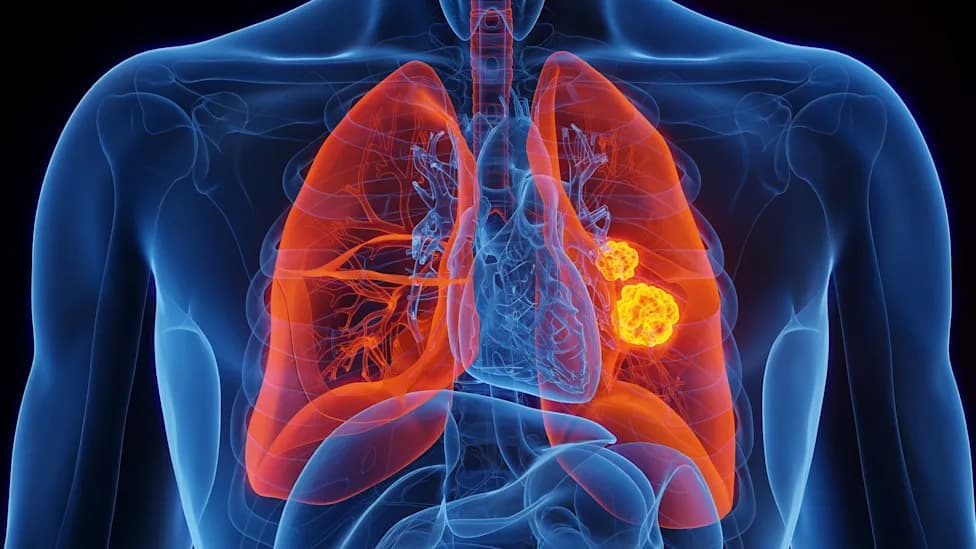
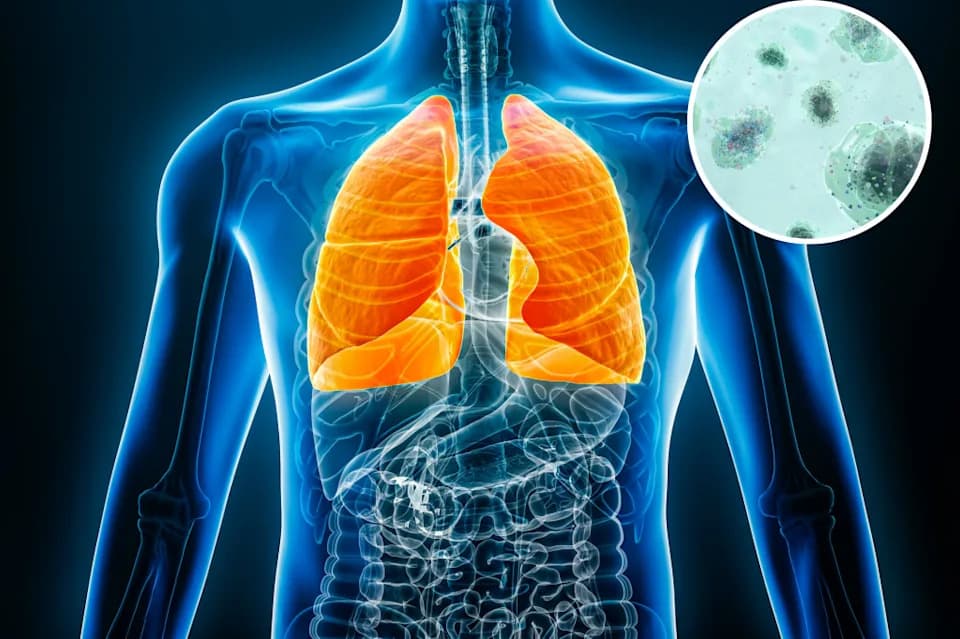
An illustration of a human torso showing the lungs in red with two yellow spheres in the left lung.
Scientists report that a rare inherited change in the EGFR gene—known as the T790M variant—is associated with a dramatically increased risk of lung cancer, even among people who have never smoked.
In a study published Sept. 17 in Science, researchers analyzed DNA and health data from more than 3.3 million 23andMe customers who consented to research use of their information. That large dataset included 641 people carrying the germline EGFR T790M variant, allowing the team to estimate its impact on lung-cancer risk with better precision than prior efforts.
Key Findings
Risk Magnitude: Nonsmokers who carried T790M were about 62 times more likely to develop lung cancer than nonsmokers without the variant. When combining smokers and nonsmokers, carriers had roughly 25-fold higher odds of lung cancer than noncarriers. Among people who smoked, carriers still showed substantially elevated risk—about an 11-fold increase compared with other smokers.
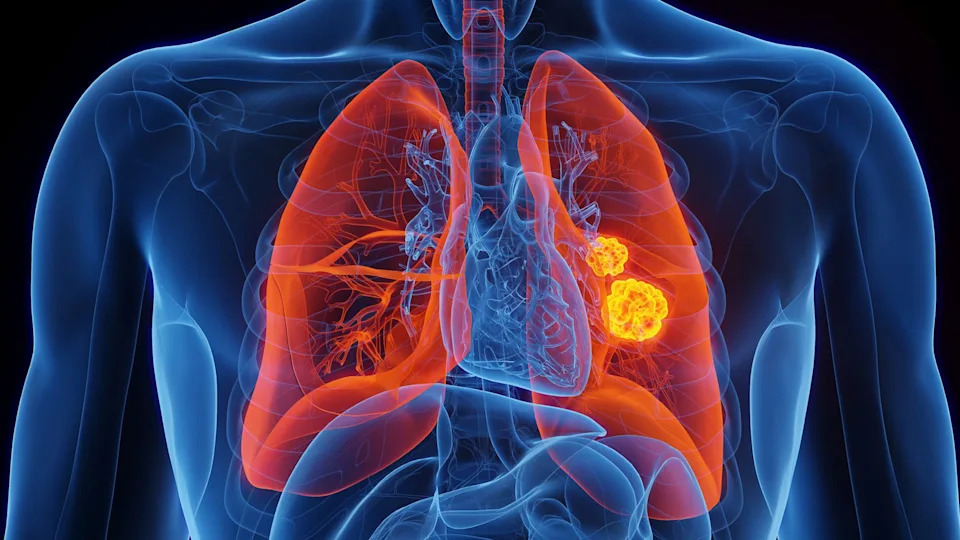
A new study used 23andMe data to pinpoint a rare gene mutation linked to a higher risk of lung cancer. | Credit: SEBASTIAN KAULITZKI/SCIENCE PHOTO LIBRARY via Getty Images
Prevalence: The T790M variant is rare in the general population—roughly 1 in 15,850 people in the dataset. However, it was more concentrated in the U.S. Southeast, especially among contributors born in Alabama, Mississippi and Tennessee, where the frequency was about 1 in 2,078.
Geography and History: The researchers used genealogical and historical records to infer a likely founder effect: they suggest settlers from the British Isles brought the variant to North America in the early 1700s and that relative isolation in parts of southern Appalachia increased its local frequency over generations.
Clinical and Research Implications: Carriers tended to develop lung cancer roughly five years earlier than noncarriers on average. The variant was not associated with other cancers or with noncancerous lung conditions in this analysis. Because T790M affects both risk and treatment decisions for EGFR-driven tumors, experts recommend considering genetic testing for patients with a family history of lung cancer in nonsmokers or when relatives are known carriers.

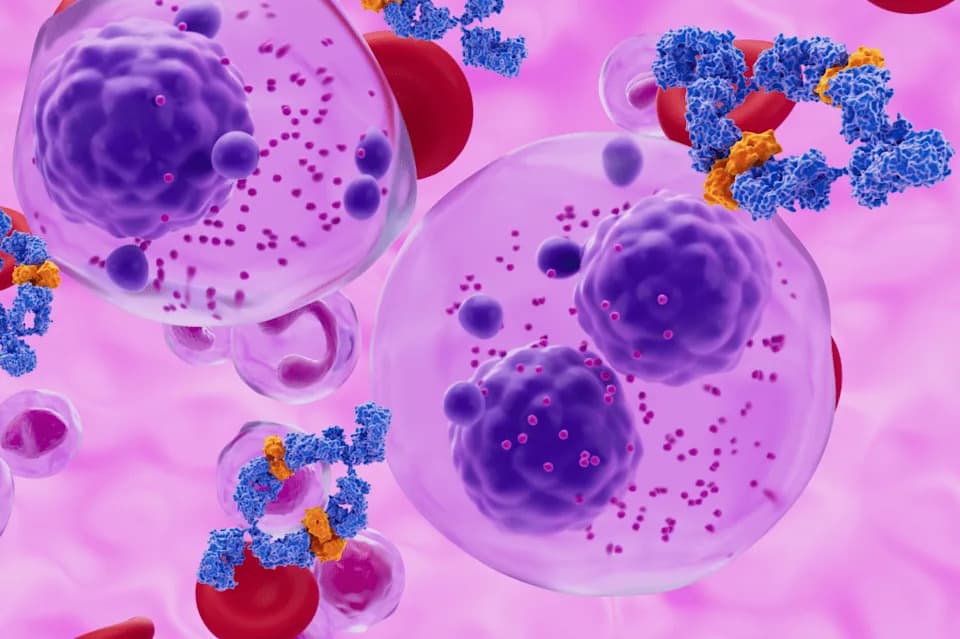
The T790M mutation is relatively rare in the general population. | Credit: Louis Koo via Getty Images
A clinical trial is now underway to evaluate low-dose CT screening specifically in people who carry T790M; the study will also examine how carrier risk changes with age. Researchers called for follow-up work to understand the biological mechanisms by which T790M increases cancer risk and to study environmental interactions (for example, exposure to particulate air pollution). They also expect additional, very rare inherited variants that increase lung-cancer risk may be identified with larger or more targeted datasets.
Expert Perspectives and Caveats
“This is a very important finding,” said Chris Amos, a genetic epidemiologist at Baylor College of Medicine who was not involved in the study, noting that the prevalence and impact of T790M were previously poorly characterized. Stephen Chanock of the National Cancer Institute emphasized that, although the variant sharply raises individual risk, its rarity means it likely accounts for only a small fraction of all lung-cancer cases nationwide.
The study relied on a direct-to-consumer dataset (23andMe) that provided statistical power to study this rare germline variant; by contrast, large public resources like the All of Us Research Program and the UK Biobank contained only 19 and two T790M carriers, respectively.
Bottom line: T790M is a rare inherited EGFR variant that substantially increases lung-cancer risk—most strikingly among nonsmokers—warranting further research, targeted screening trials, and consideration of genetic testing in appropriate family contexts.
This article is for informational purposes only and does not constitute medical advice.
Help us improve.