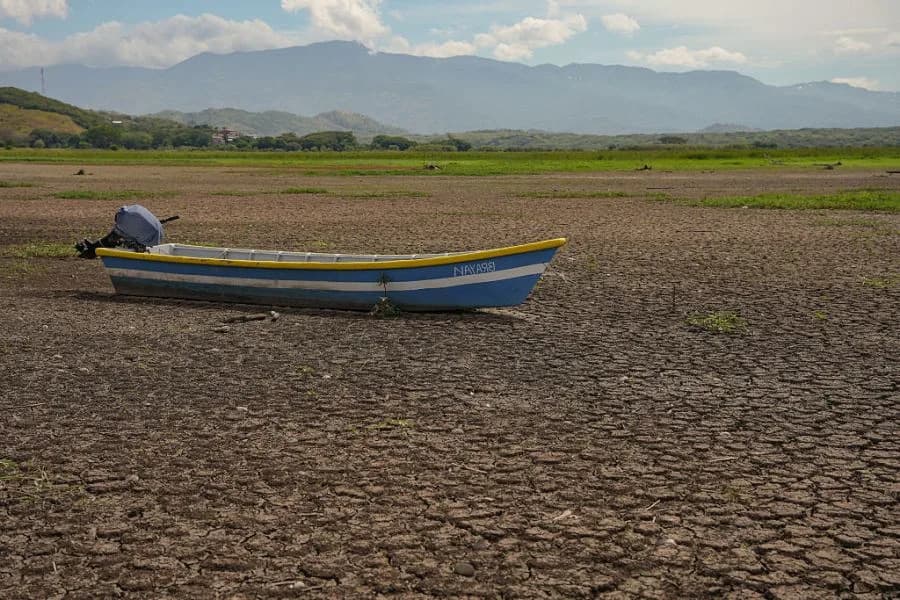
The Southern Plains have endured a six-year drought that cost agriculture an estimated US$23.6 billion from 2020–2024, forcing mass cattle sell-offs, shrinking herds and widespread crop failures. Repeated La Niña winters, rising temperatures and severely depleted water stores — including record-low reservoirs and the Edwards Aquifer serving ~2.5 million people — have prolonged the crisis. While a shift toward El Niño could bring relief later in 2026, sustained multi-month precipitation is needed to reverse the damage.
Six-Year Drought Tightens Grip on Southern Plains — Ranchers, Reservoirs and Crops Face Harsh Summer
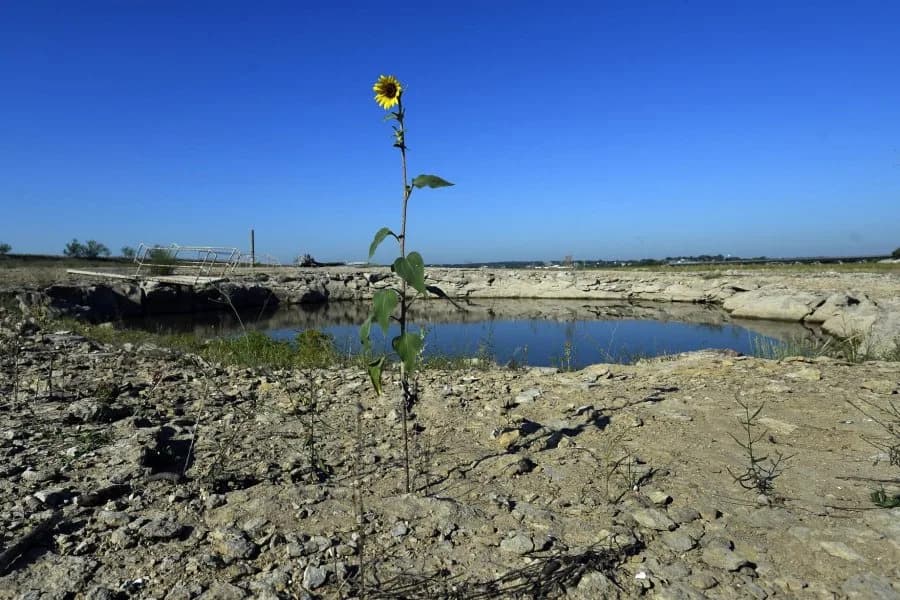
A pair of researchers look into causes and damage from the ongoing drought in the Southern Plains, which is expected to make for a difficult summer. File Photo by Larry W. Smith/EPA
In June 2022, a nearly around-the-clock cattle auction in Texas’ Lake Country illustrated the human and economic toll of a long-running drought: ranchers sold more than 4,000 animals in an auction that lasted almost 24 hours — roughly 200 cows an hour — as water supplies dwindled and pastures turned to dust.
A Regional Crisis
The Southern Plains — particularly parts of Texas, Oklahoma and Kansas — have endured a persistent dry spell since 2020. From 2020 through 2024 the drought cost agriculture across those states an estimated US$23.6 billion in lost crops, higher feed costs and herd liquidations, and dried rangelands contributed to devastating wildfires.
Drivers of the Drought
Weather and Climate
The region is a known hot spot for rapid drought development. From 2020–2025, documented "flash droughts" — rapid onset or severe intensification events — occurred at least five times. A persistent La Niña pattern influenced five of the past six winters, bringing warmer, drier conditions to much of the Southern Plains and contributing to the drought’s longevity. As global temperatures rise, research indicates the frequency and severity of such rapid drought events are likely to increase.
Deeply Rooted Water Shortages
Surface water and groundwater have been drawn down to record lows. San Antonio’s reservoirs and the Edwards Aquifer — which supplies roughly 2.5 million people — reached record-low levels in 2024 and 2025 and remained depressed into 2026. Many central and western Texas water sources are so depleted that even several large storms cannot fully replenish them.
Upstream shortages matter, too: the Rio Grande begins in Colorado and flows through New Mexico before reaching Texas. Colorado experienced a winter snow drought in 2026; reduced mountain snowpack decreases spring and summer river flows and reservoir inflows. In early February 2026, key Rio Grande reservoirs were critically low: Elephant Butte ~11%, Amistad ~34%, and Falcon ~20% full.
Economic Aftershocks
Economic recovery lags behind rainfall. Many producers were still rebuilding from the 2010–2015 drought when a rapid dry spell hit in spring 2020. During the earlier drought, Texas producers liquidated roughly 20% of the statewide cattle herd. Rebuilding herds is slow — pastures can take a year or more to recover and a heifer needs about two years to mature and produce her first calf.
From 2020–2024 herd sizes fell: Texas from 13.1 million to 12 million, Oklahoma from 5.3 million to 4.7 million, and Kansas from 6.5 million to 6.15 million. Crop losses in the 2022 peak year were severe — in Texas about 25% of planted corn was never harvested, roughly 45% of soybean acreage was abandoned, and cotton production fell by about 74%, reducing expected value from roughly US$2.4 billion to about US$640 million.
Outlook
There is a potential silver lining: La Niña faded in early 2026 and a shift toward El Niño could bring wetter fall and winter conditions that help ease the drought. However, ending a drought of this magnitude requires several months of consistent, widespread precipitation — and the region still faced a risky spring and summer. In the near term, conditions may worsen before improving.
Our assessment — conducted with colleagues at the Southern Regional Climate Center and the National Integrated Drought Information System — identifies three primary factors behind the drought’s persistence: warming temperatures combined with repeated La Niña conditions, deeply depleted water supplies, and lingering economic impacts from earlier droughts.
Authors: Joel Lisonbee, Senior Associate Scientist, Cooperative Institute for Research in Environmental Sciences, University of Colorado Boulder; William Baule, Research Assistant Professor, Atmospheric Sciences, Texas A&M University. This analysis is republished from The Conversation under a Creative Commons license.
Help us improve.