As of Jan. 6, about 87% of Florida — roughly 14.9 million people — were living in areas experiencing drought, a 10.3% rise from the prior week. Most of the state is classified as moderate to severe drought, with small pockets in extreme drought. County-level burn bans have been enacted in 14 counties, and NOAA forecasts below-normal rainfall through January with drier-than-normal conditions likely into February. Residents should follow local advisories and water-use restrictions.
Florida Faces Widespread Drought: 14.9 Million Residents Affected, Burn Bans Expand
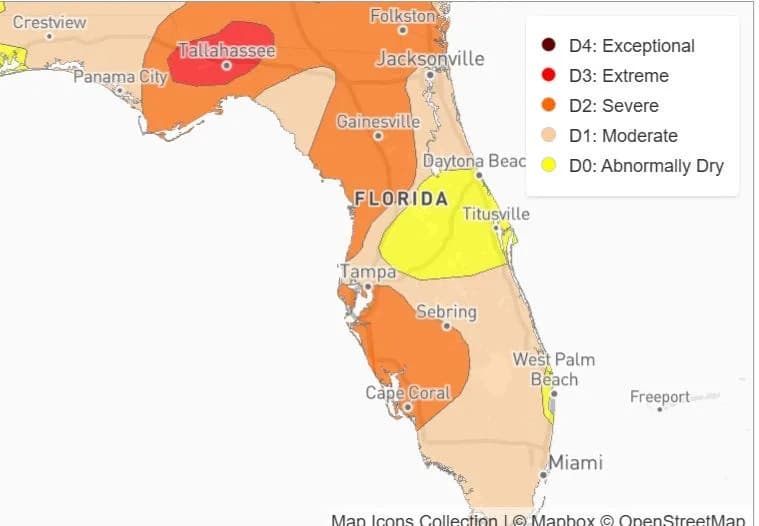
Drought conditions around Florida as of Jan. 8, 2026, show conditions range from abnormally dry to extreme drought.
Florida's dry season has intensified: as of Jan. 6, roughly 87% of the state was experiencing drought conditions, leaving about 14.9 million residents in areas classified with some level of drought, according to the U.S. Drought Monitor.
How Severe Is It?
The statewide breakdown (Jan. 6) shows most of Florida is experiencing at least moderate dryness:
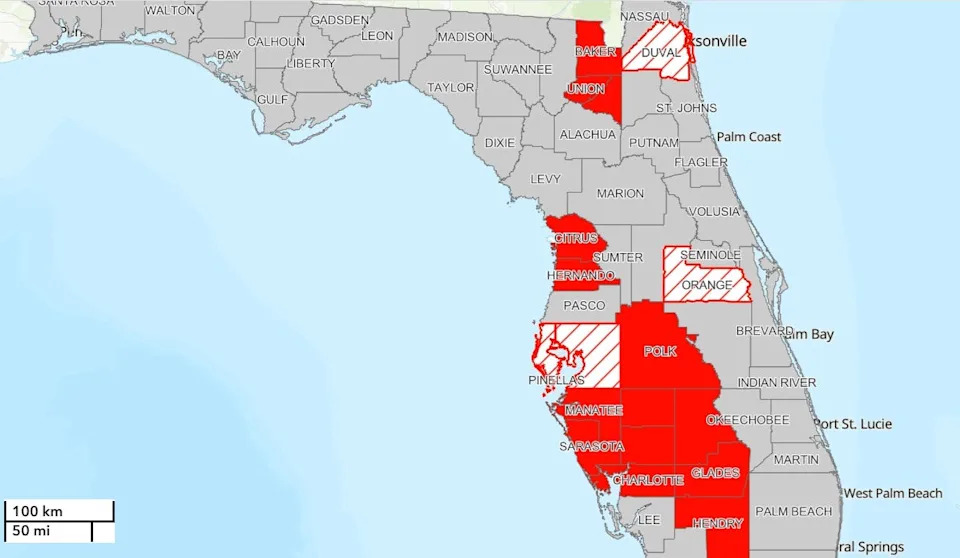
County-enacted burn bans around Florida as of Jan. 6, 2026.
- Exceptional drought: 0%
- Extreme drought: 3.55%
- Severe drought: 34.47%
- Moderate drought: 48.93%
- Abnormally dry: 12.88%
- Not dry: 0.17%
Local Actions: Burn Bans and Restrictions
To reduce wildfire risk, county-enacted burn bans are in effect in 14 Florida counties: Baker, Bradford, Charlotte, Citrus, Desoto, Glades, Hardee, Hendry, Hernando, Highlands, Manatee, Polk, Sarasota and Union. Separately, burning yard debris is always prohibited by ordinance in Duval, Hillsborough, Orange and Pinellas counties.
Counties Most Impacted By Extreme Drought
The counties with the largest share of their area in extreme drought are:
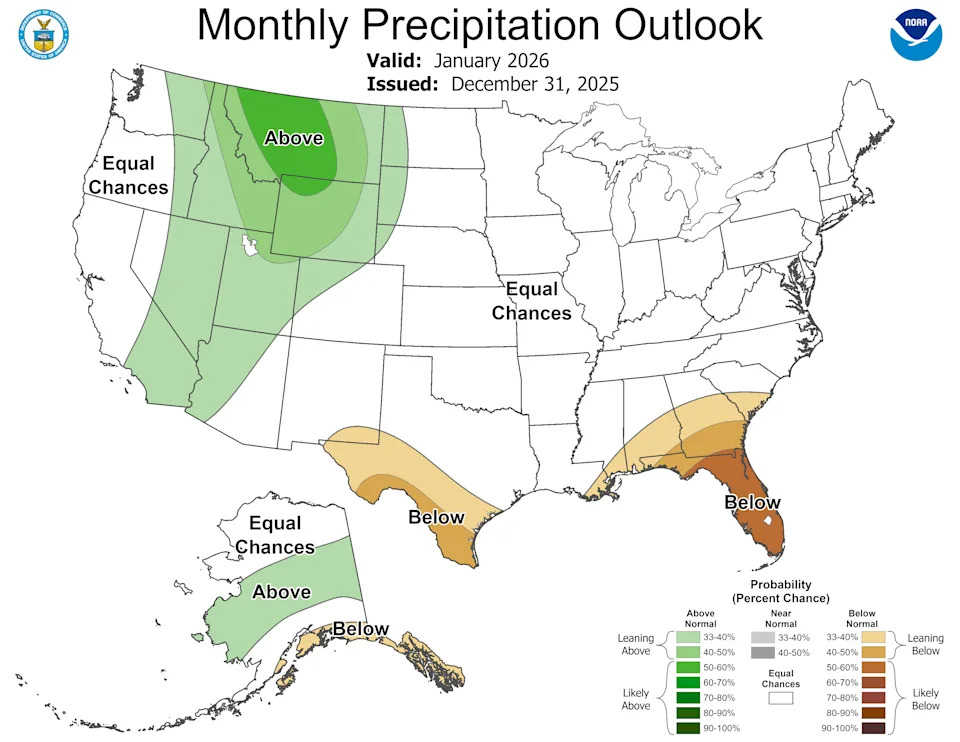
The monthly precipitation outlook for Florida in January 2026 predicts below-average rainfall.
- Gadsden: 98.83%
- Leon: 97.68%
- Liberty: 42.08%
- Jefferson: 39.61%
- Wakulla: 25.50%
Outlook
Short-term prospects for widespread relief are limited. NOAA's monthly precipitation outlook for January predicts below-normal rainfall across much of Florida. "Both the six- to 10-day and eight- to 14-day outlooks predict below-normal rainfall," said Cameron Young, meteorologist with the National Weather Service in Tallahassee, in a Jan. 12 interview. "It's looking drier than normal into February. We're in the North Florida winter wet season but it just hasn't happened."
What The Drought Categories Mean
The U.S. Drought Monitor uses five categories to describe intensity and impacts:
- Abnormally Dry: Short-term dryness that can slow planting and crop growth; lingering water deficits; pastures or crops not fully recovered.
- Moderate Drought: Some crop and pasture damage; developing water shortages; voluntary water-use restrictions may be requested.
- Severe Drought: Crop or pasture loss likely; water shortages common; water restrictions may be imposed.
- Extreme Drought: Major crop and pasture losses; widespread water shortages and restrictions expected.
- Exceptional Drought: Exceptional and widespread losses with water emergencies and severe shortages.
Officials and residents should monitor local forecasts, advisories and burn-ban notices as conditions evolve. Local water-conservation measures and adherence to burn bans help reduce wildfire risk and preserve limited water supplies.
Reporting by the USA TODAY Network — Florida service journalism Connect team. Data from the U.S. Drought Monitor and NOAA.
Help us improve.