As Prime Minister Benjamin Netanyahu heads to Washington, Israel’s security cabinet approved measures to broaden enforcement and enable state purchases of land in the West Bank—moves critics call de facto annexation. The package extends Israeli authority into Areas A and B (about 40% of the territory), revives the Land Acquisition Committee, and grants expanded municipal powers to settlers in Hebron. Palestinian officials, Hamas and rights groups condemned the decisions; the actions deepen tensions over the future of a Palestinian state.
Israel Moves to Cement Control Over West Bank Ahead of Netanyahu’s U.S. Visit
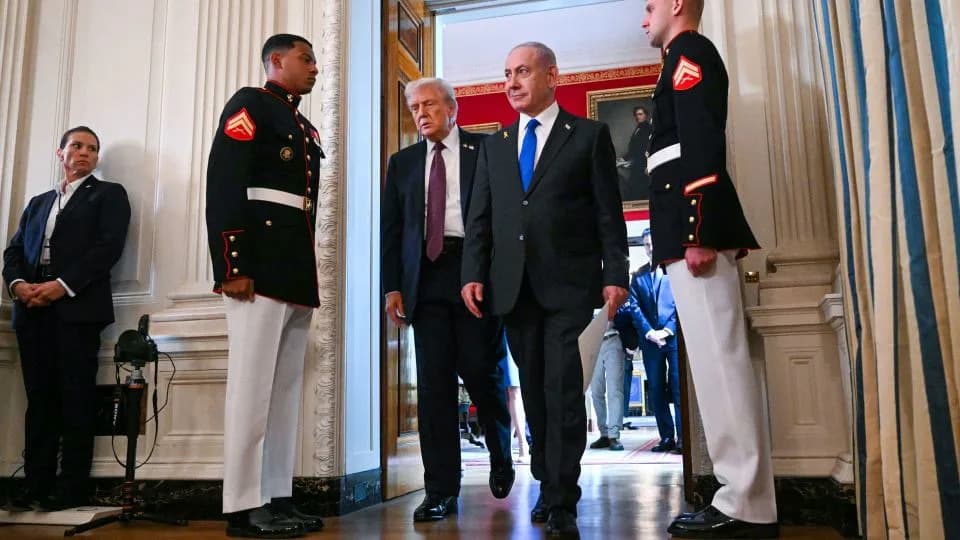
US President Donald Trump and Israeli Prime Minister Benjamin Netanyahu leave the State Dining Room of the White House after a news conference on September 29, 2025. - Jim Watson/AFP/Getty Images/File
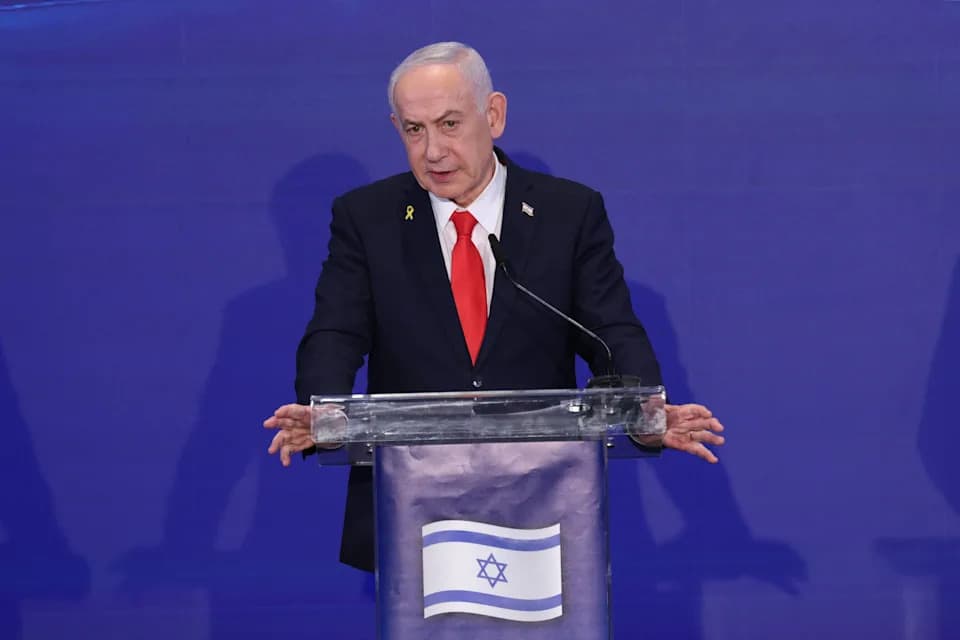
As Prime Minister Benjamin Netanyahu prepares to travel to Washington, DC, Israel’s security cabinet has approved a package of measures that will expand Israeli enforcement and enable land purchases across the occupied West Bank. Officials say the steps are intended to streamline administration and settlement growth; critics call them de facto annexation and a threat to the prospects for a Palestinian state.
What the Cabinet Approved
The cabinet’s decisions include several significant changes:
- Expanded Enforcement: Israeli authorities will extend enforcement operations into Areas A and B—areas created under the Oslo Accords that are nominally under Palestinian security control—together accounting for roughly 40% of the West Bank.
- Restarting the Land Acquisition Committee: The government will reactivate a mechanism that permits proactive state purchases of West Bank land to support settlement expansion.
- Greater Authority in Hebron: The civil administration and the small Jewish settler community in Hebron will receive broader building and municipal powers, reducing the need to consult the Palestinian municipality.
- Easier Land Purchases: New measures aim to make it simpler for settlers to acquire land across the occupied territory, facilitating further settlement activity.
Bezalel Smotrich, the far-right finance minister and deputy defense minister, said the steps would "fundamentally change the legal and civil reality" in the West Bank. He added: "We are normalizing life in the territories, removing bureaucratic barriers, fighting for the land, and deepening our presence throughout the Land of Israel."
Reactions
The measures drew immediate condemnation from Palestinian officials and rights groups. The Palestinian Authority described the decisions as "a continuation of the comprehensive war waged by the occupation government against the Palestinian people" and said they amounted to "the practical implementation of annexation and displacement plans."
Hazem Qassem, a Hamas spokesman, said the moves "confirm [Israel’s] colonial program aimed at swallowing all Palestinian land and displacing its indigenous people." Anti-settlement watchdog Peace Now called the steps de facto annexation and criticized the government for undermining earlier agreements.

Palestinians watch from balconies as an Israeli military vehicle drives through the village of Beit Awwa near Hebron, in the occupied West Bank. - Mosab Shawer/Middle East Images/AFP/Getty Images
Gershon Baskin, a long-time peace activist involved in Israeli-Palestinian negotiations, warned on social media that the developments violate international law and deepen the occupation.
Context
Israel captured the West Bank from Jordan in the 1967 war and has since established Jewish settlements there. The United Nations and much of the international community consider those settlements illegal under international law and regard the West Bank and East Jerusalem as occupied territory that Palestinians seek for a future state.
Critics say recent Israeli policies amount to de facto annexation by consolidating control and expanding settlements in ways that could make a contiguous, viable Palestinian state increasingly difficult. Last May, Israel authorized the largest settlement expansion in decades by approving the creation of 22 new settlements.
In an October interview with Time magazine, former U.S. President Donald Trump said he would not allow formal annexation of the West Bank, noting commitments to Arab states and warning that Israel would risk losing U.S. support if it formally annexed territory. Still, observers point to a pattern of policies that effectively extend Israeli civilian and administrative reach over Palestinian areas.
What to Watch
Key next steps include how the measures are implemented on the ground, whether they face legal challenges domestically or internationally, and how the Biden administration and other global actors respond during Netanyahu’s Washington visit.
Help us improve.