Light rains in Argentina's Pampas brought short‑term relief to farmers after an exceptionally hot, dry January that has stressed corn and soybean crops. The Buenos Aires Grain Exchange cut its grain output forecast to 57 million metric tons while the USDA's January estimates put corn at 53 million tons and soybeans at 48.5 million tons for 2025/26. Analysts say more than 50 millimeters of sustained rain would be needed for recovery, and many farmers warn yields could fall sharply without continued precipitation.
‘A Blessing’: Light Rains Give Argentine Farmers Relief — But Harvest Risks Remain
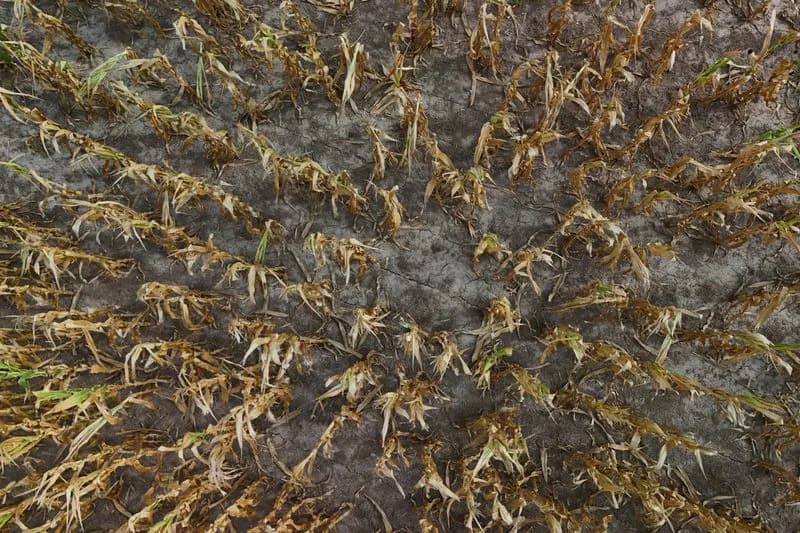
A drone view shows corn plants affected by hot weather and a lack of rain, on a farm in Chivilcoy, on the outskirts of Buenos Aires, Argentina February 5, 2026. REUTERS/Matias Baglietto
CHIVILCOY, Argentina — Light rains that fell across parts of the Pampas this week have brought temporary relief to farmers still reeling from an unusually hot, dry January that has stressed corn and soybean crops across Argentina's agricultural heartland.
Juan Solari, partner and manager at the Emidelia Solari ranch near Chivilcoy, threaded between rows of corn with yellowing leaves and undersized ears, a visible reminder of the damage caused by sustained heat and low rainfall. 'It’s a blessing,' he said as a drizzle settled over the fields, adding that the showers 'change expectations' even if they are far from a cure.
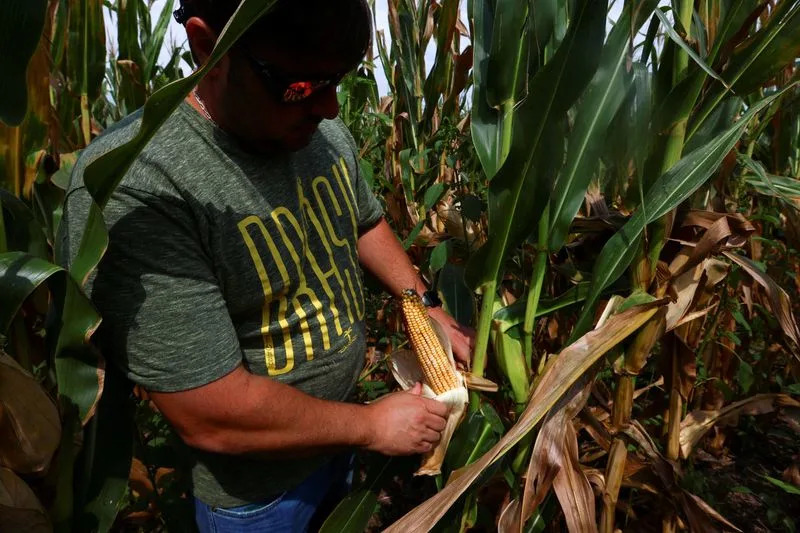
Farm manager Juan Solari inspects corn cobs on a farm in Chivilcoy, on the outskirts of Buenos Aires, Argentina, February 5, 2026. REUTERS/Matias Baglietto
What fell and what it means
Some farms recorded as little as 9–10 millimeters from the latest showers, while Solari reported about 25 millimeters since Wednesday. Those amounts eased immediate stress on crops but fall well short of the more than 50 millimeters analysts say would be needed across the central belt to begin meaningful recovery.
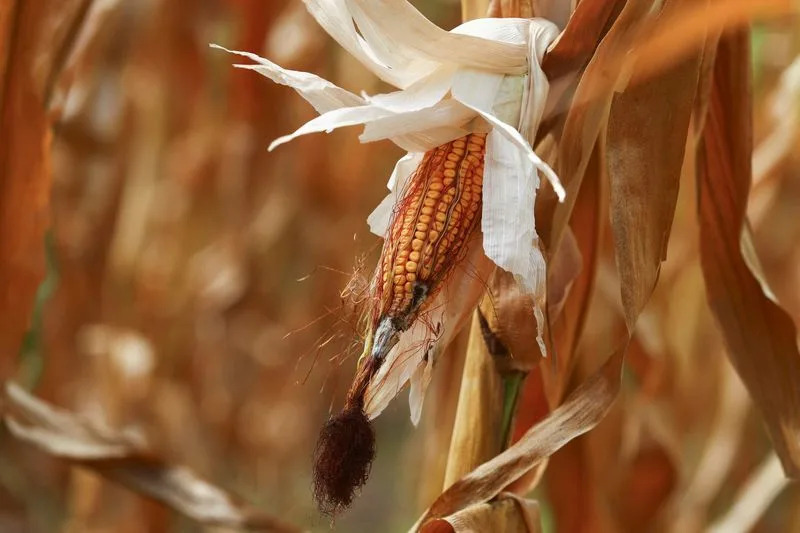
A corn cob affected by hot weather and a lack of rain stands on a farm in Navarro, on the outskirts of Buenos Aires, Argentina, February 5, 2026. REUTERS/Matias Baglietto
The Buenos Aires Grain Exchange this week trimmed its estimate for Argentina’s grain output to 57 million metric tons, down from a prior forecast of 58 million metric tons; it has not yet published an updated soybean outlook. In January the U.S. Department of Agriculture estimated Argentina’s 2025/26 corn crop at 53 million tons and soybeans at 48.5 million tons.
Weather analysts warn the situation remains precarious. 'The rain is a balm, it slows the current deterioration, but it’s not a definitive solution,' said German Heinzenknecht, a climate analyst at Applied Climatology Consulting. He noted that sustained rainfall in February will be decisive for final yields.
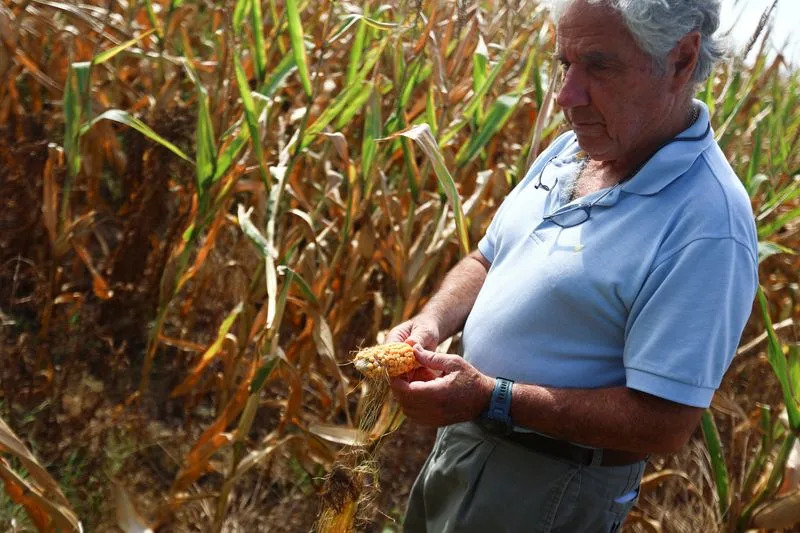
Farmer Eduardo Caruso inspects a corn cob affected by hot weather and a lack of rain, on a farm in Navarro, on the outskirts of Buenos Aires, Argentina, February 5, 2026. REUTERS/Matias Baglietto
Farmers report steep cuts if dry conditions persist
Across Buenos Aires province producers described patchy conditions. Eduardo Caruso of the Santa Ana ranch in Navarro said parts of his fields still show cracked, dry soil and estimated corn yields could fall to about 7 tons per hectare from an earlier projection of 12. Jorge Bianciotto, manager of La Lucila ranch in Pergamino, put expected declines at roughly 30% for both early‑planted corn and soybeans — estimating about 7 tons per hectare for corn and roughly 3.3 tons for soybeans if rains do not materialize.
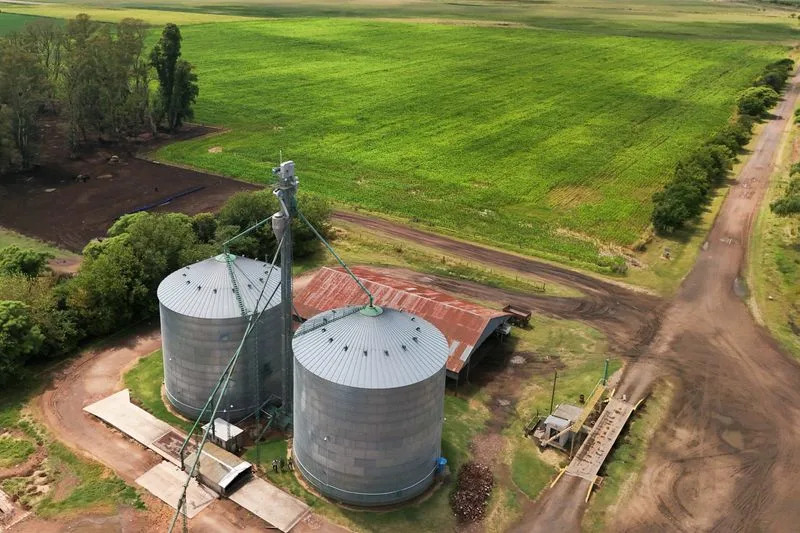
A drone view shows a silo near a soybean plantation, on a farm in Chivilcoy, on the outskirts of Buenos Aires, Argentina, February 5, 2026. REUTERS/Matias Baglietto
Soybean planting for the 2025/26 season has just finished, while the corn harvest is already under way, leaving little margin for error if the dry spell resumes. Farmers and analysts alike say next week will be critical: sustained rain could restore much of the crop's potential; continued dryness would likely lock in significant losses.
'Now the game is February: if the rains are consistent, we can maintain very good potential,' Solari said, capturing the cautious optimism and high stakes facing producers across the Pampas.
Outlook
For global markets and food supply chains, Argentina's outcomes this season matter: the country is one of the world's largest exporters of soybeans and a major corn supplier. Analysts will watch weather forecasts and updated crop reports closely in the coming weeks to reassess likely harvest sizes and exportable supplies.
Help us improve.