A Johns Hopkins study published in Science reports that Kanzi, a 43-year-old captive bonobo known for his language skills, chose containers that experimenters had acted as if they still contained juice or grapes at rates above chance. In an 18-trial baseline and subsequent pretend trials, Kanzi selected the 'full' cup 68% of the time without reward. Researchers interpret this as evidence that Kanzi could form mental representations of absent objects, suggesting that the ability to 'play pretend' may not be uniquely human but note that results come from a single, highly enculturated individual.
Kanzi the Bonobo May Have 'Played Pretend': New Study Suggests Apes Can Imagine
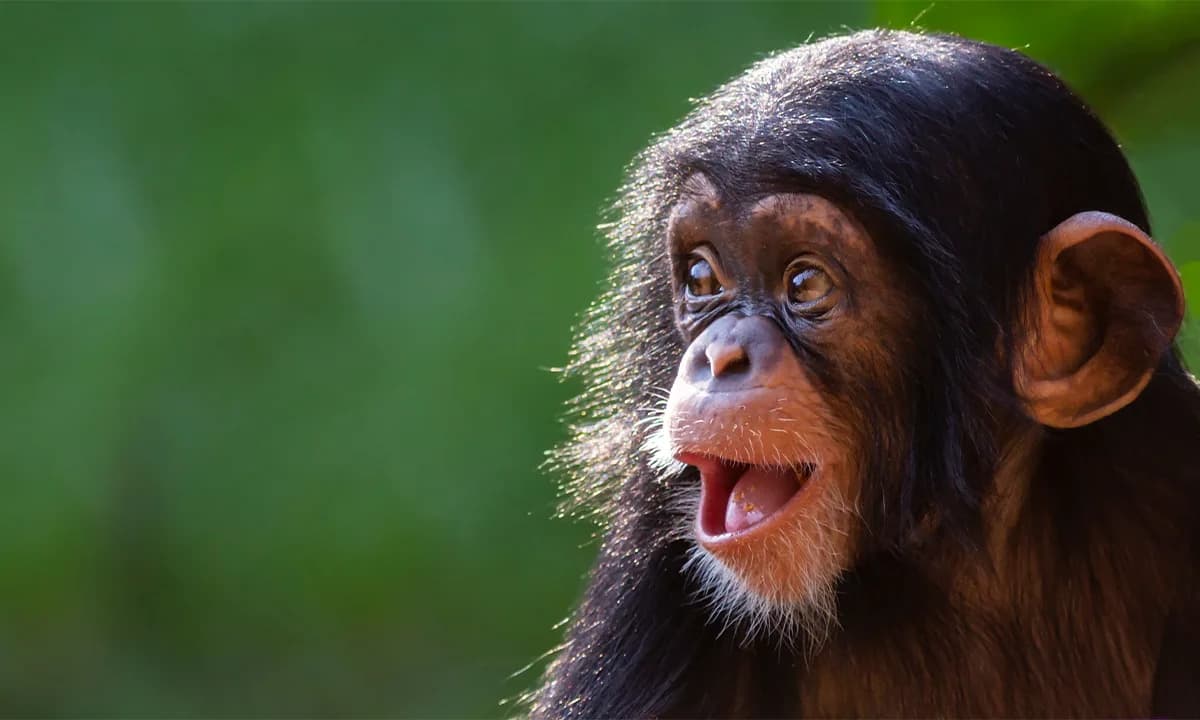
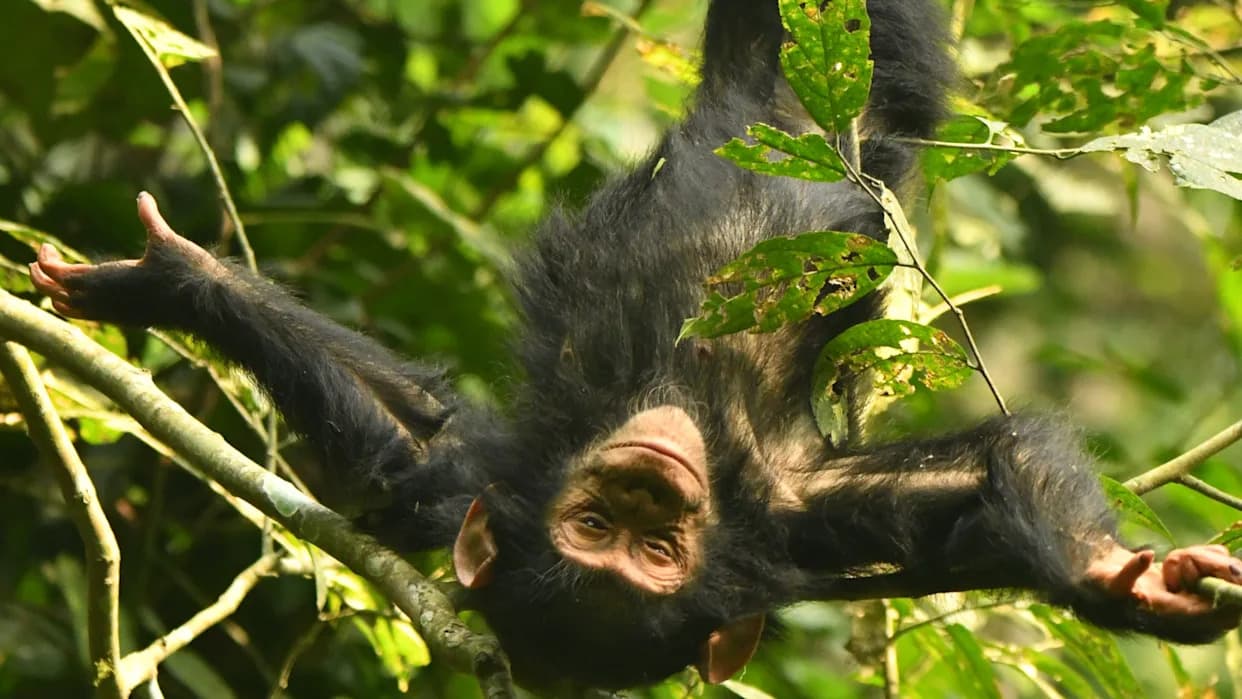
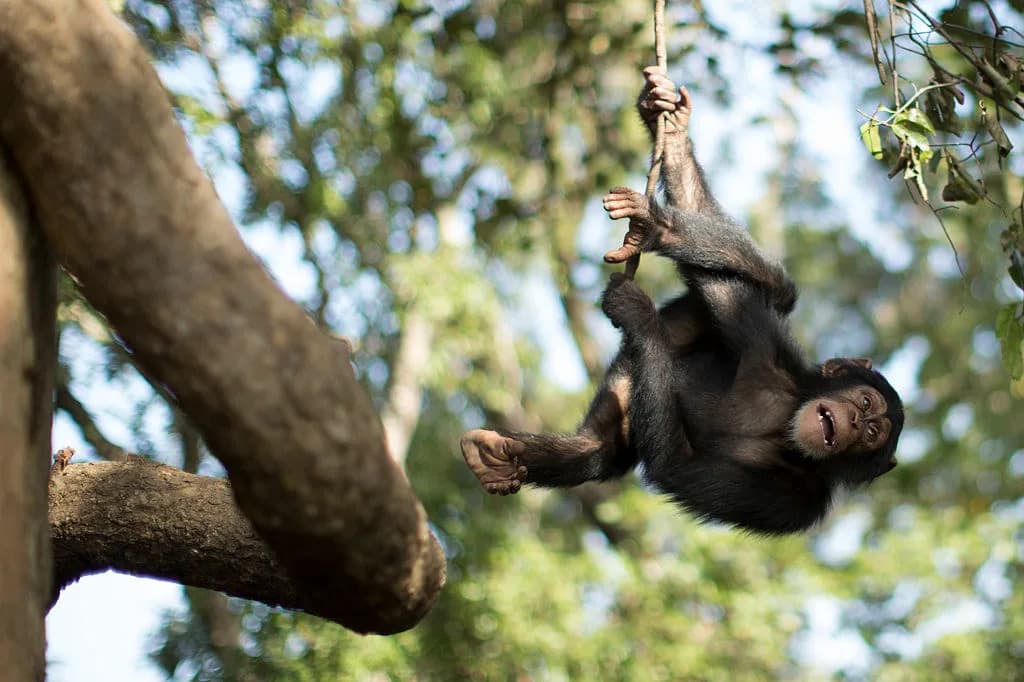
Close-up portrait of a happy baby chimpanzee. Credit: Patrick Rolands / Shutterstock.(Close-up portrait of a happy baby chimpanzee. Credit: Patrick Rolands / Shutterstock.)
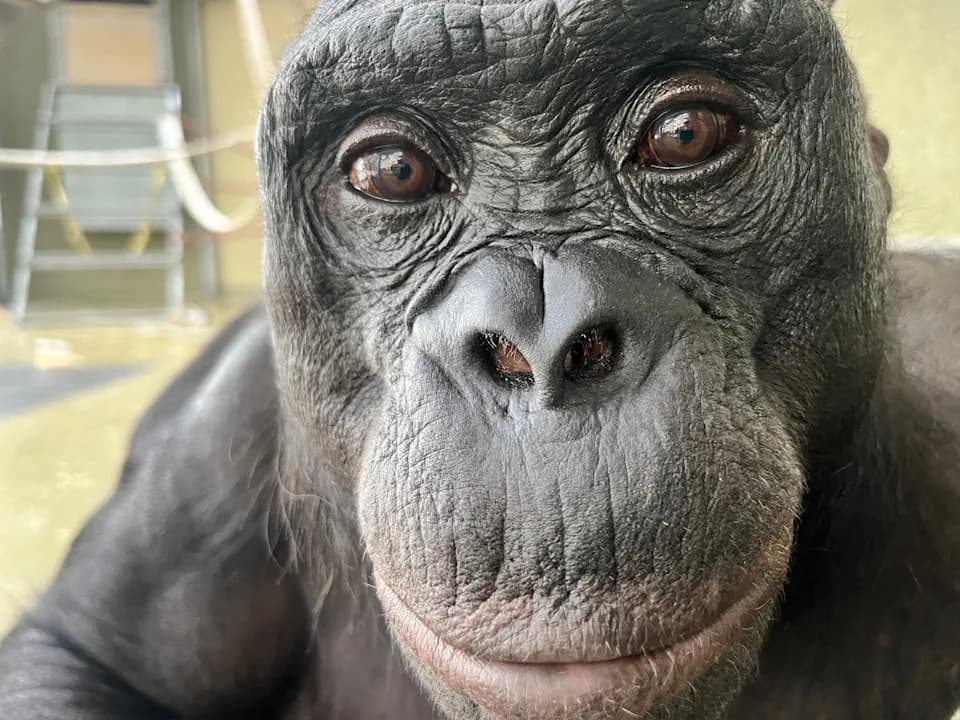
Researchers have long documented human-like behaviors in great apes, from tool use to expressive faces and empathy. A new study published in Science by biologists at Johns Hopkins University adds a striking finding: a captive bonobo named Kanzi showed behavior consistent with 'pretend play'—the ability to form mental representations of objects that are not physically present.
Study Design and Findings
Researchers Christopher Krupenye and Amalia P. M. Bastos tested Kanzi, a 43-year-old enculturated bonobo best known for understanding spoken English and using more than 300 lexigram symbols. In initial training, Kanzi completed an 18-trial rewarded task in which he reliably chose a bottle containing juice over an empty bottle.
In the critical experiments, the bottles and cups were empty. Experimenters pretended to pour juice from an empty pitcher into two clear cups, then acted as if they poured the contents of one cup back into the pitcher. When asked, 'Where's the juice?', and without any reward offered during these pretend trials, Kanzi chose the cup that experimenters had left 'full' of imaginary juice 68% of the time—a rate significantly above chance.
In a parallel test using two clear jars and pretend grapes, Kanzi again selected the container that had been acted as if it still held fruit at rates higher than chance. The authors interpret these choices as evidence that Kanzi formed secondary representations—mental models—of absent items and tracked their (pretend) locations.
Interpretation and Caveats
'Imagination has long been seen as a critical element of what it is to be human, but the idea that it may not be exclusive to our species is really transformative,' said Christopher Krupenye, a study co-author.
The findings are important because pretend play requires holding a representation of something absent and distinguishing it from immediate perception. However, the study also has clear limitations. Kanzi was a single, highly enculturated individual with extensive experience in human-led experiments, and he is now deceased. That limits how broadly the results can be generalized to other apes or to wild populations.
The authors note the implication that the cognitive capacity for pretense could have deep evolutionary roots, possibly dating back 6–9 million years to our common ancestor with other great apes. They also emphasize the need for further controlled experiments with additional subjects and different rearing backgrounds to determine how widespread this capacity may be.
Why It Matters
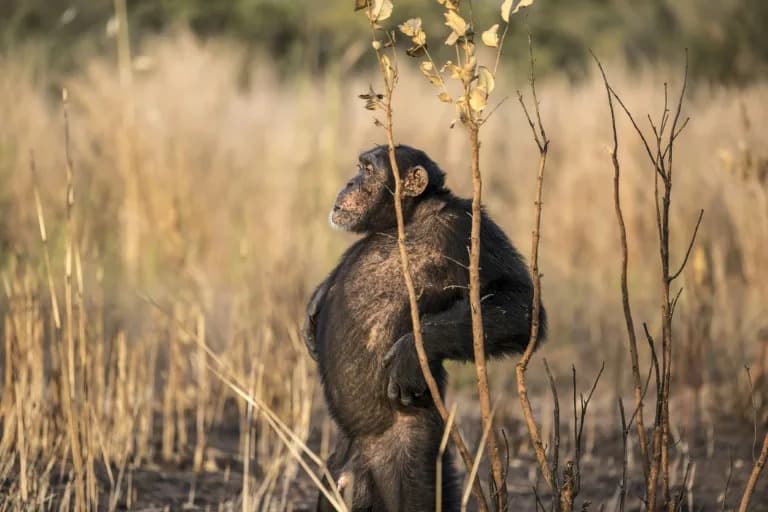
If other apes can form and maintain mental representations of absent objects, behaviors observed in the wild—such as chimpanzees carrying sticks or engaging in complex social play—might sometimes reflect imagination rather than purely instinctive or imitative actions. This study opens a new line of inquiry into the evolutionary origins of imagination and pretense.
Note: Kanzi was a well-known research subject whose language skills and history of experimental participation are relevant to interpreting these results. Lead image credit: Patrick Rolands / Shutterstock. This story was originally featured on Nautilus.
Help us improve.