Researchers adapted child‑testing methods to see whether Kanzi, a lab‑raised bonobo, could engage in pretend play. In an imaginary tea‑party task Kanzi selected the cup with pretend juice 68% of the time and chose real juice nearly 80% in a control trial, suggesting he could tell imaginary from real. Experts urge caution: the results come from one highly socialized individual and do not yet prove human‑style pretense. The study, published in Science, calls for more research on ape cognition.
Can Apes Pretend? A Bonobo’s Imaginary Tea Party Hints at an Ape Imagination
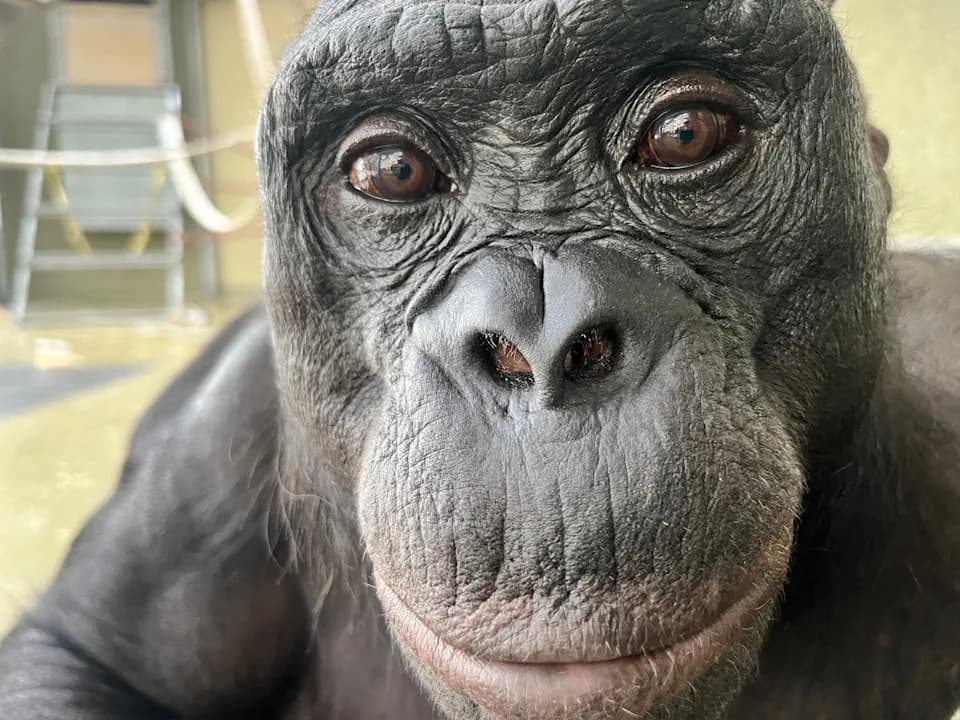
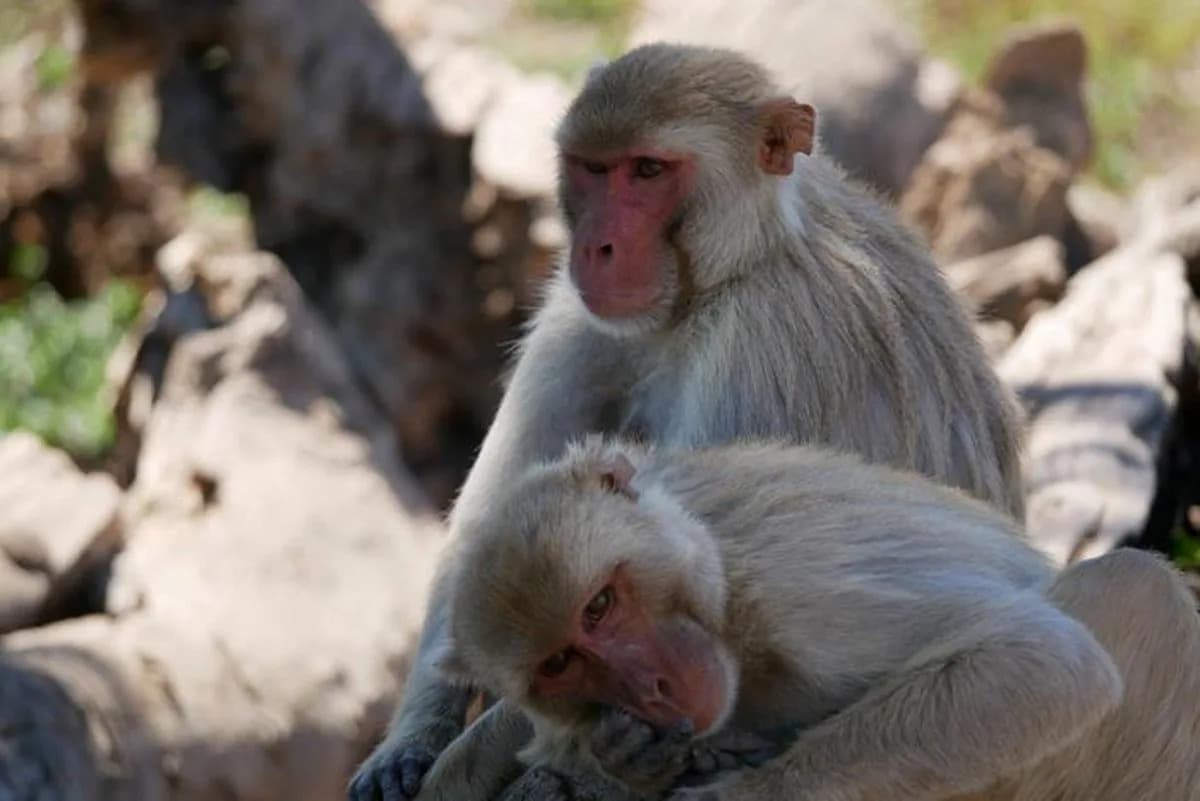
This undated photo provided by the Ape Initiative shows Kanzi, a bonobo who learned to communicate with humans, in Des Moines, Iowa. (Ape Initiative via AP)(ASSOCIATED PRESS)
Researchers adapted methods used with young children to test whether Kanzi, a lab‑raised bonobo famous for using graphic symbols, could engage in pretend play — behaving as if something were real while understanding it was not.
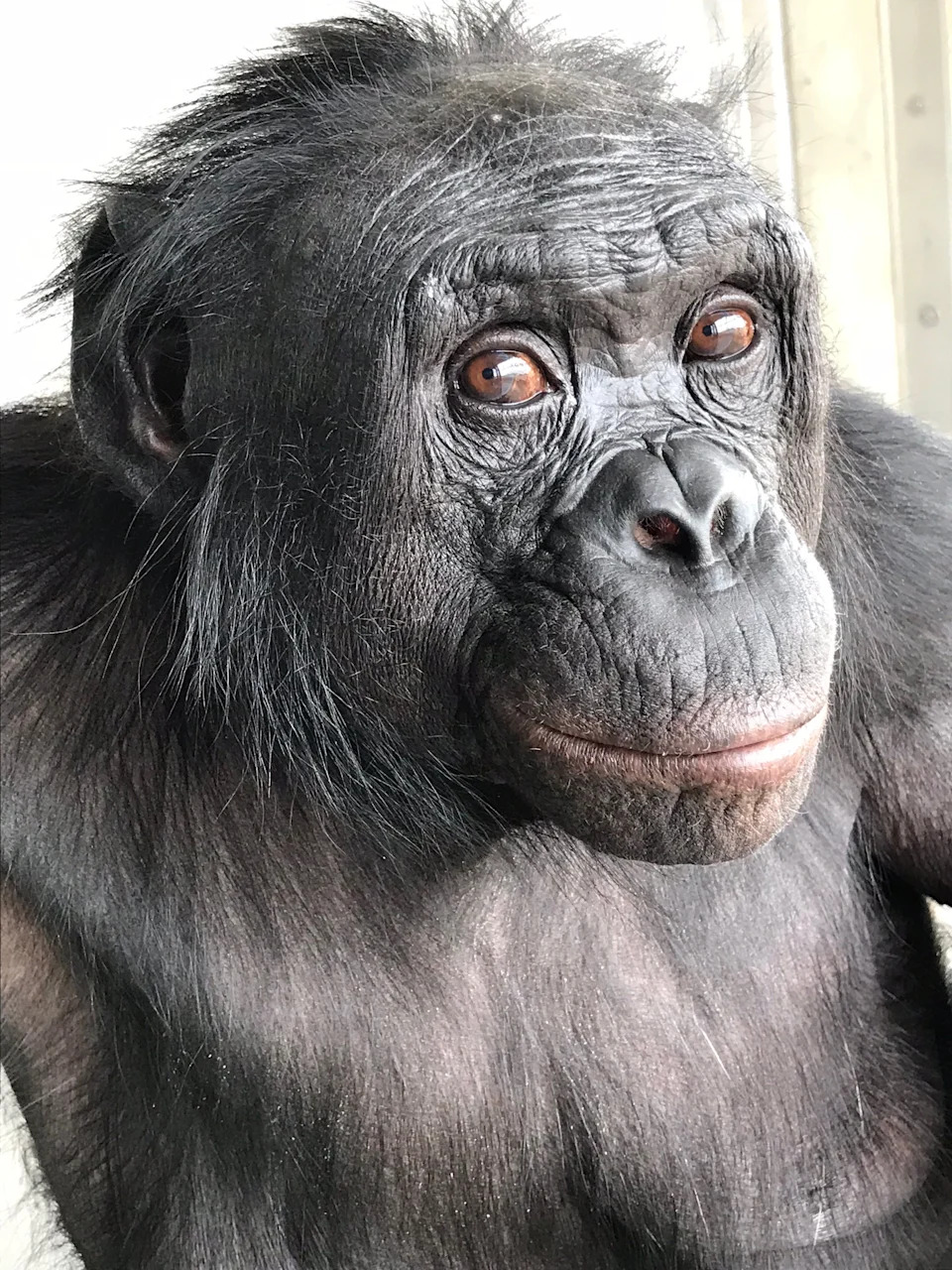
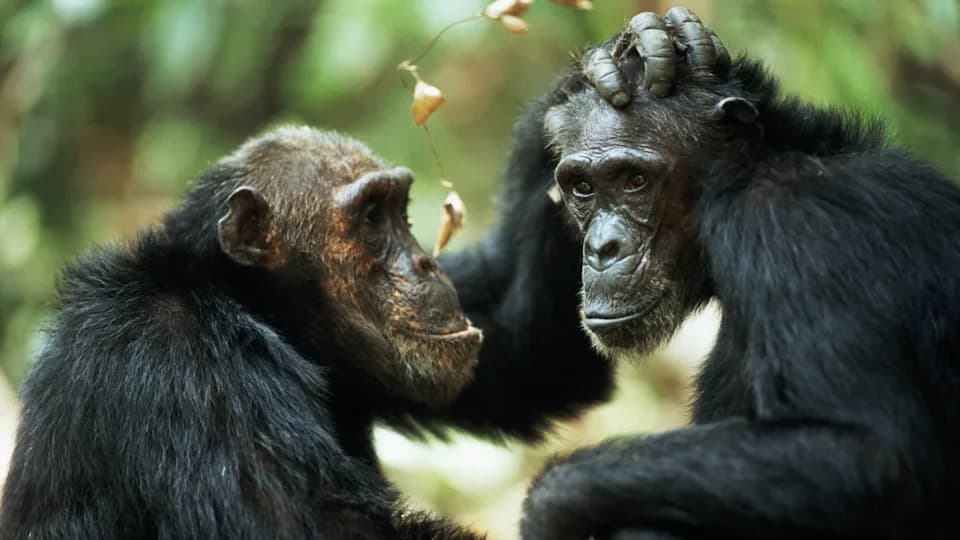
This undated photo provided by the Ape Initiative shows Kanzi, a bonobo who learned to communicate with humans, in Des Moines, Iowa. (Ape Initiative via AP)(ASSOCIATED PRESS)
How the Test Worked
Scientists staged a simple "tea party": an experimenter poured imaginary juice from a pitcher into two cups, then pretended to empty only one. When asked which cup he wanted, Kanzi pointed to the cup that still contained the pretend juice 68% of the time. In a control trial using real juice, Kanzi chose the actual juice nearly 80% of the time, suggesting he could distinguish pretend from real. A third task using simulated grapes yielded similar results.
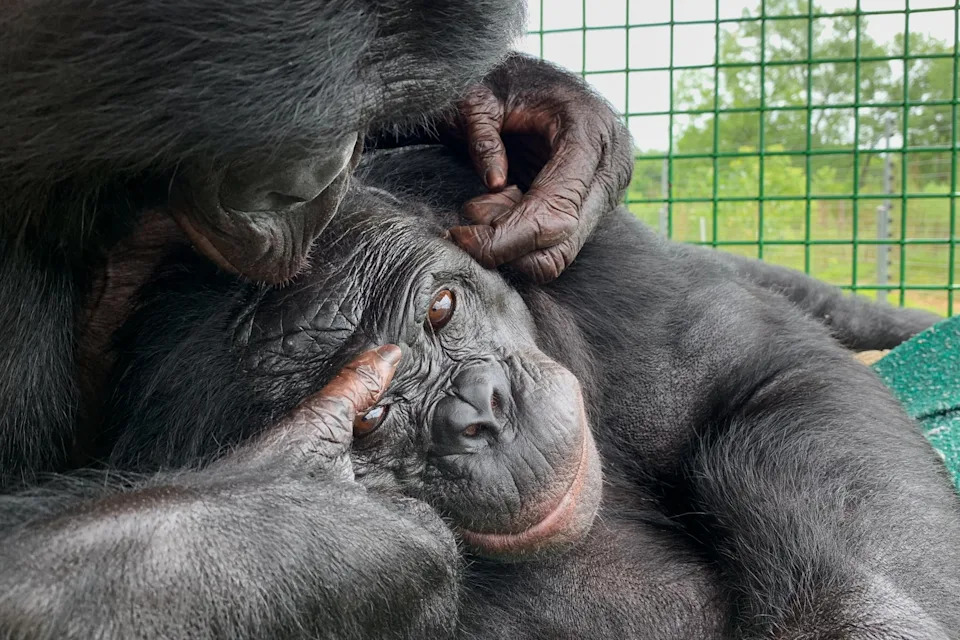
This undated photo provided by the Ape Initiative shows Nyota with Kanzi, a bonobo who learned to communicate with humans, in Des Moines, Iowa. (Ape Initiative via AP)(ASSOCIATED PRESS)
What the Results Mean — And Don’t Mean
“What’s really exciting about this work is that it suggests that the roots of this capacity for imagination are not unique to our species,” said study co‑author Christopher Krupenye of Johns Hopkins University. Co‑author Amalia Bastos of the University of St. Andrews noted the control trials indicate Kanzi was not simply confusing make‑believe with reality.
Not all experts are convinced this proves human‑like pretense. Duke University comparative psychologist Michael Tomasello wrote that mentally picturing a poured liquid is different from deliberately sustaining a pretense; he said he would want to see the ape initiate pretend pouring to be fully persuaded.
Importantly, these experiments were conducted with a single, highly socialized individual who was raised among humans. Kanzi’s unique upbringing — he learned symbolic communication and tool use and lived closely with human caregivers — makes it difficult to generalize the findings to wild apes or to conclude that such capacities are widespread across the species. Kanzi died last year at age 44.
Implications and Future Research
The study, published in Science, opens a pathway for further controlled tests of imagination and pretense in great apes. Researchers say more experiments involving other individuals and species, ideally with varied rearing histories, are needed to map the evolutionary roots of imagination. The work also highlights the ethical and conservation contexts: many great ape species remain critically endangered, and understanding their cognition can inform both science and stewardship.
Help us improve.