The Behavioral Biology study found that larger, more tolerant chimpanzee groups share scarce resources more effectively and show less aggression than smaller, more competitive groups. Researchers used controlled resource-dilemma tests to show that tolerance becomes a group-level strategy and that informal leaders—who lead by example—help coordinate peers. The work suggests cooperation and context-dependent leadership have deep evolutionary roots and that environmental conditions shaping the costs of conflict can promote restraint and collective benefit.
What Chimpanzees Teach Us About Cooperation, Conflict, and Leadership

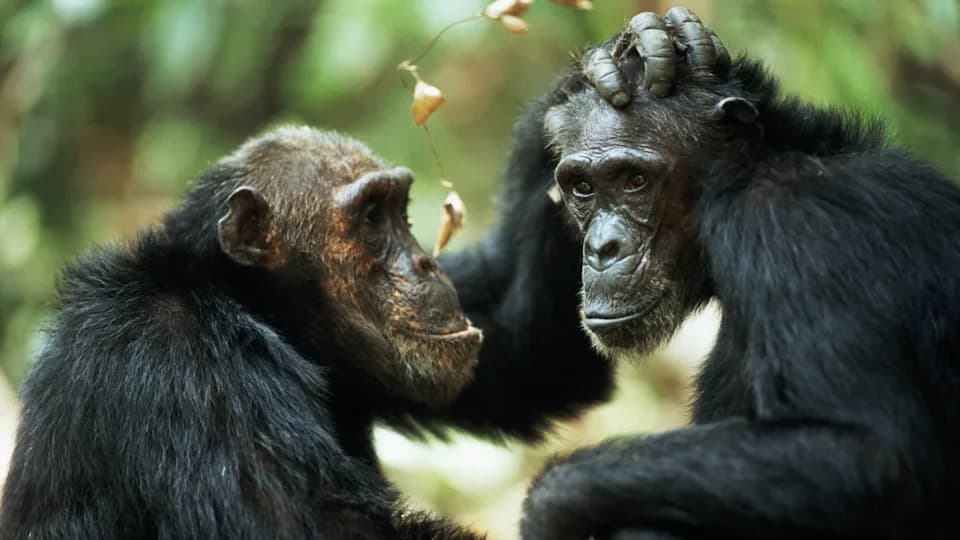
chimpanzees talk it over in committee© Patrick Rolands/Shutterstock.com
Scientists studying our closest living relatives have uncovered clear links between group composition, social tolerance, and whether cooperation or conflict dominates when resources are scarce. A new paper in Behavioral Biology examined how chimpanzee communities confronted a controlled "resource dilemma" and found that larger, more tolerant groups share limited resources more effectively and show less aggressive competition than smaller, more combative groups.

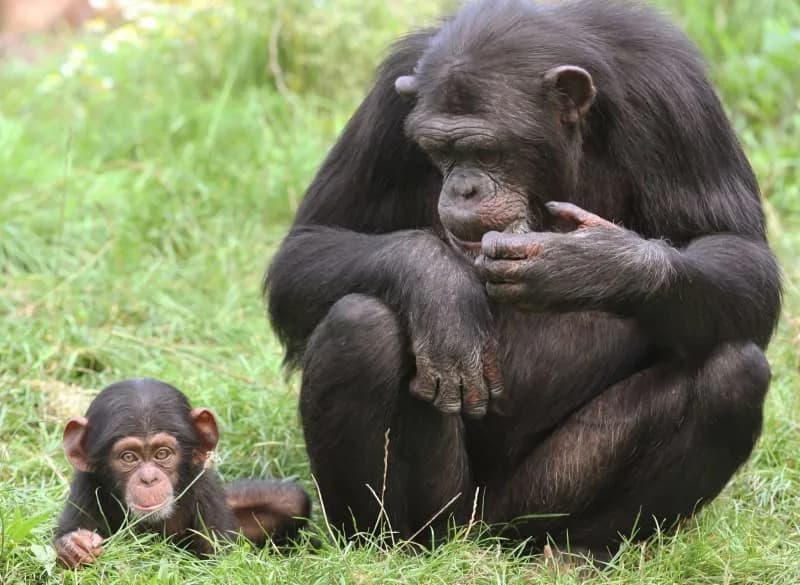
Chimpanzees face real-world resource dilemmas similar to humans, needing to balance individual gain with group cooperation to avoid conflict over limited food.©Patrick Rolands/Shutterstock.com(Patrick Rolands/Shutterstock.com)
What Is a Resource Dilemma?
Resource dilemmas are situations where individuals must choose between immediate personal gain and restraint that benefits the whole group. Think of a group lost in a desert that finds a single barrel of water: if everyone grabs as much as possible, the supply runs out and conflict erupts; if people restrain themselves, the group as a whole fares better. The study shows chimpanzees face and resolve similar trade-offs in socially sophisticated ways.
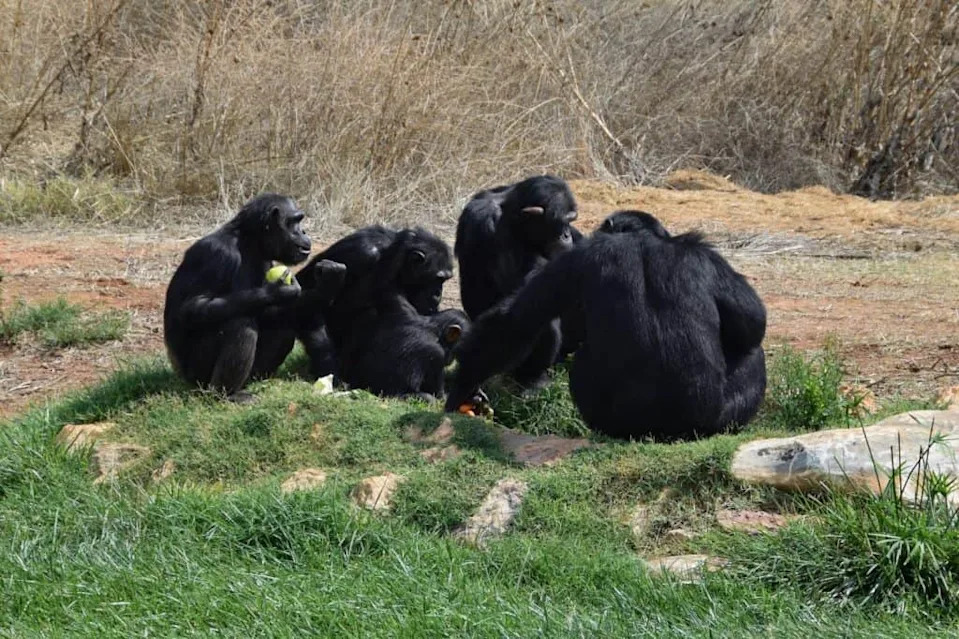
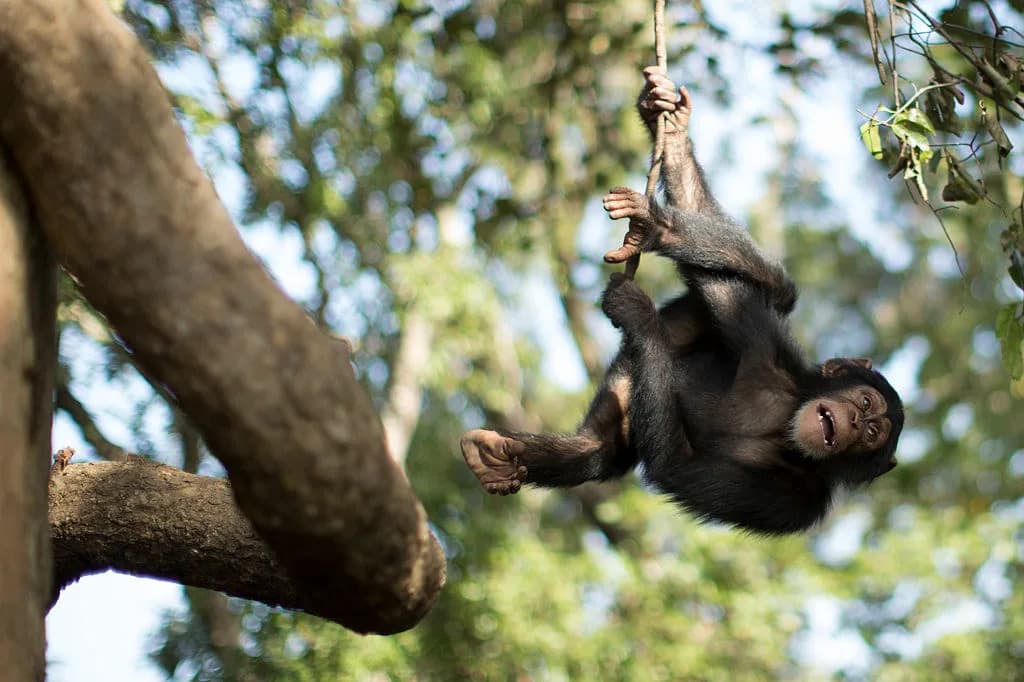
In larger chimpanzee groups, individuals restrained aggressive impulses, allowing better resource sharing and smoother group coordination.©dimitris_k/Shutterstock.com(dimitris_k/Shutterstock.com)
How the Study Worked
Researchers created safe, controlled scenarios that mimicked a shared-resource problem. Across multiple communities that differed in size and social temperament, chimpanzees were offered situations where they could either compete aggressively for food or tolerate nearby conspecifics and follow group-oriented strategies that allowed more members to benefit.

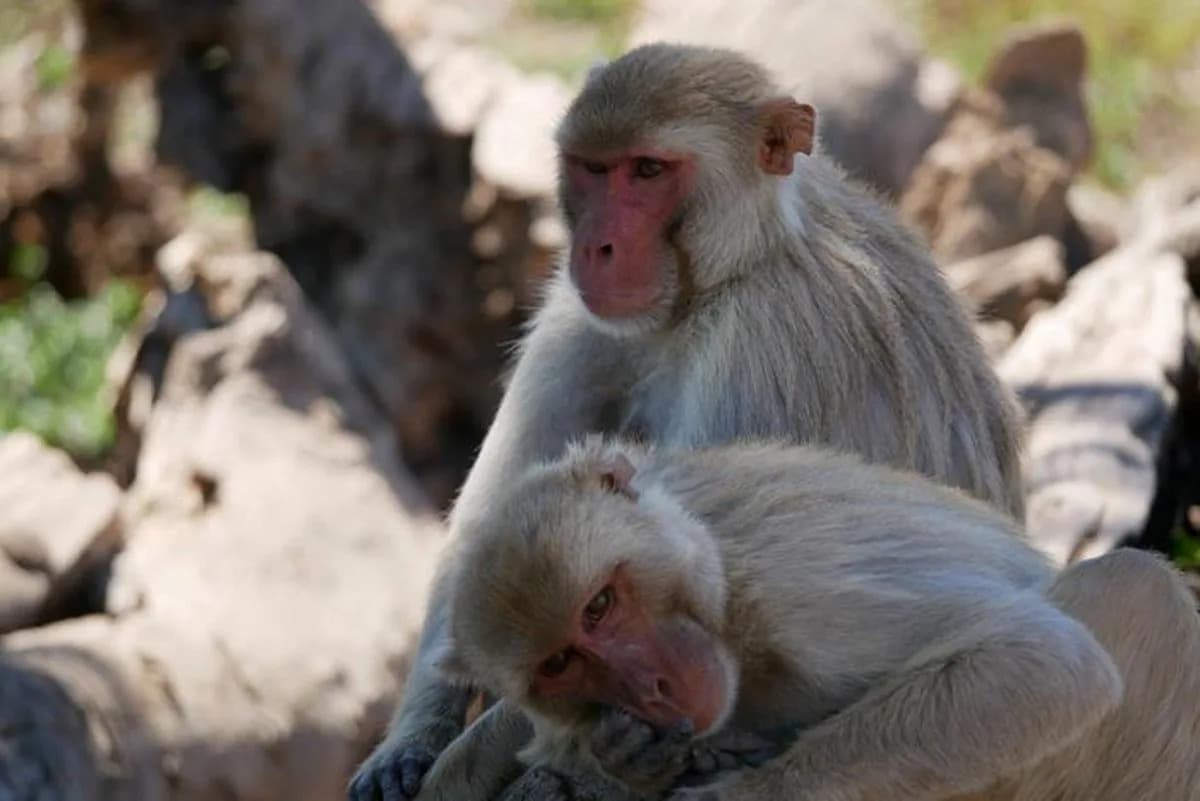
When tolerance was low, chimpanzees were more likely to compete aggressively for resources, a pattern that disrupted coordination and limited how many individuals could benefit.©Hit1912/Shutterstock.com(Hit1912/Shutterstock.com)
Key Findings
Larger groups were more successful at sharing. Contrary to a simple expectation that more individuals mean more conflict, many large groups restrained aggressive impulses, waited their turn, read social signals and coordinated access so more animals could feed without constant fighting.

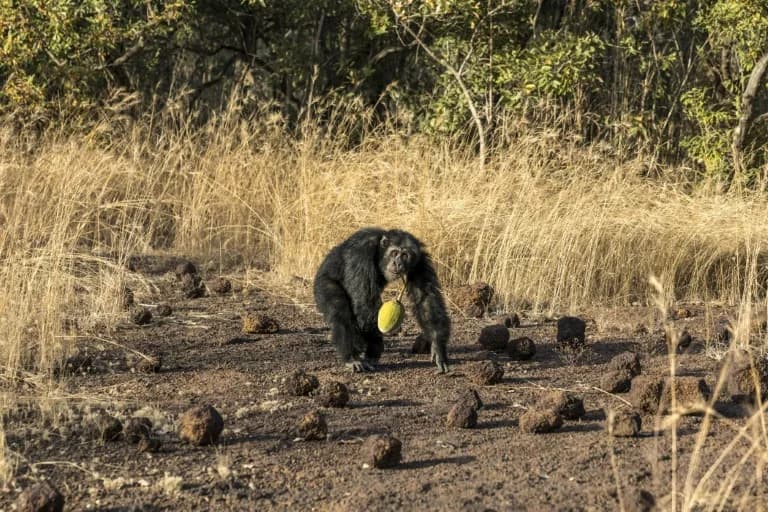
Understanding chimpanzee social dynamics helps explain human cooperation, illustrating how shared resources, group size, and leadership shape collective behavior.©Lili Aini/Shutterstock.com(Lili Aini/Shutterstock.com)
Tolerance acted as a group-level strategy. Tolerance was not just the product of a few mellow individuals. Entire communities consistently behaved in more tolerant ways, suggesting that group-level norms or temperaments—shaped by past interactions and environmental pressures—can develop because they improve collective outcomes.
Informal leadership improved coordination. In tolerant groups, certain chimpanzees led by example: others imitated their actions when those actions reduced conflict or smoothed access to the resource. These leaders did not enforce rules but served as behavioral models, helping the group coordinate without coercion.
Smaller groups tended to monopolize and conflict more. When groups were small and competitive, individuals often tried to monopolize resources, provoking fights that reduced overall sharing and coordination.
Implication: When fighting is costly and resources are hard to monopolize, restraint and cooperation become efficient, stable strategies—even without language, laws, or formal institutions.
Why This Matters
Because chimpanzees are our closest living relatives, these patterns offer insight into the evolutionary roots of human cooperation and social influence. The findings suggest that cooperation, tolerance, and context-dependent leadership likely predate modern human institutions and may have been present in common ancestors. Environmental conditions that punish open conflict or make monopolization difficult favor the emergence of tolerant, cooperative social systems.
Conclusions
The study reinforces that cooperation can be an adaptive, durable strategy when it improves collective payoff. Peaceful sharing in the chimpanzee groups observed emerged not from coercion but because cooperation produced better outcomes under the test conditions. These results are relevant for researchers across primatology, psychology, sociology, and political science who study how communities manage shared resources.
Help us improve.