Researchers trained bumblebees to roll small wooden balls for a sugary reward, then removed the reward to test whether bees would continue interacting with the balls. Over 54 hours, 45 bees carried out 910 ball-rolling actions; younger and male bees were most likely to play. Follow-up tests showed bees preferred chambers associated with balls even when empty, suggesting play-like behavior. Scientists say neurochemical studies are needed to identify the motivation and implications for insect sentience.
Do Bees Have Hobbies? Inside the Study Where Bumblebees Rolled Wooden Balls
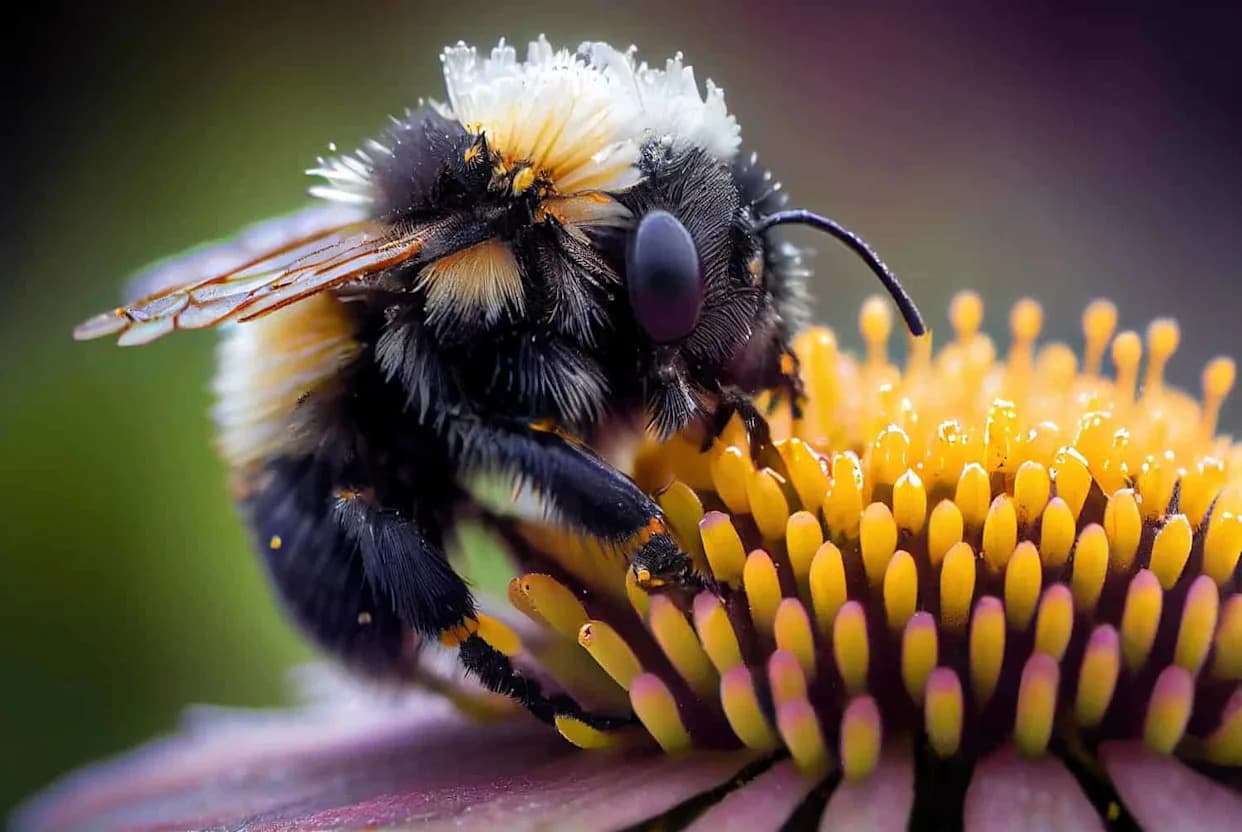
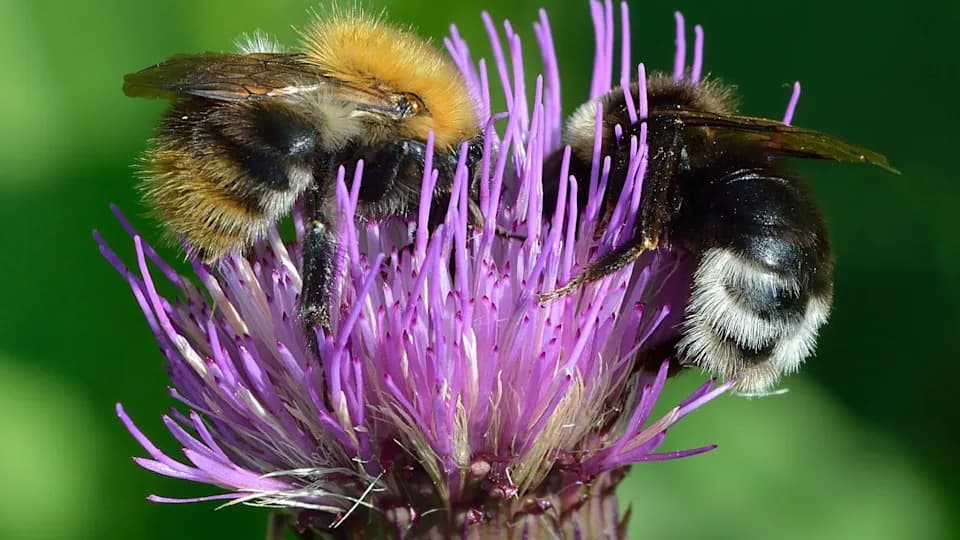
Bumblebee on a flower macro. Bumblebee collects flower nectar© ArtEvent ET/Shutterstock.com
Bees are often portrayed as tireless workers, but surprising laboratory experiments suggest bumblebees may sometimes engage in behavior that looks like play. In a 2017 study led by Lars Chittka at Queen Mary University of London, researchers trained bumblebees to roll small wooden balls for a sugary reward — and then removed that reward to see whether the bees would keep interacting with the balls.
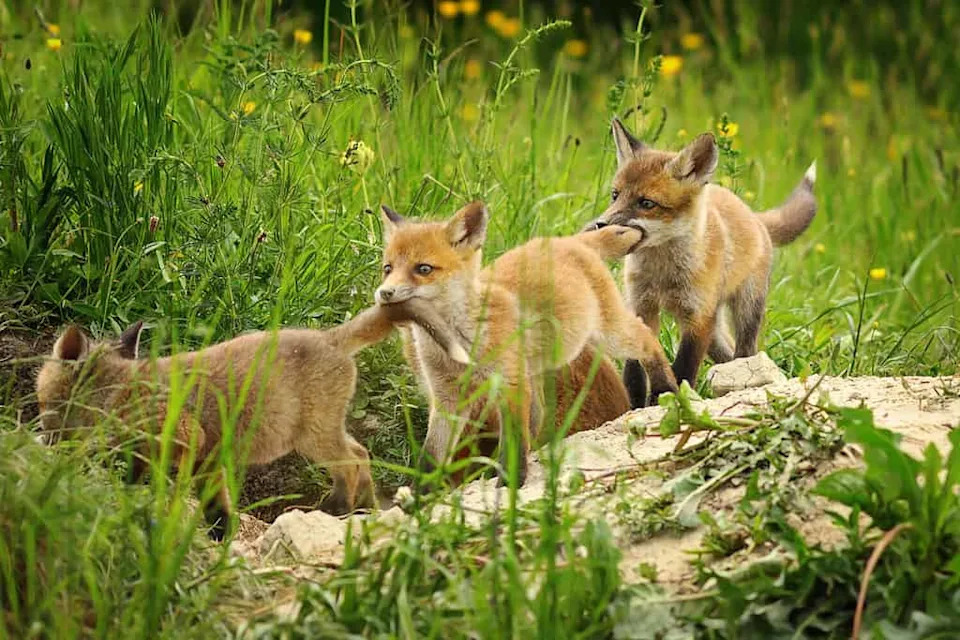
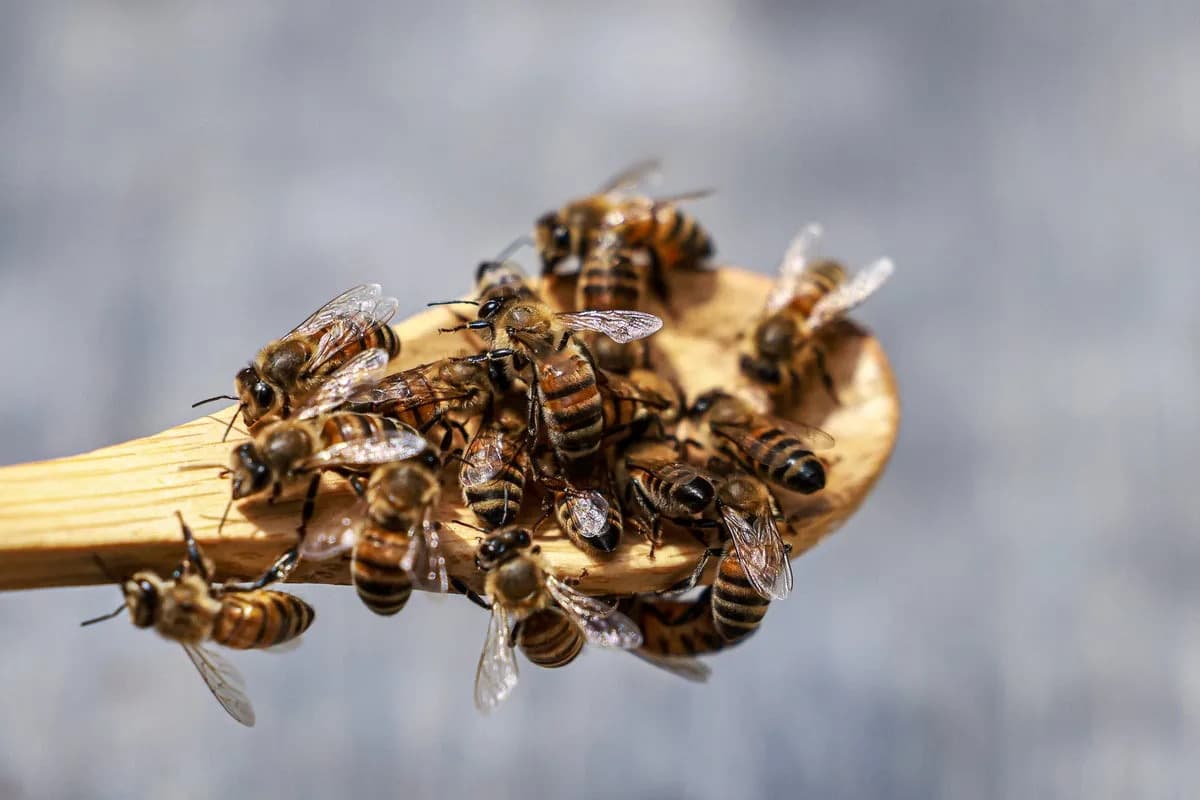
Animals such as mammals and birds are known to play extensively as juveniles, which helps them practice the skills they will need to survive as adults.©taviphoto/Shutterstock.com(taviphoto/Shutterstock.com)
Study Design
The experiment guided bees along a straight path toward a sugar feeding station. Along the route sat wooden balls of different colors; some were fixed in place, while others were loose and free to roll. This setup gave each bee the option to fly straight to the food or pause and interact with the balls. After initial training, the researchers removed the food reward to test whether bees would continue to roll the balls when no immediate benefit was available.
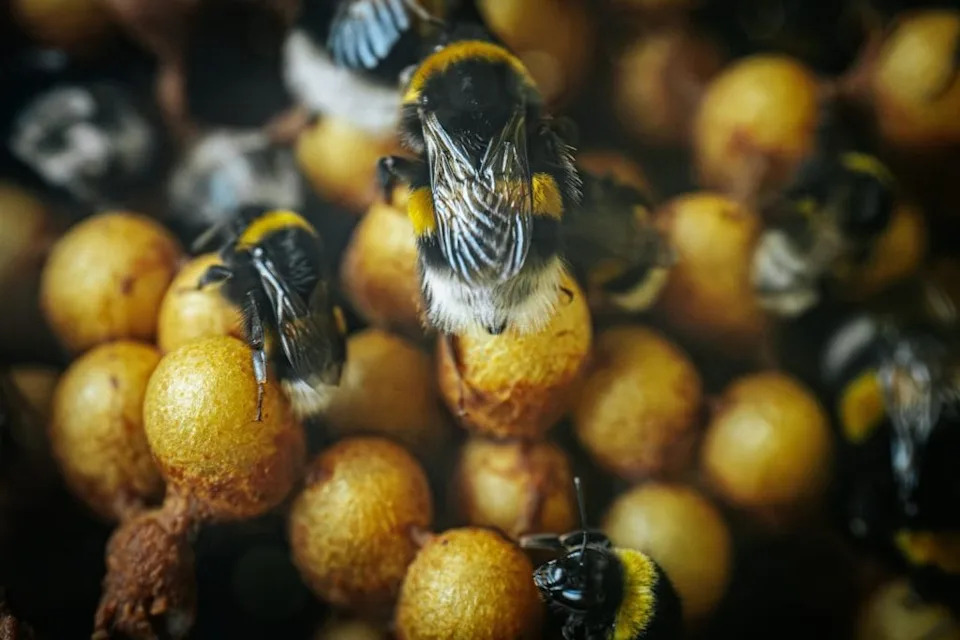
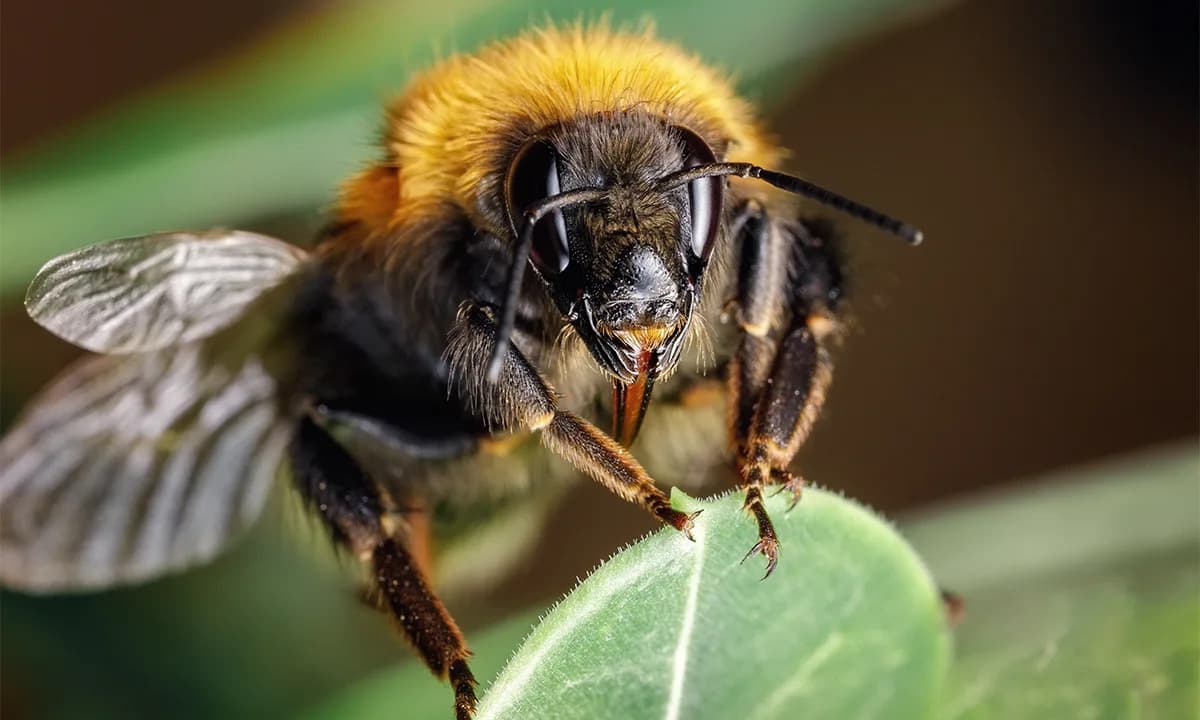
Researchers found that younger bees and male bees would stop and roll wooden balls even when tasty food was available in another direction.©Emvat Mosakovskis/Shutterstock.com(Emvat Mosakovskis/Shutterstock.com)
What Researchers Observed
Over a 54-hour observation period, the team watched 45 bees perform a total of 910 ball-rolling actions. Some individuals tried a ball once and moved on; others returned repeatedly and pushed balls in varied patterns. The sequence of feeding and ball rolling appeared random rather than strictly tied to obtaining food, and younger bees and males were notably more likely to stop and roll loose balls even when a sugary reward was available nearby.
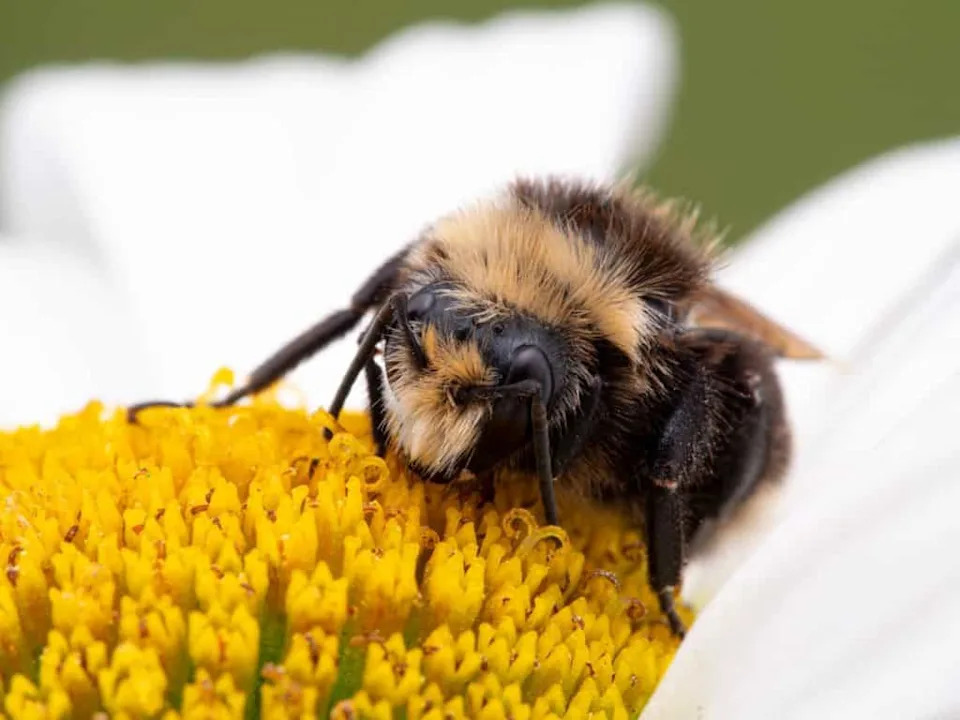
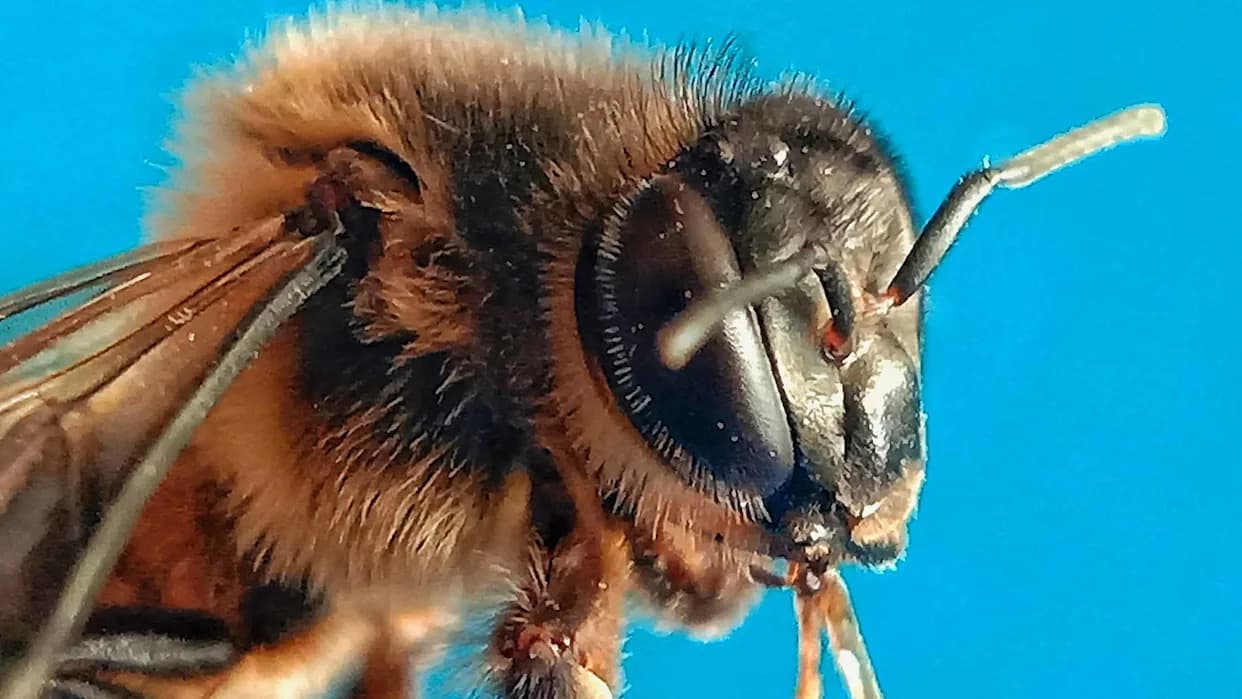
Experiments like these help increase the understanding of animal sentience, even in small creatures like bumblebees.©Ernie Cooper/Shutterstock.com(Ernie Cooper/Shutterstock.com)
Follow-Up Tests
In later trials, researchers trained bees to associate balls with specific colored chambers. After training, bees preferentially entered those chambers again even when they were empty — an outcome the authors interpret as additional evidence of play-like behavior or at least of a preference formed around the object interaction.
Why This Matters
Behavioral scientists often define play as relatively purposeless activity that does not provide an immediate survival benefit. Playfulness is one of several behavioral markers that researchers use when exploring animal sentience. Experts such as Olli Loukola suggest play may serve to develop motor skills, while philosopher Heather Browning notes that complex behaviors can imply more complex neural organization. Understanding whether insects experience inner states similar to those of mammals or birds remains an open question.
Next Steps
Pinpointing why a bee will abandon a straight route to food to roll a ball will likely require neurochemical and neurological studies — for example, measuring which neurotransmitters become active during ball-rolling episodes. Future work could also explore developmental patterns, ecological relevance, and whether similar behavior appears in wild contexts.
Bottom line: The experiments show that bumblebees sometimes interact with objects in ways that resemble play. While the behavior’s precise motivation is unclear, the findings broaden discussions about insect cognition, development, and the possible range of animal sentience.
Help us improve.