A Science study recording neural activity in rhesus macaques found that both medial and lateral cortical regions contribute to producing facial expressions. The lateral cortex encodes rapid movements over milliseconds, while the medial cortex processes slower contextual information that helps guide expression. Neural patterns in both regions appear before the face moves, suggesting expressions are prepared in advance. The findings imply facial displays may be partly voluntary and serve social functions, though researchers call for naturalistic follow-up studies.
Monkeys May Plan Their Faces — Both Cortical Regions Shape Facial Expressions
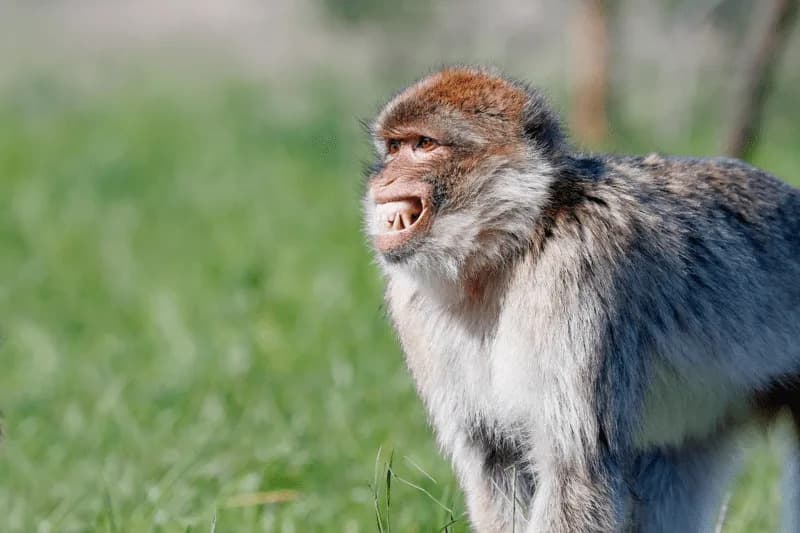
Macaques’ threatening grins and friendly lip-smacks may be partially intentional.
Facial expressions are central to social life, yet scientists have not fully explained how the brain produces them. A new study in Science used rhesus macaques to probe how neural circuits create expressions, and its results challenge a long-running idea that spontaneous, emotion-driven and voluntary, deliberate expressions are produced by separate brain systems.
Study and Methods
Researchers recorded neural activity from rhesus macaques—Old World monkeys with facial muscles and brain organization similar to humans—while the animals interacted with one another and while they viewed digital avatars and videos of other macaques. The team monitored activity in both medial and lateral cortical regions during a range of expressions, from threatening grimaces to affiliative lip-smacking.
Key Findings
Contrary to the traditional view that the medial cortex produces spontaneous, emotion-driven faces while the lateral cortex controls voluntary movements, the study found that both regions participate in generating all types of facial expressions. The two networks differ mainly in timing: activity in the lateral cortex shifts very quickly—on the order of milliseconds—to coordinate rapid facial movements, whereas the medial cortex evolves more slowly and may track contextual information that changes over seconds or longer (for example, whether an ongoing threat has subsided).
Importantly, neural patterns in both regions appeared before the face moved, indicating that the brain prepares expressions in advance rather than merely reacting reflexively.
Interpretation and Implications
Commentators on the paper suggest these results imply facial displays are not purely automatic readouts of inner emotion but can be partly voluntary and used strategically as tools for social influence. As Bridget Waller and Jamie Whitehouse suggest, if expressions can be planned, they likely serve communicative goals shaped by both emotion and cognition.
Limitations and Next Steps
Not all experts are ready to generalize lab-based findings to wild behavior. Alan Fridlund and others recommend follow-up studies in naturalistic settings to confirm whether the same neural patterns occur during free-ranging social interactions. Future work should also probe how other brain areas and sensory feedback contribute to the timing and flexibility of facial displays.
Bottom line: Facial expressions in macaques arise from coordinated activity across medial and lateral cortex, with distinct tempos—suggesting a blend of preparatory planning, rapid motor control, and contextual evaluation that supports flexible social signaling.
Help us improve.