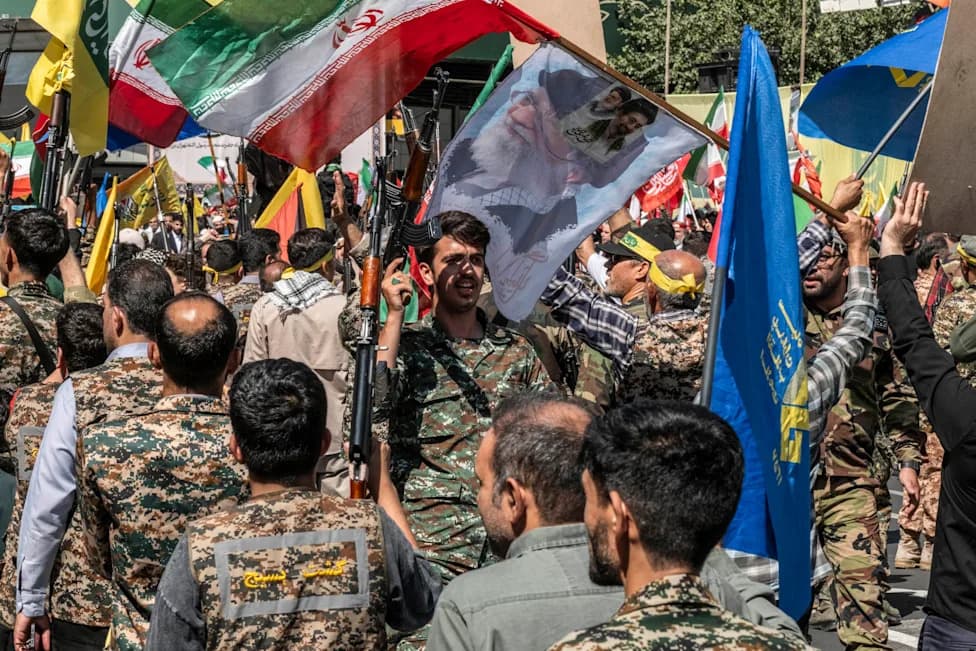
U.S. forces have launched multi-day air exercises in the Middle East designed to sharpen rapid deployment, dispersed operations and combat sortie generation. President Trump renewed threats toward Iran, urging talks on a new nuclear deal and warning that "time is running out." Iran warned it would respond "immediately and powerfully" to any aggression while saying indirect diplomatic messages continue. Regional partners and EU governments are weighing their responses, including possible sanctions and whether to designate the IRGC as a terrorist organization amid a deadly crackdown on protesters.
US Launches Multi-Day Air Drills In Middle East As Trump Renews Threats Toward Iran
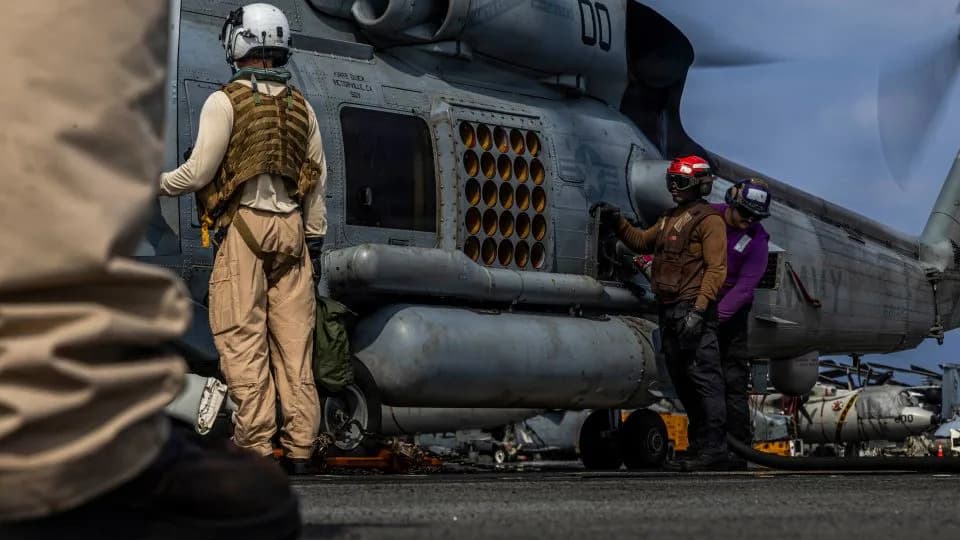
Sailors fuel an MH-60R Sea Hawk helicopter on the flight deck of the Nimitz-class aircraft carrier USS Abraham Lincoln in the Indian Ocean on January 21, 2026, in this photo provided by the U.S. Navy. - Seaman Daniel Kimmelman/AP
The United States has stepped up its military presence in the Middle East with multi-day air exercises as tensions with Iran rise amid renewed threats from President Donald Trump. U.S. Air Forces Central Command (AFCENT) says the drills are designed to sharpen rapid deployment, dispersed operations and the ability to sustain missions with a minimal footprint while operating alongside regional partners.
U.S. Exercises And Force Posture
AFCENT said the exercise highlights airmen's capacity to generate combat sorties under demanding conditions and to operate from dispersed locations when required. Central Command (CENTCOM) also confirmed the arrival of the USS Abraham Lincoln carrier strike group, but provided few operational details about exact locations, participating assets or the duration of the drills.
According to CENTCOM, the readiness exercises are being conducted with host-country approval and in close coordination with civil and military aviation authorities, emphasizing safety, precision and respect for sovereignty.
Political Rhetoric And Threats
President Trump renewed warnings aimed at Tehran, reiterating last week's claim that an "armada" is moving toward Iran and urging Iranian leaders to come to the negotiating table for a "fair and equitable" nuclear deal. On social media he warned:
"Time is running out."He also warned that "the next attack will be far worse" than last year’s U.S. strikes on Iranian nuclear facilities if Iran does not negotiate.
U.S. officials told reporters that the president remains publicly and privately weighing options, and there is no indication a decision to use military force has been made.
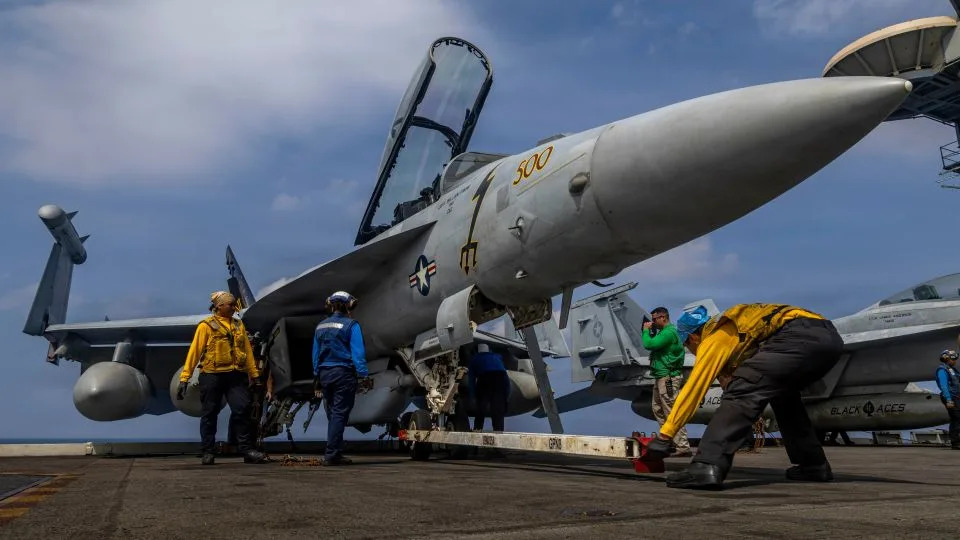
This photo provided by the US Navy shows sailors preparing a Boeing EA-18G Growler on the flight deck of the Nimitz-class aircraft carrier USS Abraham Lincoln in the Indian Ocean on January 21, 2026. - Seaman Daniel Kimmelman/AP
Iranian Response
Iranian officials issued firm warnings while maintaining a rhetorical opening for diplomacy. Foreign Minister Abbas Araghchi said Iran's armed forces are prepared to respond "immediately and powerfully" to any aggression against its territory, airspace or waters, and reiterated Tehran's stated willingness to pursue a fair nuclear agreement.
Kazem Gharibabadi, a deputy foreign minister, said no direct negotiations are underway but that "indirect messages are being exchanged," and urged Washington to stop issuing threats if it genuinely seeks talks. Foreign Ministry spokesman Esmaeil Baghaei added that the arrival of warships will not alter Iran's defensive determination.
Brig. Gen. Ahmad Vahidi, deputy commander of the Islamic Revolutionary Guard Corps (IRGC), stressed that Iran's growing defensive capabilities make any hostile operation against it "extremely complex and high-risk" for potential adversaries.
Protests And Humanitarian Concerns
Heightened tensions have been fueled by Iran's crackdown on nationwide protests. The U.S.-based Human Rights Activists News Agency (HRANA) reported more than 5,800 protesters killed since demonstrations began; another 17,091 deaths were said to be under review. CNN has not independently verified those figures; Iran's government acknowledged that thousands of people had been killed. U.S. leaders have publicly warned Tehran against further violence while keeping a limited diplomatic opening should Iran be willing to discuss terms.
Regional And International Reactions
Regional partners have signaled limits to their support for offensive options. Saudi Arabia and the United Arab Emirates have said they will not allow their airspace to be used for military action against Iran; the UAE has also stated it will not provide logistical support for strikes. Meanwhile, European governments are debating new sanctions and whether to designate the IRGC as a terrorist organization. Officials from France, Italy and Israel have urged stronger measures in response to the crackdown on protesters.
The situation remains fluid: U.S. forces are conducting readiness drills intended to ensure rapid response capability, while diplomatic channels and public rhetoric continue in parallel. Authorities on all sides emphasize monitoring developments closely as calculations over military, political and humanitarian risks evolve.
Help us improve.