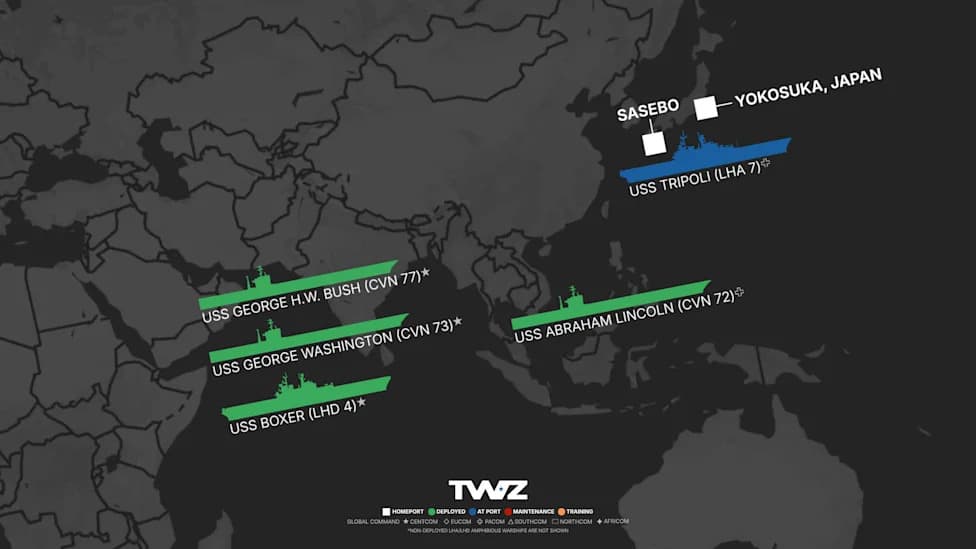
The US has redirected the USS Abraham Lincoln carrier strike group from the South China Sea toward the Middle East as President Trump weighs responses to Iran’s deadly crackdown on protests. Human-rights monitors report more than 2,600 deaths since Dec. 28, while Iran’s internet shutdown may conceal an even higher toll. Diplomatic efforts from Gulf states and regional leaders reportedly delayed immediate strikes, though US officials say military options remain under consideration. International actors including the UN, Russia and Israel are urging restraint to avoid wider regional escalation.
US Redirects USS Abraham Lincoln Carrier Strike Group Toward Iran Amid Deadly Protests
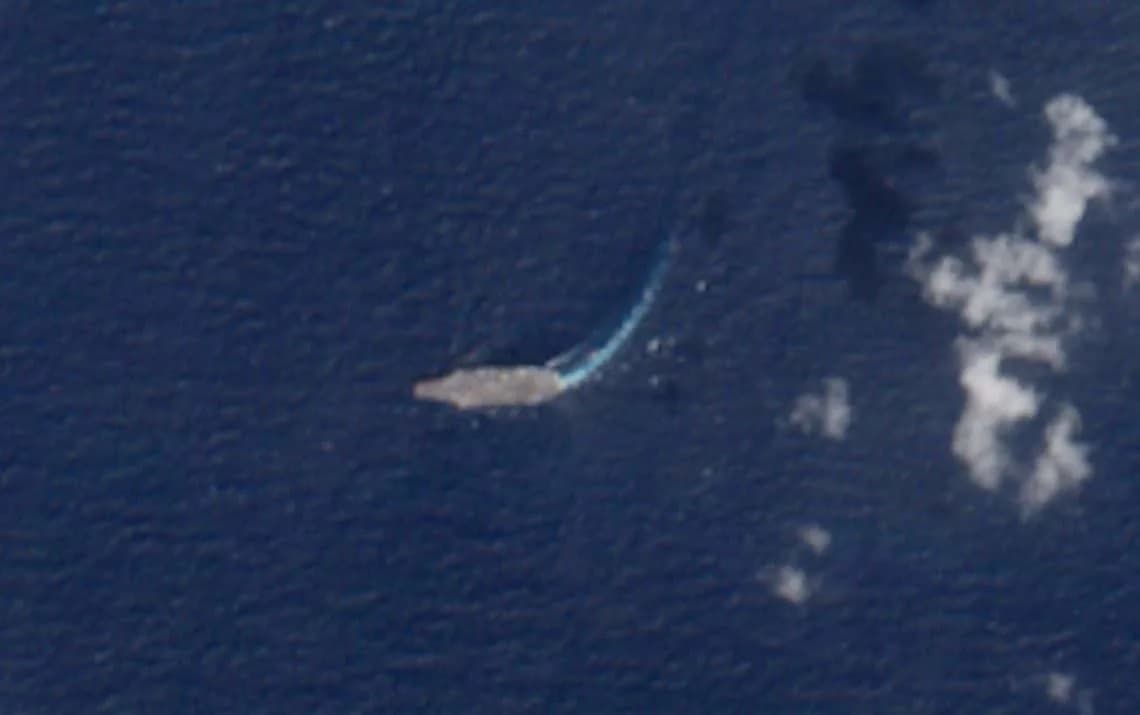
Satellite imagery showed the USS Abraham Lincoln positioned near the Philippines, as it turned west towards the Middle East
The US Navy has ordered the USS Abraham Lincoln aircraft carrier strike group to reverse course from the South China Sea and head toward the Middle East, US officials said. The formation — including carrier-based fighter aircraft, guided-missile destroyers and at least one attack submarine — is expected to arrive in the region within a week.
Context: The move comes as Iran faces a violent government crackdown on nationwide protests that began on December 28. Human rights monitors have reported thousands of deaths, while Iranian authorities have restricted internet access, limiting independent confirmation of the full scale of the unrest.
Defense Department officials confirmed the carrier group’s redeployment as President Donald Trump weighed US responses to the crisis. Satellite imagery from Copernicus, a maritime-monitoring data provider, showed the Abraham Lincoln group turning west away from the Indo-Pacific, consistent with the US account that it was being repositioned toward Iran.
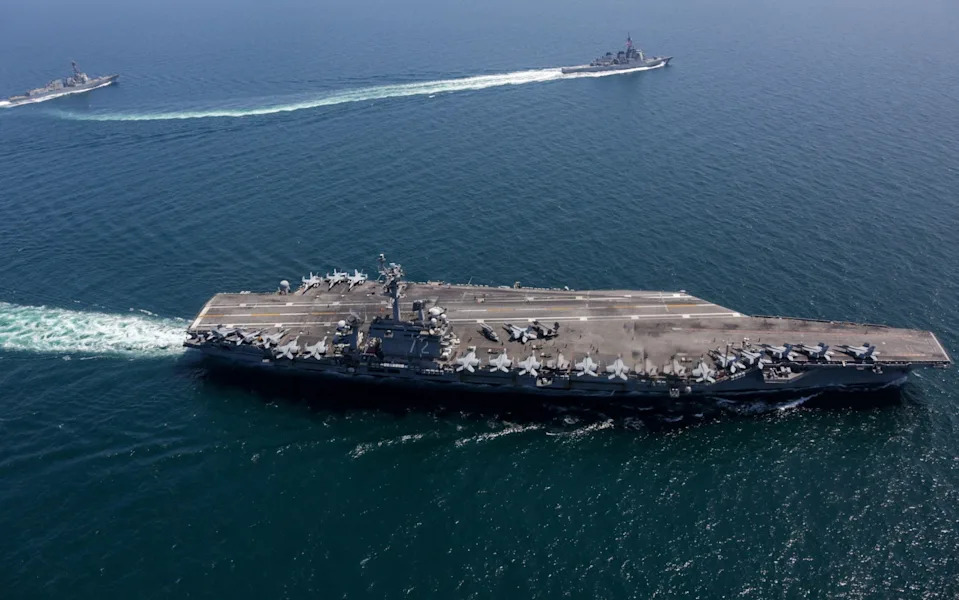
The Pentagon said it was moving the USS Abraham Lincoln aircraft carrier and its strike group towards the Middle East - US Navy/Shutterstock
Military Options and Caution: Senior US officials told media outlets the president was considering strikes on potential targets such as ballistic missile sites and elements of Iran’s domestic security apparatus. However, any operation was described as "at least several days away." Advisers raised concerns about protecting US forces from possible Iranian retaliation and about the regional consequences of military action, including impacts on neighboring countries and global energy markets.
Diplomatic efforts by Persian Gulf states reportedly persuaded the president to delay immediate strikes. Israeli Prime Minister Benjamin Netanyahu also urged caution, warning that Israel could be exposed to retaliatory attacks. At an emergency United Nations Security Council meeting, US envoy Mike Waltz said "all options are on the table," while UN Secretary-General António Guterres urged maximum restraint to avoid escalation into a wider regional conflict.
Humanitarian And Political Developments: Reports from the US-based Human Rights Activists News Agency and other observers have placed the death toll at more than 2,600, including foreign nationals and aid workers. Iran’s extensive internet shutdown has hindered reporting; observers expect casualty figures may rise once communications are restored. International pressure increased after Iran announced it had canceled the planned execution of Erfan Soltani, a 26-year-old protester, and the White House later said a batch of executions had been halted — developments that briefly softened Washington’s posture.
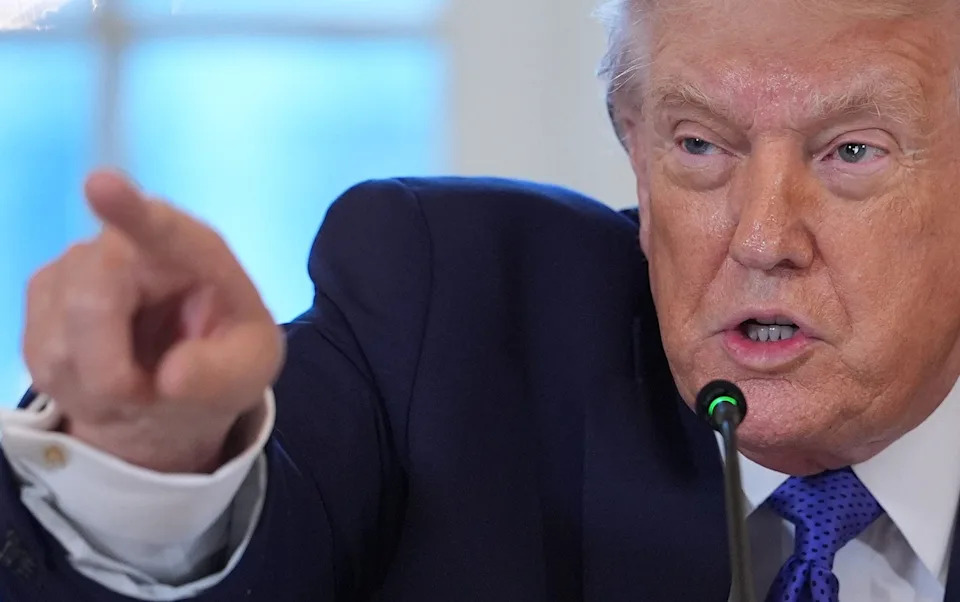
Donald Trump warned that should the killings continue in Iran, there would be ‘grave consequences’ - Evan Vucci/AP
Regional And International Reactions: Washington criticized South Africa for allowing Iranian naval participation in BRICS maritime exercises off Cape Town, calling Iran a "destabilising actor" and warning that such involvement undermines regional stability. South Africa reportedly limited Iran’s role at the last minute, but satellite images suggested at least one Iranian corvette took part in some drills.
Meanwhile, the Kremlin said President Vladimir Putin spoke with Iran’s president, Masoud Pezeshkian, and with Israeli Prime Minister Benjamin Netanyahu to urge de-escalation and offer mediation. Israel’s Mossad director, David Barnea, arrived in the United States for talks focused on Iran, according to reports.
Outlook: The US redeployment signals heightened readiness but also underscores the delicate balance policymakers face between responding to human-rights abuses and avoiding a broader regional war. For now, diplomacy remains active across capitals as leaders weigh the risks and consequences of military action.
Help us improve.