Researchers found that an elite group of word-learning dogs can acquire new toy names simply by overhearing their owners speak. In tests with 10 gifted dogs, including a Border collie named Basket and a Labrador named Augie, seven correctly retrieved newly named toys after passive exposure. Dogs even learned labels when the toy was hidden in an opaque box, suggesting they can form word–object links without simultaneously seeing the object. The study, published in Science, points to distinct mechanisms for adult canine word learning compared with human toddlers.
Gifted Dogs Can Learn New Toy Names Just By Overhearing Their Owners
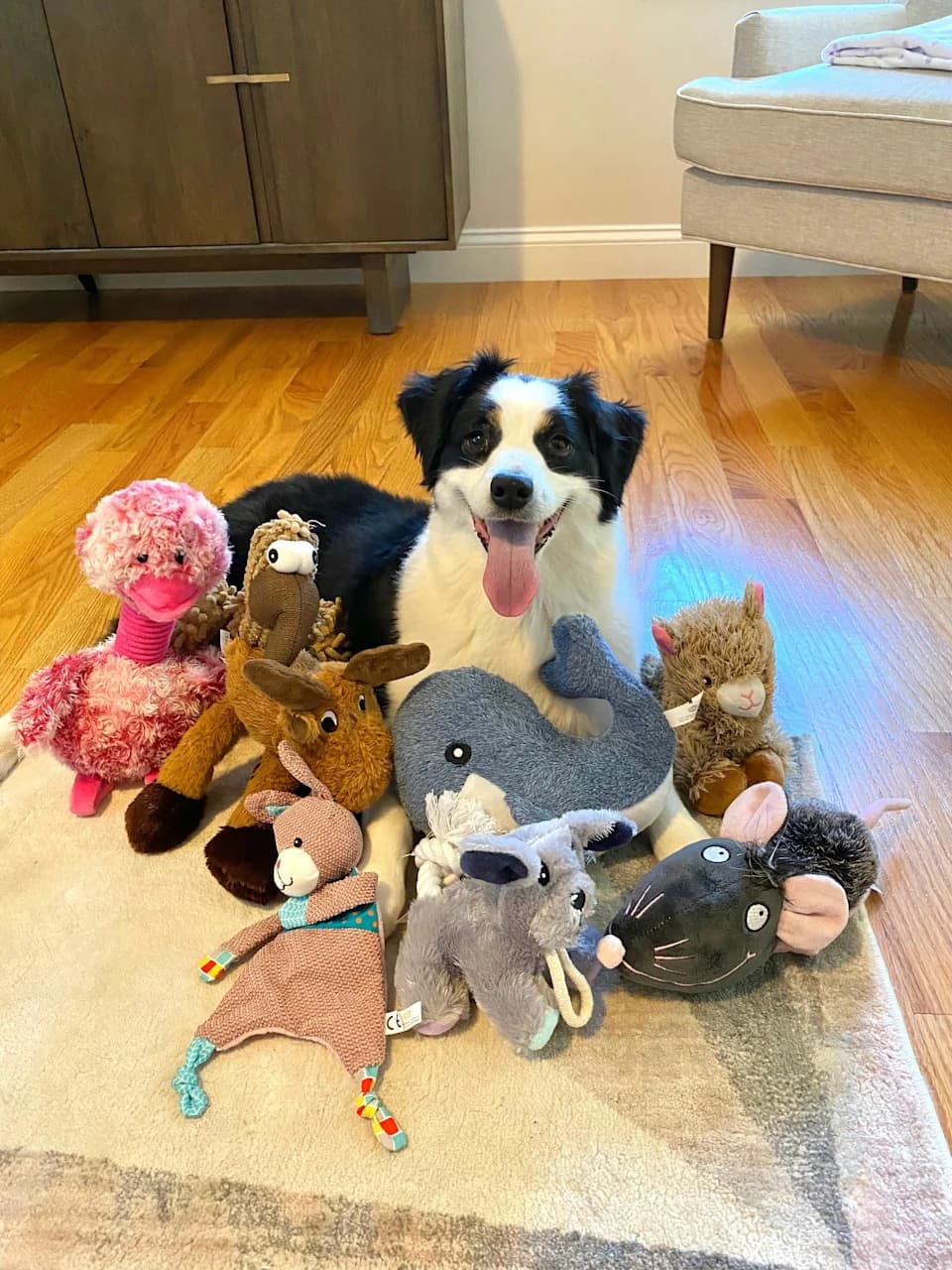
This 2022 image provided by Shany Dror shows a dog named Mugsy in Massachusetts, who has learned the names of many of her toys. (Francine Hannan/Shany Dror via AP)(ASSOCIATED PRESS)
NEW YORK — Dogs are famously good at following action commands like “sit” and “stay,” but most struggle to remember the names of objects such as squeaky or stuffed toys. A small, elite group of word-learning dogs, however, can retain hundreds of toy names — and new research shows some of them can learn those names simply by eavesdropping.
Study Details
Researchers tested 10 of these exceptional dogs — including a Border collie named Basket and a Labrador named Augie. Each dog watched its owner hold an unfamiliar toy and talk about it with another person. The dogs were then sent to a different room and asked to retrieve the newly named toy from a pile of many others. Seven of the 10 dogs correctly selected the target toy after only passively listening to the interaction.
The animals even succeeded in trials where the toy was hidden inside an opaque box while the owner spoke about it, creating a clear separation between hearing the label and seeing the object. That result suggests the dogs formed a word–object link without direct visual confirmation at retrieval time.
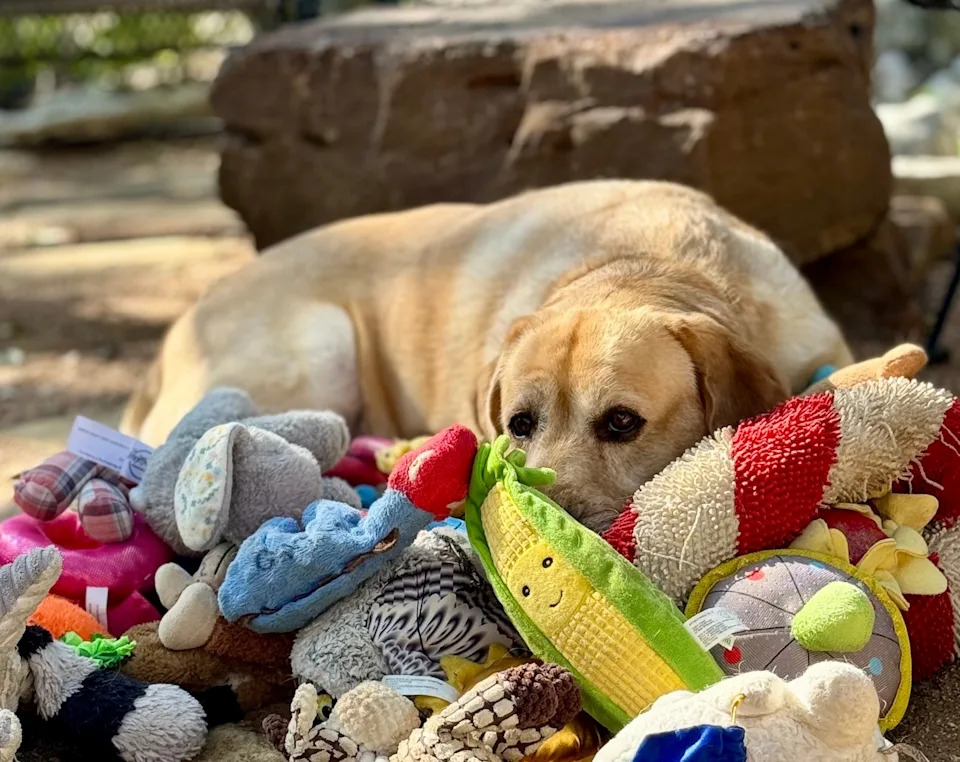
This 2023 image provided by Shany Dror shows a labrador named Augie in Texas. (Don Harvey/Shany Dror via AP)(ASSOCIATED PRESS)
“This is the first time that we see a specific group of dogs that are able to learn labels from overhearing interactions,” said study author Shany Dror of Eötvös Loránd University in Hungary and the University of Veterinary Medicine in Austria.
Only a handful of nonhuman species — some parrots and apes, for example — have shown similar eavesdropping abilities. The capacity to pick up words through observation is also important in human development: children under 2 can learn new words by listening to conversations they overhear. Because the dogs in this study were fully grown, Dror suggested the neural mechanisms that enable their learning may differ from those used by toddlers.
“The new work shows how animals have a lot more going on cognitively than maybe you think they do,” said animal cognition expert Heidi Lyn of the University of South Alabama, who was not involved in the study. The research was published Thursday in the journal Science.
Scientists estimate there are roughly 50 such “word-learner” dogs known so far, and researchers do not yet know what genetic, training, or social cues underlie their exceptional skills. Dror and colleagues plan to continue studying these gifted pooches to determine which cues they use when learning names. She also noted the practical challenges of working with enthusiastic canine participants: “We do have dogs coming to the lab sometimes, which is really nice, but then often someone pees on the couch. So that does happen.”
This story is based on reporting by The Associated Press.
Help us improve.