The metaphor of an “axis” borrows the moral and strategic stigma of World War II’s Axis powers to frame contemporary rivals. Labels such as “axis of evil,” “axis of resistance” and “axis of upheaval” do more than describe ties; they shape public perception and policy by turning disparate challenges into a single antagonistic story. This rhetorical power can mobilize opinion but also harden diplomatic barriers and make compromise politically costly.
From 'Axis of Evil' to 'Axis of Upheaval': How the 'Axis' Metaphor Shapes Modern Geopolitics
The world spins on its axis.iStock/Getty Images Plus
The word “axis” carries weight far beyond its geometric meaning. Used by commentators and policymakers, it summons the memory of World War II’s Axis powers and imports their moral and strategic connotations into contemporary debates about rival states.
Earlier this year, scholar Walter Russell Mead warned in a Wall Street Journal column about an “axis of revisionist powers,” naming China, Russia, North Korea and Iran. Variations on that grouping have also appeared as the “axis of upheaval” and the “axis of autocracies.”
Why Labels Matter
As a scholar of international relations, I argue that calling a set of states an “axis” does more than describe patterns of cooperation: it performs political work. The label borrows moral freight from the original Axis of World War II and places contemporary rivals into a familiar story of menace and moral danger. Applied rhetorically, it converts separate grievances or threats into a single, dramatized antagonism.
Origins and Revival
The term’s modern lineage begins not in Washington but in Rome. In 1936 Benito Mussolini declared a “Rome–Berlin Axis,” and by World War II the phrase “Axis powers” referred to the military coalition of Germany, Italy and Japan. For nations outside that coalition, “axis” thus came to connote unity, threat and moral wrongdoing.
After the Axis defeat in 1945 the label largely receded from everyday use—until it was revived by U.S. President George W. Bush. In his 2002 State of the Union address, Mr. Bush coined the phrase “axis of evil,” grouping Iran, Iraq and North Korea into a single rhetorical category. The three states had little formal connection to one another, but the label fused them in the public imagination as a unified menace.
"The phrase ‘axis of evil’ was not an empirical map of reality so much as a rhetorical tool intended to shape perception."
Reclaiming and Recasting the Term
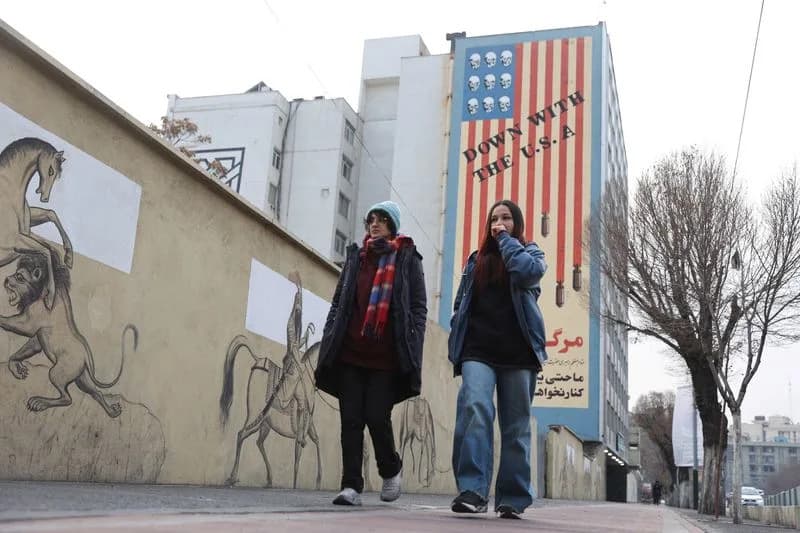
That rhetorical move provoked counter-claims. A Libyan daily, Al-Zahf Al-Akhdar, labeled Washington’s targets an “axis of resistance.” Iranian officials and allied movements adopted and reshaped that language, using it as a badge of honour for groups that framed themselves as resisting American influence and Israeli occupation—turning a Western accusation into a unifying identity for some actors.
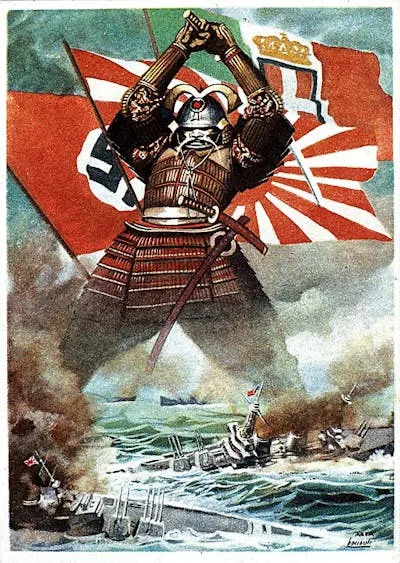
A propaganda poster for the original ‘axis’ – Italy, Germany and Japan.Gino Boccasile, Public domain, via Wikimedia Commons
Recent Uses: Upheaval and Multipolarity
The Russian invasion of Ukraine in 2022 renewed U.S. analysts’ use of “axis” language. In 2024, a Foreign Affairs article by Andrea Kendall-Taylor and Richard Fontaine warned of an “axis of upheaval” — China, Iran, North Korea and Russia — arguing that these states share a disposition to challenge the rules and institutions of the prevailing international order. Although they lack deep formal coordination, the label captured a mood: a drift toward multipolar rivalry and systemic friction.
The Risks and Rewards of the Metaphor
Describing rivals as an “axis” is never neutral. It can concentrate public attention, clarify perceived threats, and galvanize policy action. But it also flattens nuance, hardens diplomatic categories and makes compromise politically costly—compromises that might otherwise be possible through quieter engagement.
For example, the “axis of evil” frame helped shape the political environment that led to the 2003 invasion of Iraq while simultaneously making negotiations with Iran and North Korea politically toxic for years.
Language and Moral Geography
Whether cast as “evil,” “resistance” or “upheaval,” each iteration of the “axis” metaphor tells us about how political language constructs the world it describes. When we invoke an “axis,” we are not just cataloguing alliances: we are drawing a moral map of global politics—deciding who lies inside the circle of legitimacy and who is consigned to the outside.
Author: Andrew Latham, Macalester College. Originally published by The Conversation, republished here with permission.
Further reading: Walter Russell Mead, Wall Street Journal; Andrea Kendall-Taylor and Richard Fontaine, Foreign Affairs (2024).
Help us improve.