The madman theory—using apparent irrationality to gain bargaining leverage—originated in an era of slower information flows and controlled diplomatic signaling. Modern media make domestic pushback visible to foreign audiences, turning internal constraints into international signals. Empirical research shows unpredictability can yield narrow gains but imposes domestic costs that reduce overall credibility. Today, resolve is better signaled by institutional coherence and consistent behavior than by episodic volatility.
Why the 'Madman Theory' Fails in a 24/7 Media World

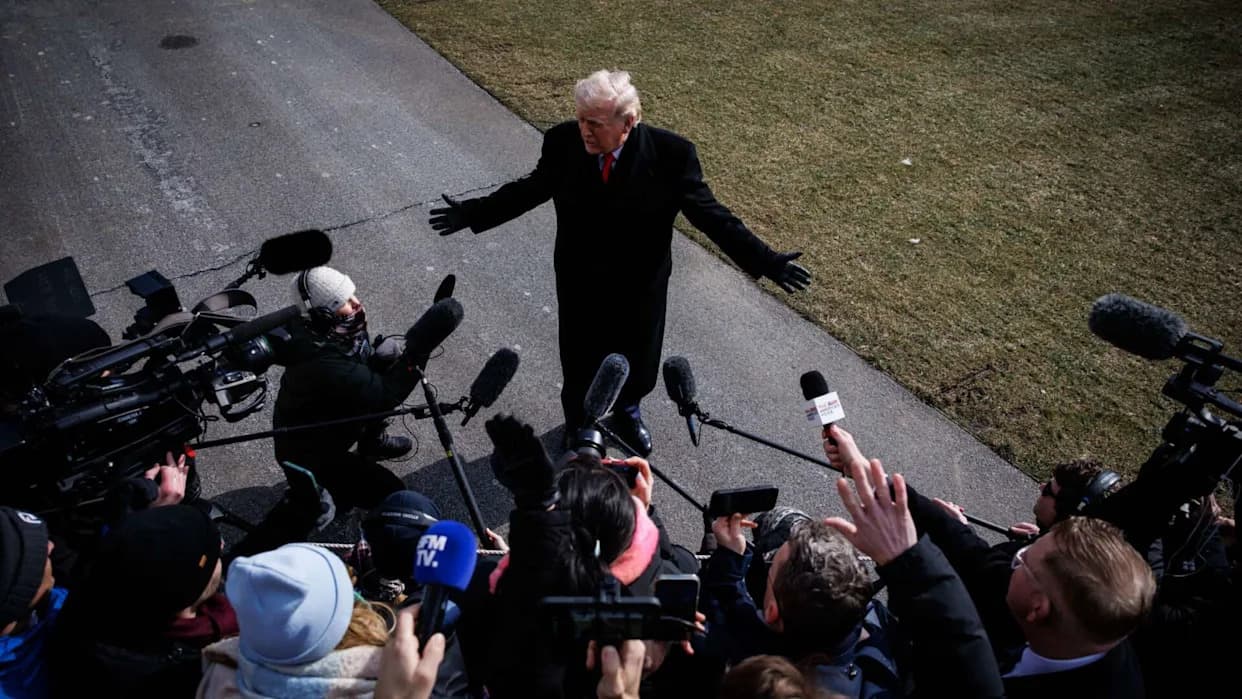
President Trump's foreign-policy style is often framed through the so-called madman theory—the notion that deliberate unpredictability can be turned into leverage by unsettling rivals and distorting their calculations. That interpretation, encouraged by Trump and accepted even by many of his critics as an accurate description, relies on a premise that no longer holds: that strategic irrationality can be credibly signaled in a controlled information environment.
Why the Madman Theory Worked—Then
The madman theory is most commonly associated with Richard Nixon. Its logic was never to endorse chaos but to exploit ambiguity as a signaling tool in an era of slower information flows and tightly managed diplomatic channels. If adversaries believed escalation might slip beyond rational control, they might act more cautiously. That effect depended on signals lingering without immediate clarification and on audiences that could be managed.
Why It Fails Now
Two changes have undercut that logic. First, modern media and communications are instantaneous and global: court rulings, legislative pushback, agency resistance, and allied concerns are visible to foreign audiences in real time. Second, domestic political costs are no longer private side effects; they become public signals that foreign governments incorporate into assessments of a leader's freedom of action.
When domestic institutions push back, observers infer constraint rather than danger. Repeated volatility becomes pattern, and pattern removes ambiguity—the very commodity on which the madman theory depends. Instead of producing fear, erratic rhetoric increasingly registers as noise; capability and institutional coherence become the decisive metrics for credibility.
Evidence and Broader Implications
Recent empirical work—such as a Belfer Center study—finds that reputations for unpredictability can sometimes yield limited bargaining leverage but exact meaningful domestic costs: weakened public support, frayed institutional cooperation, and eroded trust. In today’s transparent media environment those domestic costs feed directly into international perception, reducing rather than enhancing deterrent effect.
Trump illustrates this dynamic. Volatility unfolded in full view of U.S. courts, agencies, legislatures, and allies. Observers treated those visible constraints as signs that his freedom of action was limited, and foreign actors adjusted their calculations accordingly. The problem is structural, not personal: any leader operating in an open political system faces the same trade-off.
What Leaders Should Do Instead
Coercion and deterrence have not disappeared, but the optimal signal of resolve has changed. Credibility today rests on:
Institutional Coherence—consistent policy across executive agencies, courts, and congresses; and Behavioral Consistency—predictable, sustained commitments that demonstrate capability and follow-through.
Leaders who rely on episodic volatility misunderstand both the contemporary information environment and the narrower historical logic of the madman theory. In transparent systems, unpredictability tends to expose limits rather than create leverage.
Andrew Latham is a professor of international relations at Macalester College in Saint Paul, Minn., a senior fellow at the Institute for Peace and Diplomacy, and a non-resident fellow at Defense Priorities in Washington.
Copyright 2026 Nexstar Media, Inc. All rights reserved. This material may not be published, broadcast, rewritten, or redistributed.
Help us improve.