Researchers at the University at Buffalo found that PFOS, a persistent PFAS compound, shifts from branched isomers in water and market fish to predominantly linear isomers in bird egg yolks. Linear PFOS binds more tightly to proteins and accumulates in tissues, raising concerns for predators and people who eat fish—especially bottom-dwelling species. The study argues regulators should distinguish PFAS isomers rather than treating all forms as equivalent and demonstrates advanced testing methods that make such distinctions possible.
Study: PFOS Changes Form Through the Food Chain — Linear Isomers Build Up in Predators
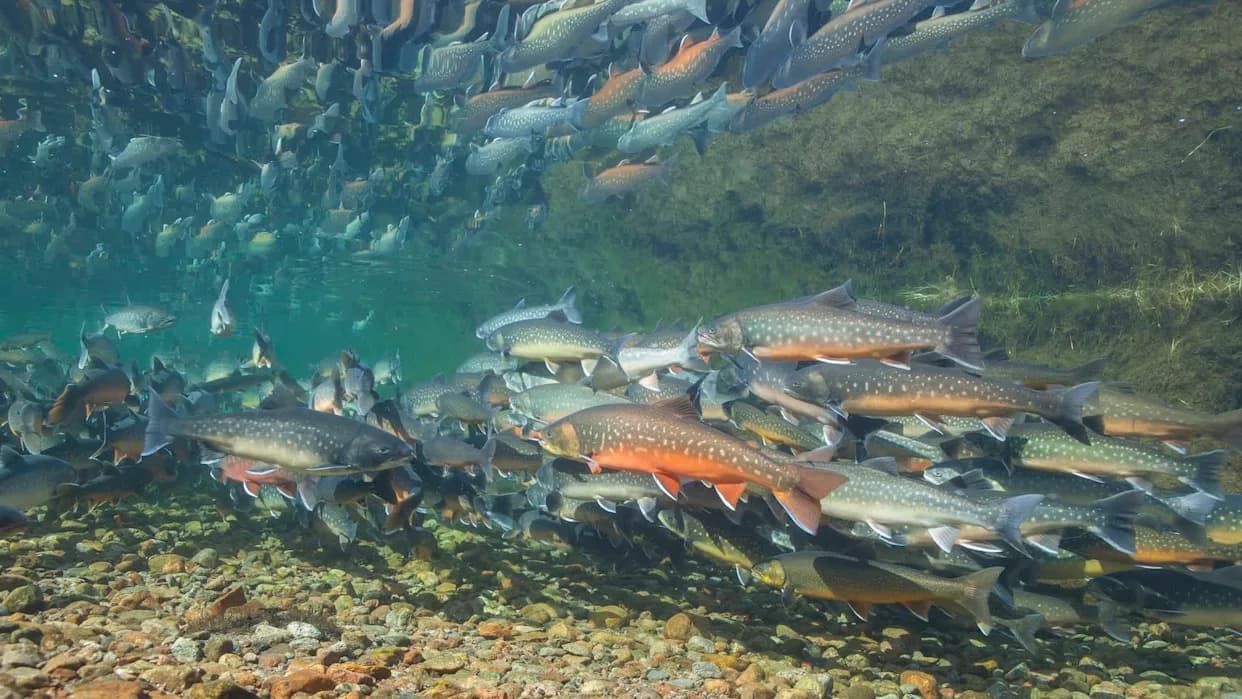
Photo Credit: iStock
Chemists at the University at Buffalo report new evidence that one of the most concerning "forever chemicals," perfluorooctanesulfonic acid (PFOS), changes its structural composition as it moves through aquatic ecosystems — with potential implications for regulation and human exposure.
Key Findings
Using advanced analytical methods to separate PFAS isomers by molecular shape, the researchers analyzed samples from wastewater, supermarket fish, and eggs of fish-eating birds. They found that more than half of PFOS in wastewater and market fish appeared as branched isomers — forms that are relatively more water-soluble. In contrast, nearly 90% of PFOS in the yolks of bird eggs was the linear isomer, which binds more tightly to proteins and tends to persist in tissues for longer periods.
"Taken together, these results suggest that as PFOS moves across the food web — from water to fish to birds — its linear isomers become more prevalent than branched isomers," said Diana Aga, the study's senior author. "Our study is yet another piece of evidence that PFAS isomers can bioaccumulate at different rates and should not be treated as if they were all the same."
Why This Matters
Linear PFOS isomers' greater tendency to bind to proteins and persist in tissues means predators — including humans who eat fish — could experience higher and longer-lasting internal exposures than water concentrations alone would suggest. The team also observed that bottom-dwelling (benthic) fish had higher PFOS concentrations than open-water species, which is important for consumers who regularly eat species like catfish or certain flatfish.
Regulatory and Health Context
Per- and polyfluoroalkyl substances (PFAS) have been linked to cancer, immune-system suppression, hormone disruption, and developmental problems. Current regulatory monitoring in the U.S. and Europe often reports PFAS as total concentrations without distinguishing structural isomers. This study suggests that treating all PFAS or all PFOS isomers as equivalent may underestimate risk for consumers and wildlife.
Practical Steps and Policy Implications
The researchers' use of specialized mass spectrometry and separation techniques shows it is feasible to track isomer-specific behavior across environmental compartments and trophic levels. That information can help policymakers refine standards, target cleanups, and prioritize which forms of PFAS pose the greatest long-term risk. Individuals can reduce personal exposure by checking local water-quality reports, choosing PFAS-free cookware and consumer products, increasing dietary fiber (which can reduce PFAS absorption), and supporting stronger chemical regulations.
The study's findings were published in the Journal of Agricultural and Food Chemistry and the Journal of the American Society for Mass Spectrometry.
Help us improve.