Rice University researchers developed a copper‑substituted layered double hydroxide (LDH) that can adsorb certain PFAS up to 100× faster than common filtration media. The PFAS‑loaded material can be thermally treated at roughly 400–500°C to break carbon–fluorine bonds and lock fluoride into a stable calcium‑fluoride residue. While the LDH is reusable and compatible with existing systems, major challenges remain for scaling, safety, regulatory approval and real‑world performance.
Rice Researchers Develop Copper‑Aluminum LDH That Adsorbs PFAS Up To 100× Faster, With Promising Destruction Route

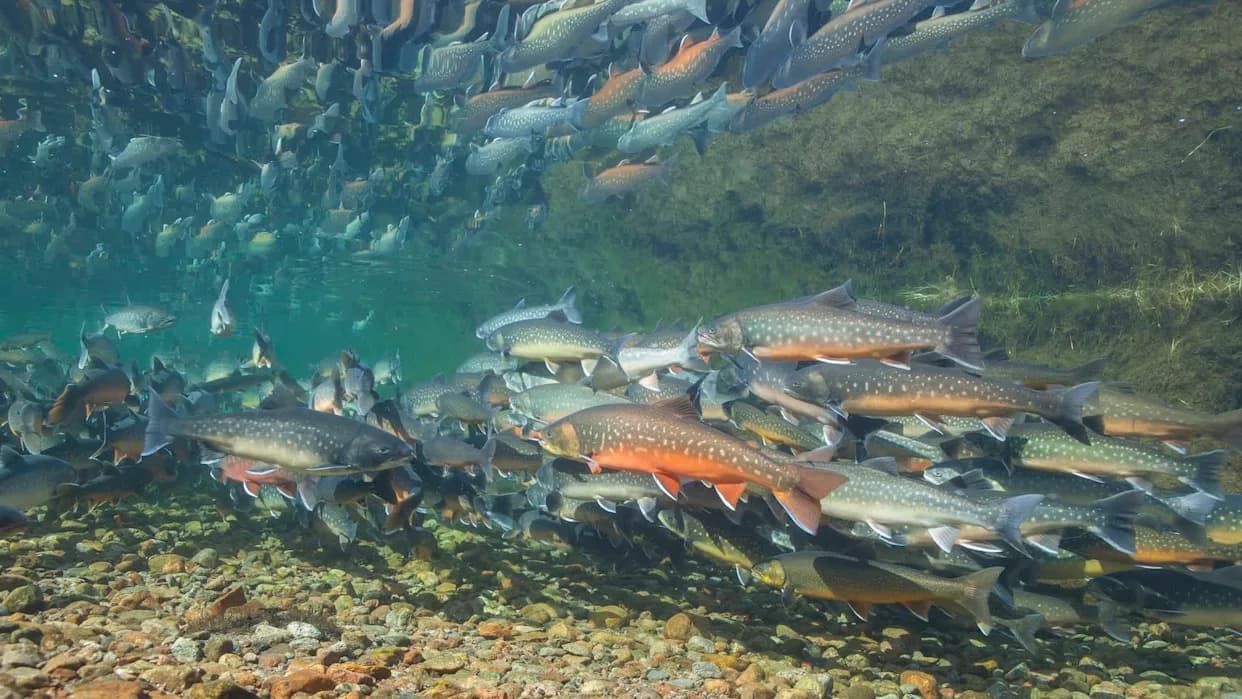
Pfas are among the most common water pollutants.Photograph: Olga Rolenko/Getty Images(Photograph: Olga Rolenko/Getty Images)
Rice University researchers report a new layered double hydroxide (LDH) material made from copper and aluminum that can adsorb certain long‑chain PFAS — the so‑called “forever chemicals” — up to 100 times faster than commonly used filtration media. The team also describes a complementary destruction method for PFAS captured by the material, though both approaches face challenges before industrial deployment.
How the LDH Works
The LDH is a positively charged, copper‑substituted variant of known layered double hydroxides. Long‑chain PFAS molecules are typically negatively charged in water, so they are rapidly attracted to and bound by the LDH through electrostatic adsorption. According to the researchers, this electrostatic mechanism is what yields uptake rates far faster than conventional media such as granular activated carbon, ion exchange resins, or reverse osmosis membranes.
Destruction Pathway and Waste Form
PFAS are difficult to break down because of strong carbon–fluorine bonds. Rice’s paper reports that PFAS bound to the LDH can be thermally treated at roughly 400–500°C to cleave those bonds — a substantially lower temperature than some high‑temperature incineration approaches. During treatment, fluoride is trapped by the LDH and ultimately stabilized as calcium‑fluoride, a chemically stable residue the authors say is suitable for standard disposal pathways.
Potential Advantages
Key potential benefits of the Rice LDH include:
- Very rapid adsorption rates — enabling smaller contactors or faster flow-through treatment.
- Compatibility as a “drop‑in” material for existing filtration systems, which could reduce retrofit costs.
- Reusability and high loading capacity, which may lower lifecycle treatment expenses.
Limits, Risks, and Next Steps
Despite promising lab results, significant hurdles remain. Many PFAS technologies that perform well at bench scale have struggled to scale up to industrial volumes. Open questions include how the material performs in complex, real‑world water matrices (with competing ions and organic matter), the energy and emissions profile of the thermal treatment at scale, occupational safety for workers handling PFAS‑loaded media, regulatory approval, permitting, and the complete lifecycle analysis of waste forms.
“We’re going to need as many technologies as we can possibly find to deal with PFAS in drinking water, and if this works to scale on wastewater, then it would be really something to pay attention to,” said Laura Orlando, a PFAS researcher with the Just Zero nonprofit, noting the practical challenges of scaling and regulation.
Rice’s Michael Wong, director of the university’s Water Institute, said the combination of rapid adsorption and a lower‑temperature destruction pathway could shift research and remediation strategies for PFAS if the findings are validated at larger scales.
Bottom line: The Rice LDH and destruction approach are promising advances toward faster PFAS capture and potentially lower‑temperature destruction. However, independent validation, pilot‑scale testing, and regulatory review are needed before the technology can be relied on for large‑scale PFAS remediation.
Help us improve.