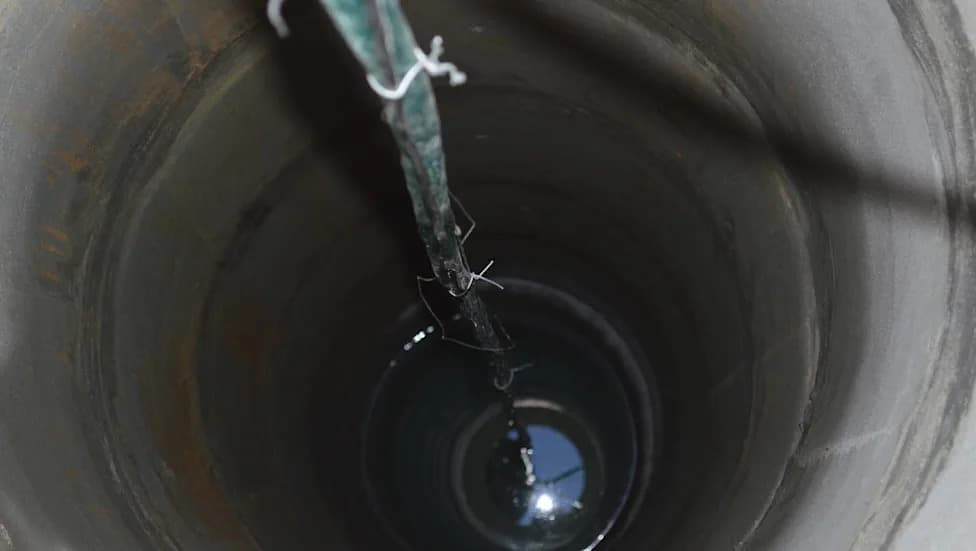
The Associated Press found that about 40 million Americans who use private wells face elevated risk from persistent PFAS chemicals because federal testing and limits cover public systems but generally not private wells. Remediation for wells must usually be handled household by household, leaving many families without timely help while responsibility is negotiated. State responses vary widely: some, like Michigan, offer proactive monitoring and free testing, while at least 20 states rarely test private wells beyond suspected hotspots.
AP Investigation: PFAS Contamination Leaves 40 Million Private Well Users At Risk
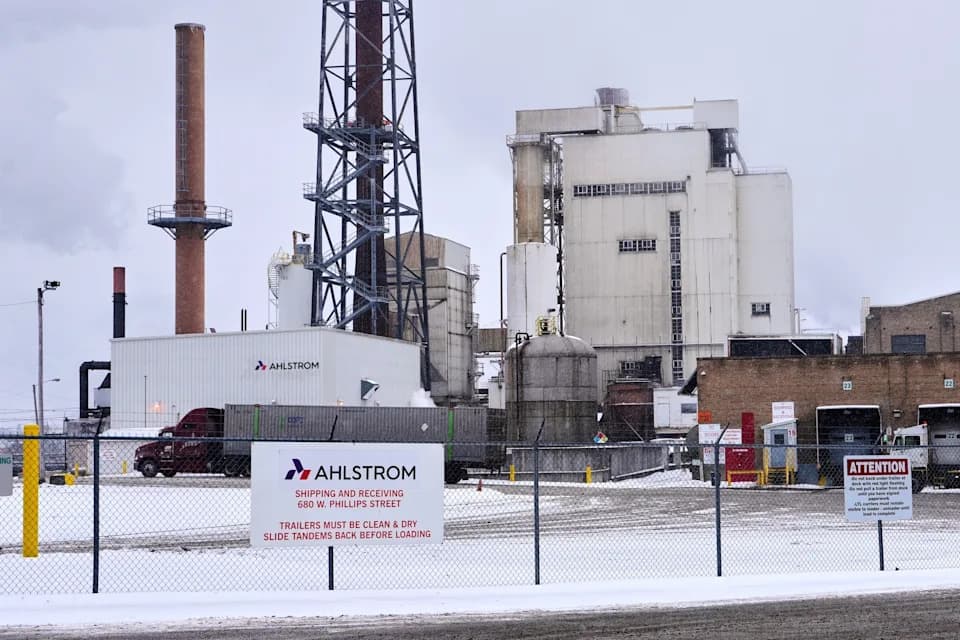
The Ahlstrom paper mill in Rhinelander, Wis., on Friday, Dec. 5, 2025. (AP Photo/Morry Gash)(ASSOCIATED PRESS)
About 40 million Americans rely on private wells for household water and are disproportionately exposed to persistent per- and polyfluoroalkyl substances (PFAS), often called "forever chemicals." Unlike public water systems, private wells are not covered by federal PFAS testing rules and limits, which leaves many homeowners unaware of contamination and facing costly, time-consuming fixes.
Why Private Wells Are More Vulnerable
Federal limits and mandatory testing for PFAS generally apply to public utilities, not to private wells. That regulatory gap means households near industrial sites, farms or wastewater discharges can consume contaminated water while public systems are monitored and treated. PFAS were widely used because they repel stains and resist heat; they also persist in soil and water and have been linked to certain cancers and developmental problems in children.
How Some Well Owners Get Stranded
Public water systems can treat PFAS at centralized plants, but restoring safe water to private wells usually requires individual solutions, such as new deeper wells, point-of-use filters or whole-house systems. That household-by-household approach becomes a patchwork during legal and regulatory negotiations, leaving some families without help.
In Peshtigo, Wisconsin, PFAS was detected near a fire-technology plant linked to firefighting foam. Disputes over where the company needed to test and who should pay for replacement wells meant neighbors received different levels of assistance. Johnson Controls has said it accepted responsibility for the area identified by its investigation.
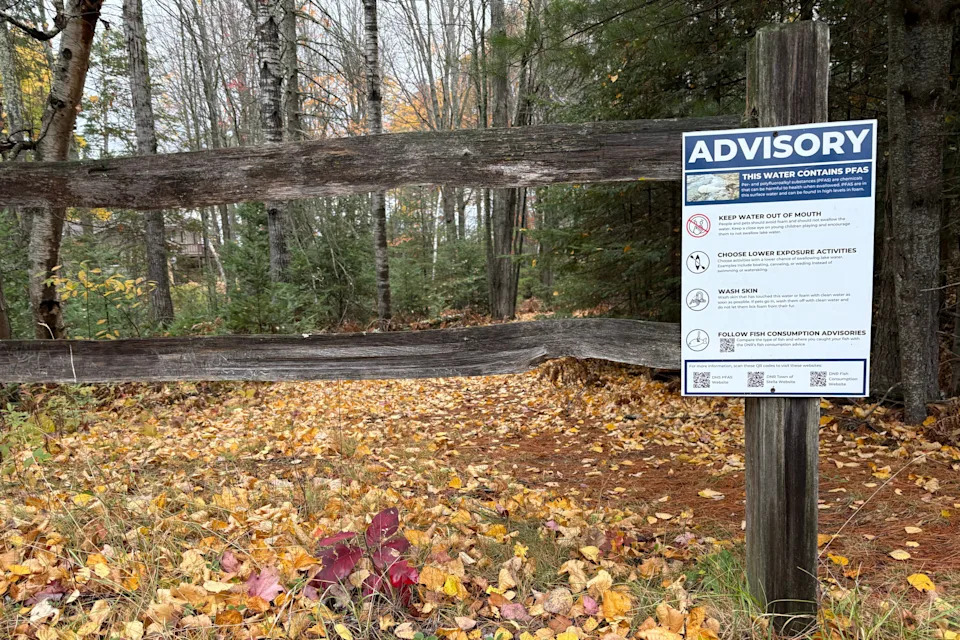
A sign warns that nearby water contains PFAS chemicals in Stella, Wis., on Oct. 21, 2025. (AP Photo/Michael Phillis)(ASSOCIATED PRESS)
In North Carolina, PFAS from a chemical plant has traveled nearly 100 miles down the Cape Fear River, forcing tens of thousands of tests to map how far contamination extends and which homes are affected.
Where You Live Changes The Response
Because federal rules do not generally regulate private wells, states carry primary responsibility for testing and notification. An AP survey found at least 20 states do not routinely test private wells for PFAS except where problems are already suspected. Some states, like Michigan, have been proactive—offering groundwater monitoring and free testing for wells near identified hot spots—while many well owners still pay hundreds of dollars for tests out of pocket.
A Community Jolted By High PFAS Levels
In 2022, Kristen Hanneman of rural Wisconsin learned her family's well water contained PFAS at concentrations thousands of times above federal drinking-water limits. State officials pointed to a nearby paper mill that spread sludge on farm fields; the mill's owners say those practices were permitted at the time and that PFAS use has since stopped. The discovery reverberated through the town and highlighted how limited state resources can leave residents in limbo over health risks and remediation.
What This Means For Well Owners
Private well owners should consider testing if they live near industrial sites, agricultural land where biosolids have been applied, military or firefighting training sites, or downstream of chemical plants. Where possible, homeowners should document testing results, seek information from state health or environmental agencies, and explore financial assistance programs or legal options when contamination is linked to a nearby facility.
Reporting: This story is based on an Associated Press investigation in collaboration with The Atlanta Journal-Constitution, The Post and Courier and AL.com. AP reporters contributed reporting from Wisconsin, North Carolina, Georgia and beyond.
Help us improve.