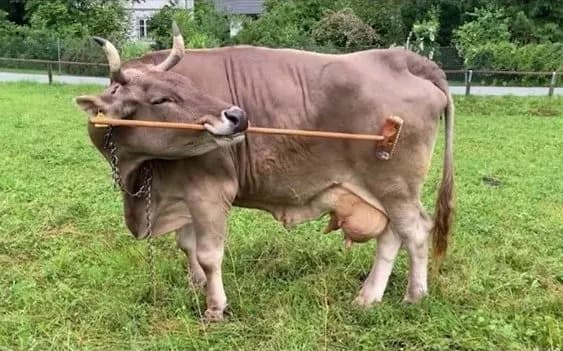
Researchers observed a Swiss Brown cow, Veronika, deliberately using a deck scrub broom as a multi-functional tool to scratch different body regions. Controlled, randomized trials at the University of Veterinary Medicine, Vienna showed she grasped whichever end was needed—bristles for tougher skin on her back, the stick end for softer lower areas. Published in Current Biology (Jan 2026), the study challenges assumptions about livestock cognition and urges reporting of similar cases.
Veronika the Cow: First Confirmed Case of Intentional Tool Use in Cattle
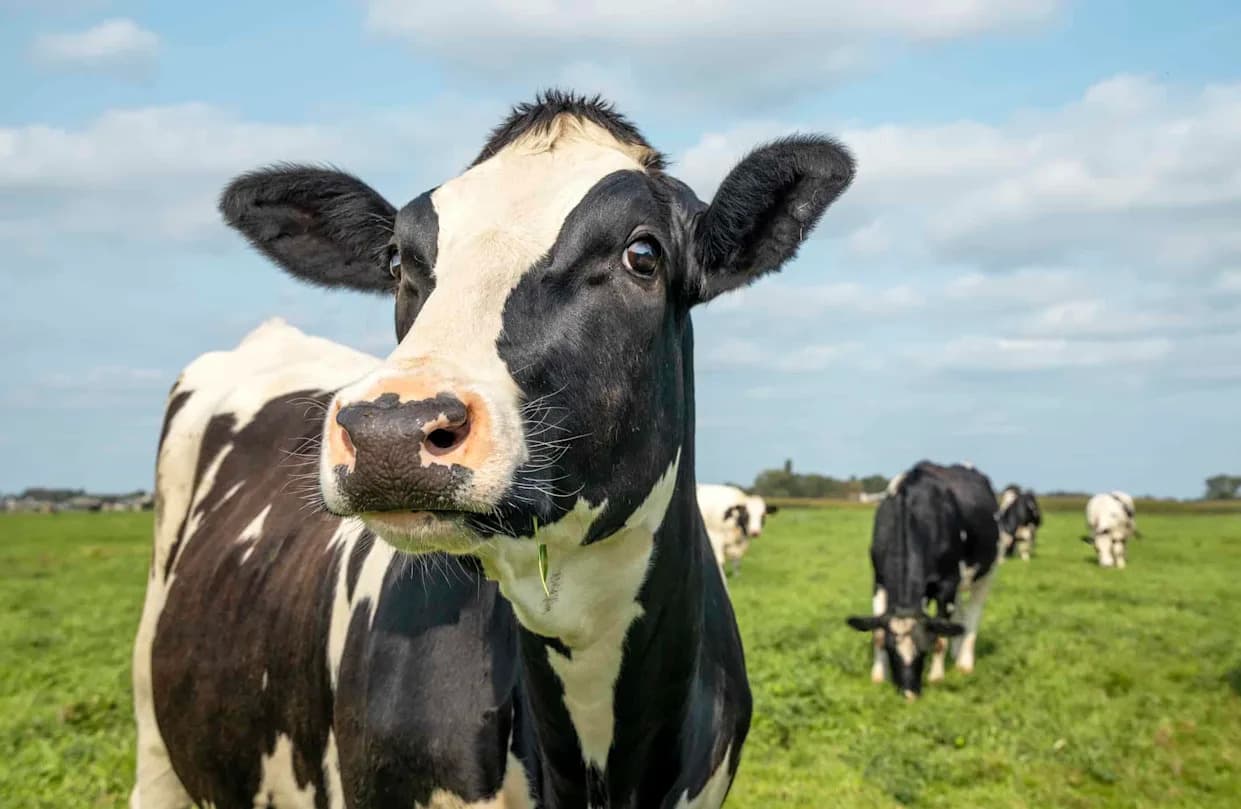
Mature cow, black and white curious gentle surprised look© Clara Bastian/iStock via Getty Images
A Swiss Brown cow named Veronika has provided the first clear evidence that cattle can deliberately use a multi-functional tool to solve a problem. Researchers from the University of Veterinary Medicine, Vienna, documented her flexible use of a deck scrub broom to scratch different parts of her body, and published their findings in Current Biology in January 2026.
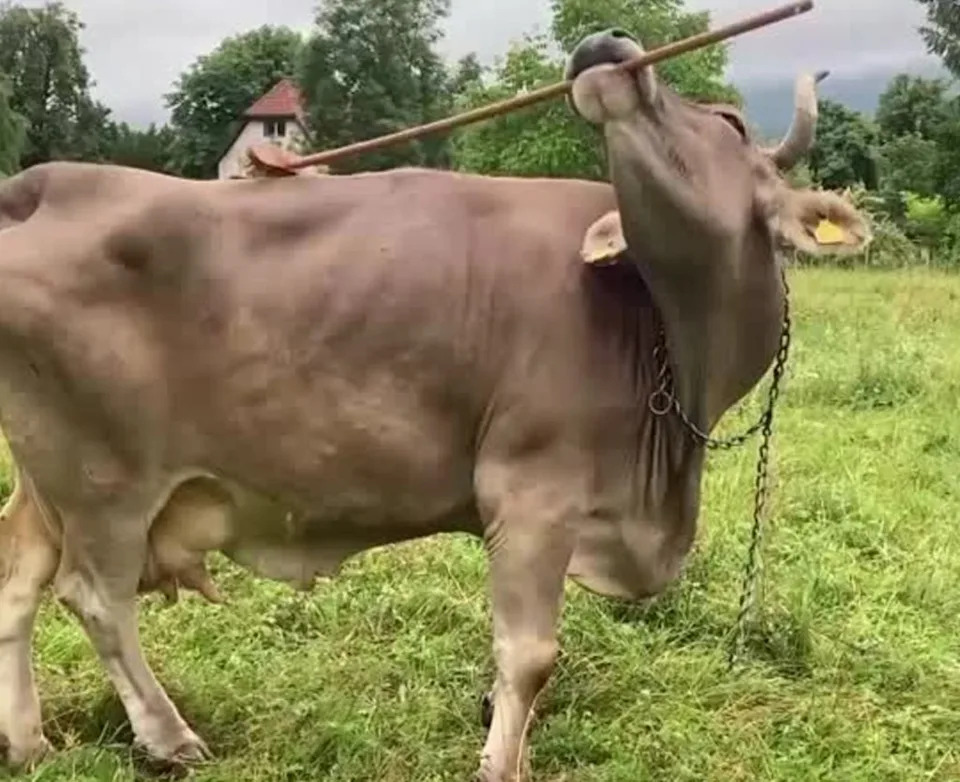
Veronika, the cow, has learned how to manipulate a deck scrub broom to perform different tasks.© –Original
How Veronika Used the Broom
A video showing Veronika handling a deck scrub broom was shared with cognitive biologist Dr. Alice Auersperg. Intrigued, Auersperg and postdoctoral researcher Antonio Osuna-Mascaró visited Veronika and ran controlled, randomized trials to test whether her behavior was accidental or intentional.
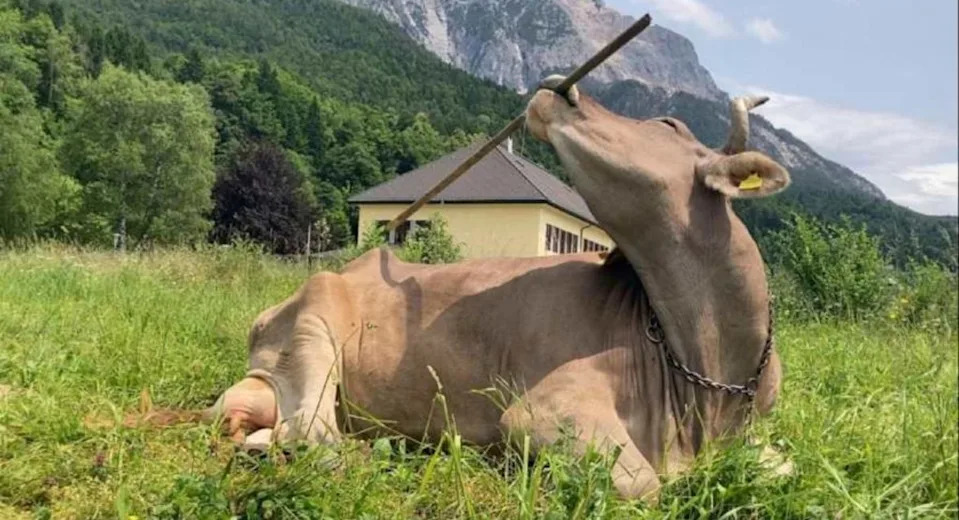
Veronika proved to scientists that using the deck scrub broom to scratch different parts of her body was not random, but instead an intentional choice.© –Original
The researchers found that Veronika consistently grasped the broom at the end required to reach the itchy region: she preferred the bristled end for tougher skin on her back and the stick end for softer lower-body areas. This pattern was stable across two weeks of observation, indicating goal-directed, flexible tool use.
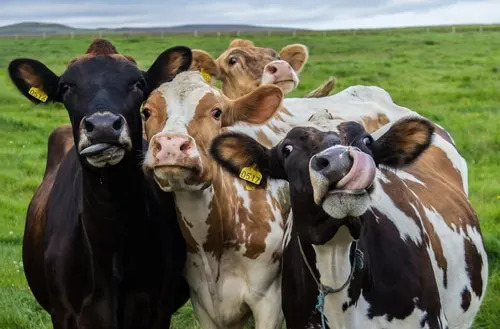
Despite co-existing for thousands of years, cows’ intelligence has been ignored by humans.©Birkir Asgeirsson/Shutterstock.com(Birkir Asgeirsson/Shutterstock.com)
Why This Matters
Tool use is often associated with primates, corvids, elephants, and marine mammals. That a cow—an animal without opposable thumbs and long domestication history—demonstrates multi-functional tool use challenges assumptions about which species are capable of technical problem solving.
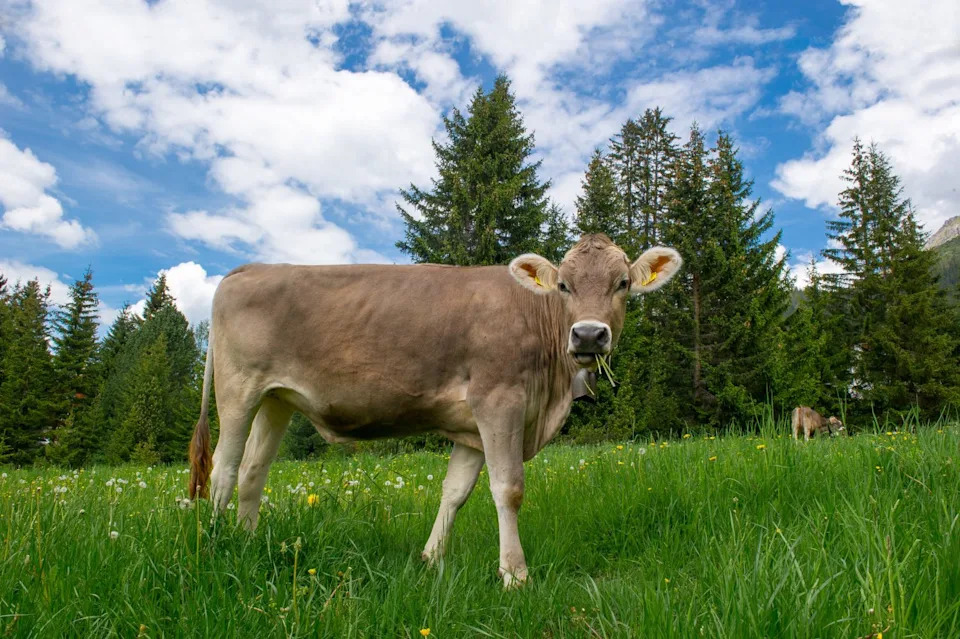
Veronika, similar to this Swiss cow, may have learned to problem-solve through unique life experiences.©O.C Ritz/Shutterstock.com(O.C Ritz/Shutterstock.com)
"When I saw the footage, it was immediately clear that this was not accidental," Dr. Alice Auersperg told EurekAlert. "This was a meaningful example of tool use in a species that is rarely considered from a cognitive perspective."
Context and Possible Drivers
Veronika lives as a family companion with regular human interaction and has enjoyed a long life on pasture—circumstances the authors suggest may have created enriched conditions for learning and experimentation. The researchers note that because cattle have rarely been expected to show such behaviors, observers simply did not look for them, which may explain why similar cases have gone undocumented.
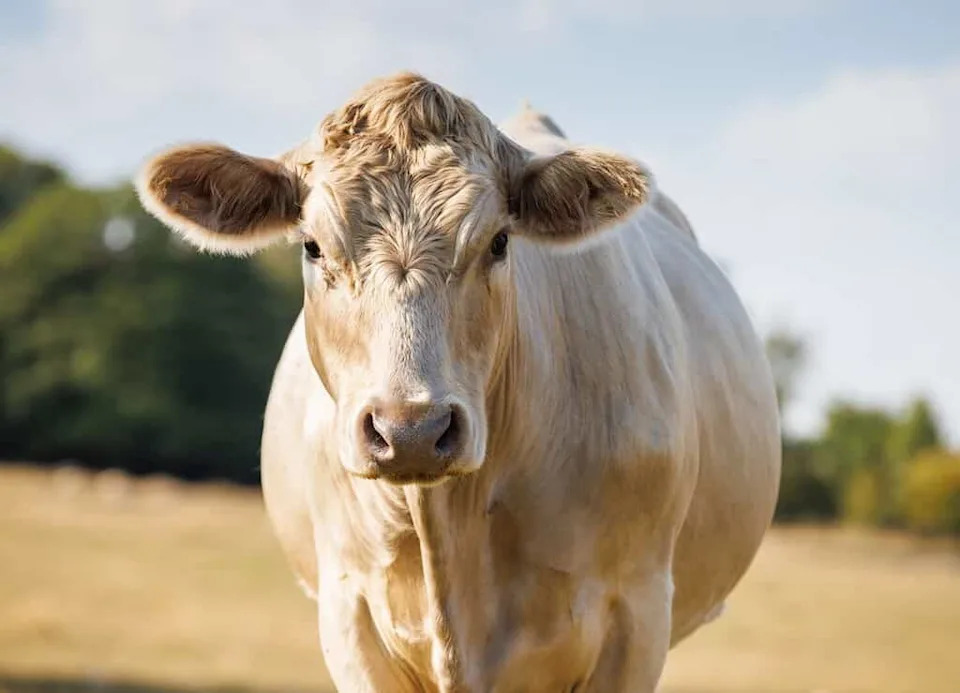
Cows have been proven to be far more intelligent than they have ever been given credit for.©vyasphoto/Shutterstock.com(vyasphoto/Shutterstock.com)
Implications and Next Steps
The study argues for broader consideration of livestock cognition and calls for reports from farmers, animal caretakers, and the public of similar observations so that tool use in cattle can be studied more widely. Outside experts highlighted the relevance of the finding for understanding cattle sentience and emotional complexity.
"While [Veronika] didn’t manufacture the brush, she clearly learned it could be used to relieve her itching, and she manipulated it for that purpose," said Marc Bekoff, emeritus professor of ecology and evolutionary biology, speaking to CNN.
Veronika’s case does not prove that all cattle will use tools, but it demonstrates that such abilities exist in at least some individuals. The finding invites researchers, caretakers, and the general public to reassess assumptions about farm animal cognition and to document any similar behaviors they observe.
Help us improve.