A camera-trap clip from Haíɫzaqv (Heiltsuk) Territory shows a female coastal gray wolf pulling a buoy and rope to haul a submerged crab trap ashore and access hidden herring bait. Described in Ecology and Evolution as “potential tool use,” the 14-month study and follow-up tracking suggest the wolf chained several planned actions, demonstrating persistence, causal understanding, and observational spatial memory. The finding — captured by Haíɫzaqv Guardians — highlights social learning potential, Indigenous stewardship, and conservation implications for managing adaptable wildlife.
One Tug, New Thinking: Coastal Wolf’s Multi-Step Pull Suggests Tool-Like Problem Solving
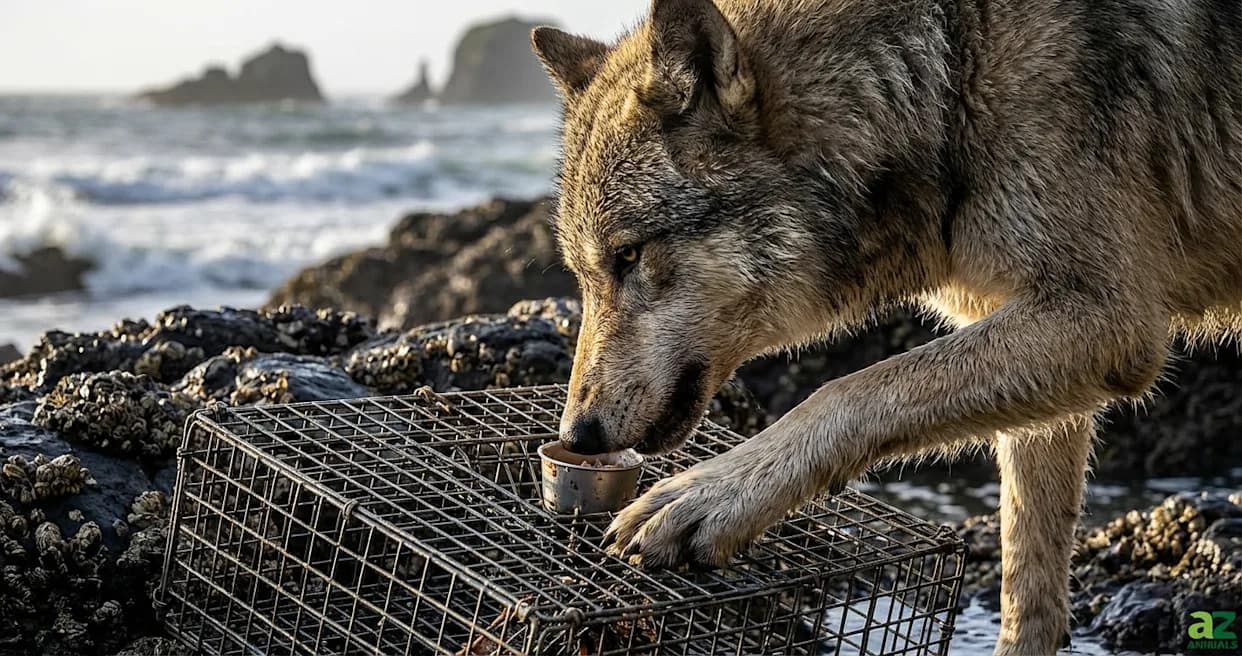
A close-up of a gray wolf using its paw to steady a wire crab trap on a rocky beach while sniffing for bait inside.© A-Z Animals
On Canada’s central Pacific coast, a short camera-trap clip captured a female coastal gray wolf manipulating a buoy, pulling a rope, and hauling a submerged crab trap ashore to reach herring bait hidden underwater. Filmed in Haíɫzaqv (Heiltsuk) Territory, the sequence — observed during a 14-month study and described in the journal Ecology and Evolution — has prompted researchers to reconsider how flexible and inventive wild canids can be.
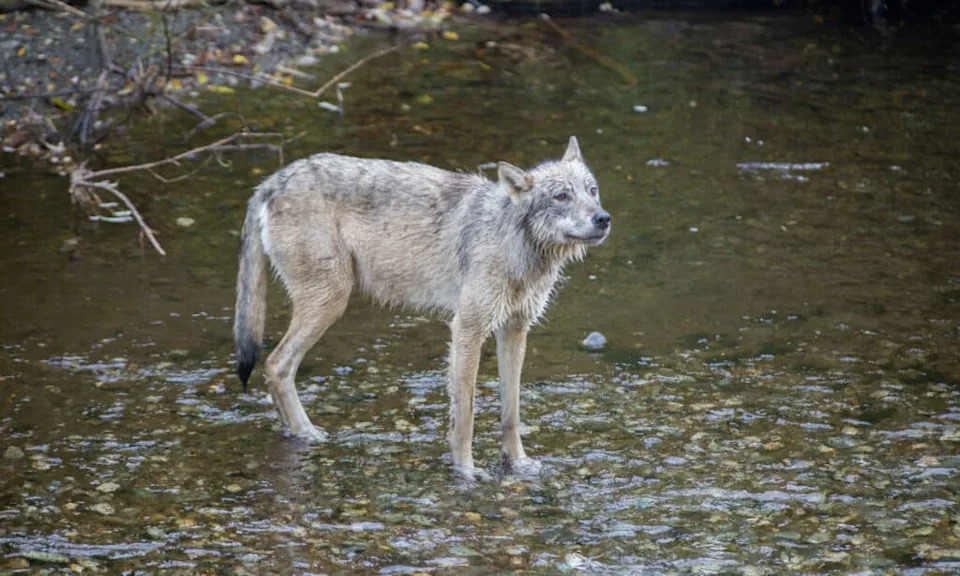
A coastal gray wolf wades through shallow shoreline water, the same environment where researchers recorded a wolf hauling a baited crab trap to reach hidden herring.©Ghost Bear/Shutterstock.com(Ghost Bear/Shutterstock.com)
What Happened
Haíɫzaqv Guardians had set baited crab traps in shallow intertidal waters to control invasive European green crabs. At certain tides only a buoy and rope were visible. One evening a camera recorded a female wolf arrive at the rocky shore, seize the buoy, drag it ashore, return to pull the rope until the metal-and-net trap surfaced, haul it farther up the beach, remove the bait cup, and eat the fish.
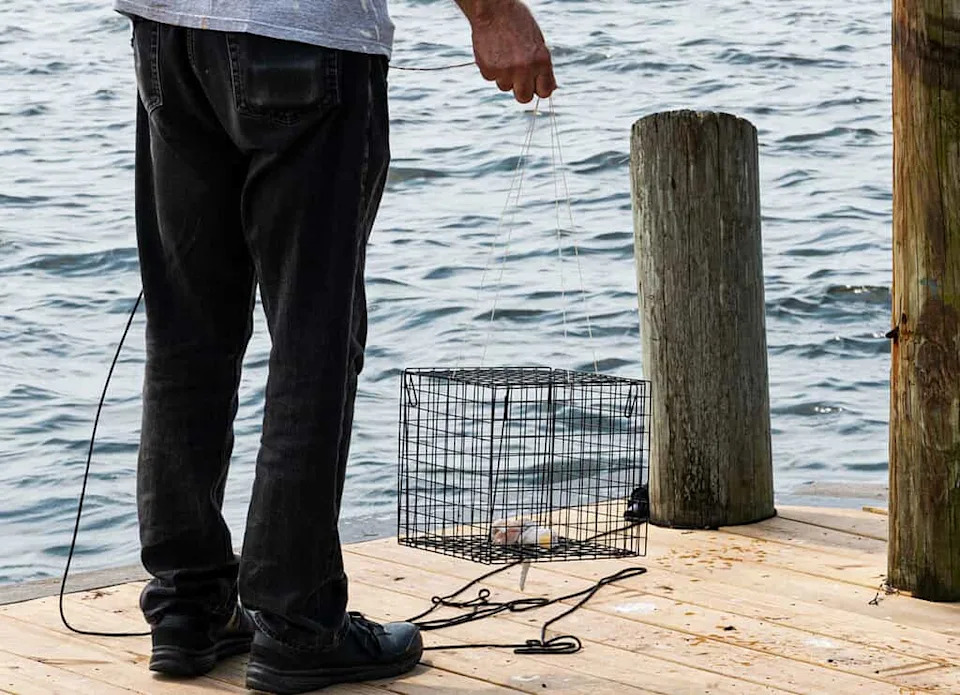
A baited crab trap rests on a coastal dock, similar to the gear a coastal wolf pulled ashore to reach herring hidden underwater.©WoodysPhotos/Shutterstock.com(WoodysPhotos/Shutterstock.com)
Why Scientists Find It Important
Researchers described the episode as “potential tool use” because the wolf used a human-made system (buoy, rope and trap) to obtain food she could not access directly. By classic definitions of tool use — employing an external object to change the environment and secure food — the behavior fits. The case also demonstrates a chained, multi-step sequence that suggests planning, persistence, and an understanding of cause and effect rather than random tugging.
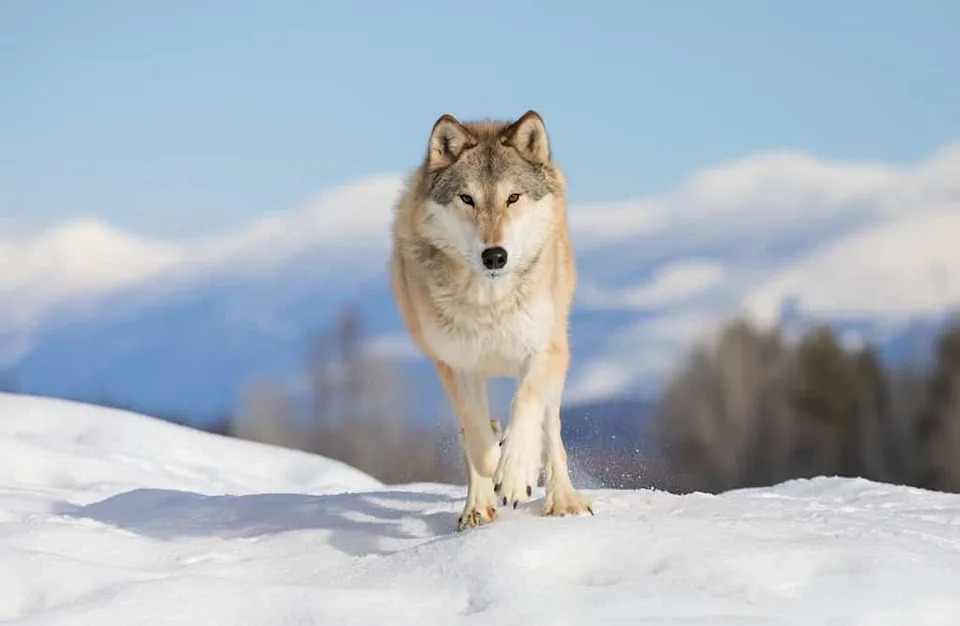
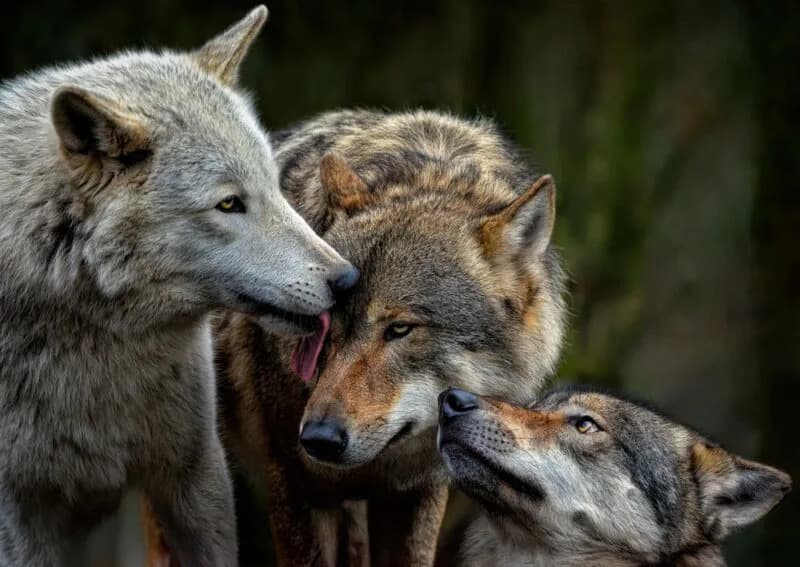
In a challenging environment, wolves have developed keen intelligence for survival.©Jim Cumming/Shutterstock.com(Jim Cumming/Shutterstock.com)
Key cognitive themes: object permanence (knowing something exists when out of sight), causal understanding (predicting that pulling a line will change an object's location), and observational spatial memory (forming mental maps from visual cues).
How This Fits With Previous Research
Controlled experiments show wolves and dogs can watch someone hide food and later search those locations more efficiently — a skill called observational spatial memory. Often, wolves outperformed dogs in these tests, possibly due to greater persistence or motivation. The crab-trap incident extends this laboratory evidence into the wild, showing a wolf chaining several behaviors over time and space to reach a concealed reward.
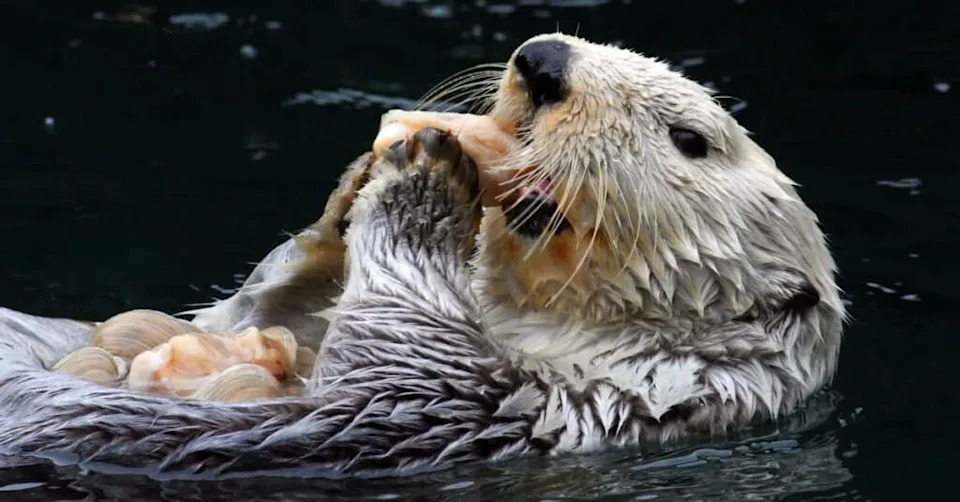
A sea otter floats on its back with shellfish, a well-known example of animal tool use that helps frame the wolf’s crab trap behavior in a broader context.©Kirsten Wahlquist/Shutterstock.com(Kirsten Wahlquist/Shutterstock.com)
Debate: Tool Use Or Clever Exploitation?
Not all scientists define tool use the same way. Some require animals to fashion or modify tools; others emphasize purposeful and flexible use of external objects. The wolf did not build or alter the trap, but she exploited human gear in a goal-directed way. Critics who insist on modification may hesitate to call it formal tool manufacture, while proponents point out humans routinely use complex tools they did not construct themselves.
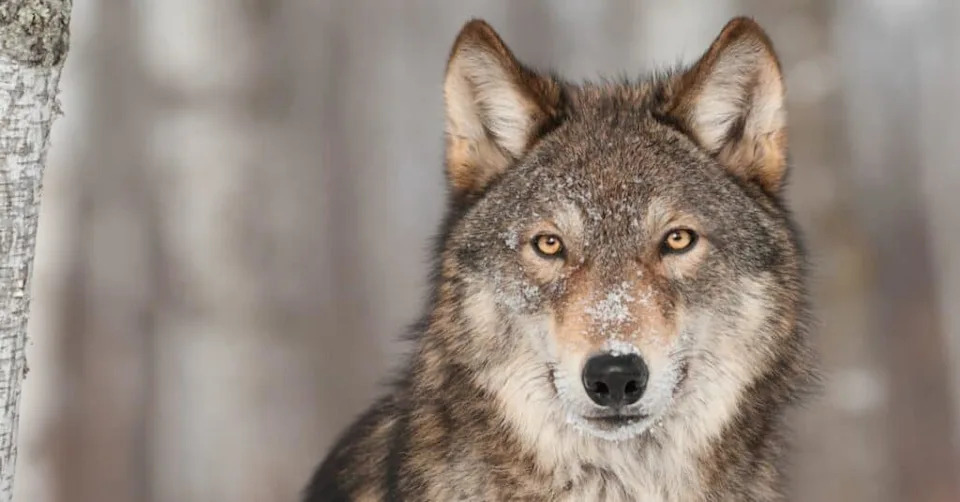
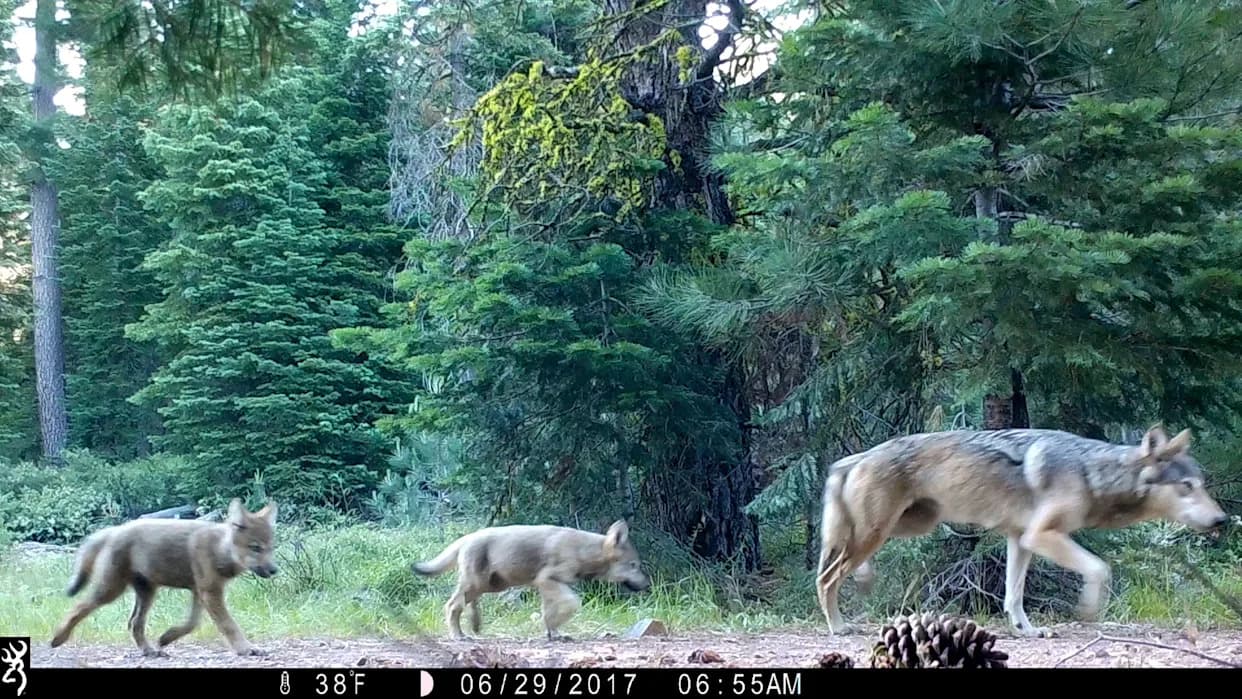
A gray wolf looks on, a reminder that understanding canid intelligence matters for thoughtful conservation and coexistence.©Holly Kuchera/Shutterstock.com(Holly Kuchera/Shutterstock.com)
Social Learning And Cultural Potential
Haíɫzaqv Guardians and researchers had observed damaged traps and missing bait in the area, suggesting other wolves may have interacted with the gear. Camera traps have not yet captured a second clear hauling event, so verified repeat instances are lacking. However, wolves are social and observant; if one individual’s technique is effective, it could spread through the population by social learning and eventually become a local tradition.
Role Of Indigenous Stewardship
The discovery depended on the Haíɫzaqv Guardians’ monitoring work. Their traps and cameras provided the context and footage that brought the episode to light. Leaders of the Haíɫzaqv Nation note that oral histories and local knowledge long recognize close, meaningful relations between people and wolves — perspectives that complement and deepen scientific interpretation.
Conservation And Management Implications
Recognizing wolves’ cognitive flexibility matters for conservation and conflict-mitigation. Underestimating their ability to adapt to new prey, infrastructure, or human behavior can make management strategies ineffective or wasteful. Anticipating creative problem-solving by wolves can lead to more durable, humane, and cost-effective approaches.
Where To See Coastal Wolves
Coastal wolves inhabit stretches of British Columbia’s central and northern shoreline, including areas near Bella Bella and the Great Bear Rainforest. They use forest, shoreline and intertidal zones and often feed on salmon, shellfish, and marine carrion — diets distinct from inland wolves. Responsible, guided wildlife viewing during low tides offers the best chance of sightings and can support local conservation when conducted ethically.
Broader Takeaway
Whether or not every scientist labels this event formal "tool use" is secondary to its broader significance: a wild wolf solved a hidden, multi-step problem using a human-made system. The episode invites additional study of canid cognition, highlights the value of Indigenous-scientific collaboration, and reminds us that many acts of ingenuity in nature remain undocumented until we look closely.
Help us improve.