The authors argue that President Trump’s 2019 statement on resuming nuclear testing deserves careful consideration because simulations and annual certifications cannot fully guarantee the reliability of aging warheads. Evidence that Russia—and likely China—have conducted low-yield tests weakens claims that U.S. testing would inevitably spark an arms race. Reestablishing testing capability will require urgent planning, rebuilt infrastructure, and adequate Congressional funding.
Why the U.S. Should Reconsider Nuclear Testing: Safety, Strategy, and Urgency
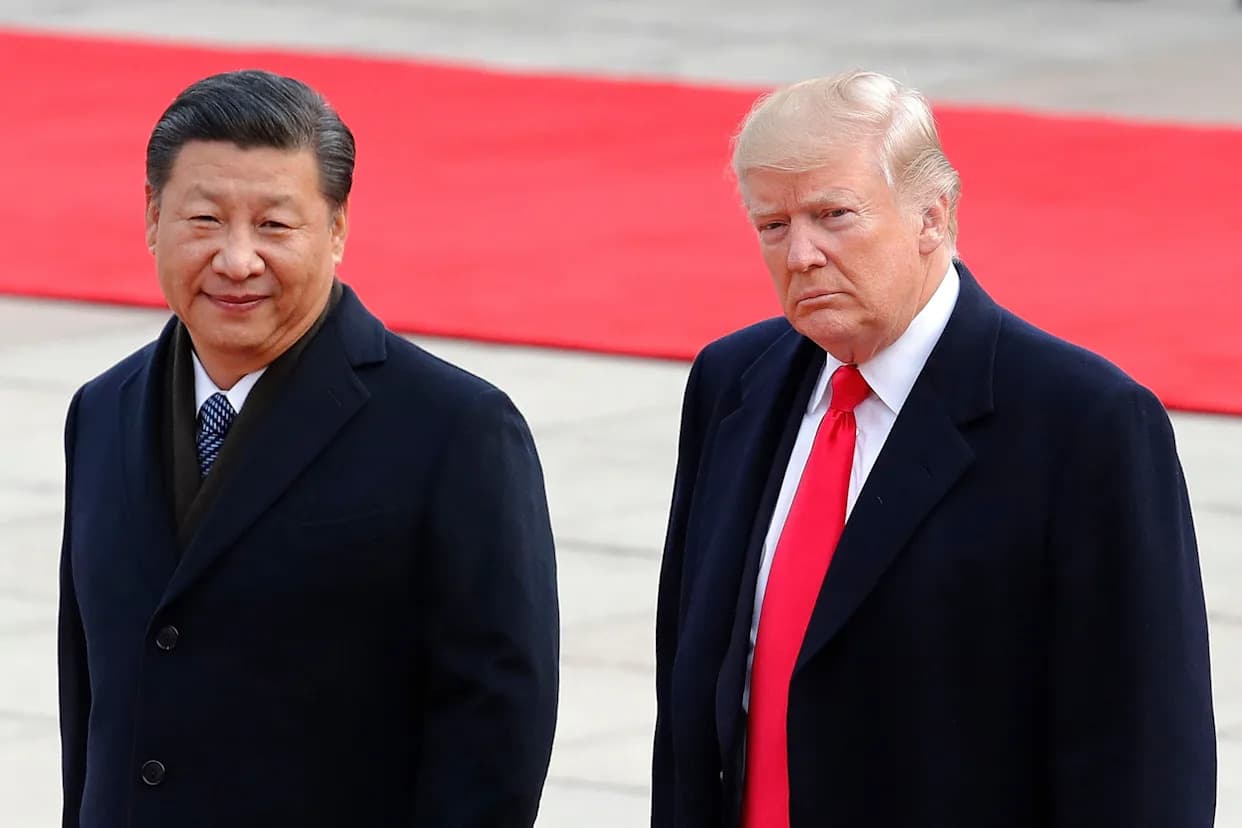
U.S. President Donald Trump with Chinese President Xi Jinping. China's nuclear expansion is on a trajectory to soon rival America's arsenal, the authors of this op-ed write. (AP/Shutterstock)
In October, President Donald Trump announced that the United States would resume nuclear testing "immediately," ending a voluntary moratorium observed since 1992. Nearly three months later, there is little public evidence that concrete steps have been taken to implement that pledge.
Why This Conversation Matters
The announcement reignited a heated debate within the arms-control community. Opponents argue that renewed testing is unnecessary and would spark a fresh arms race. Proponents counter that the case for at least considering limited live testing is grounded in practical concerns about safety, reliability, and strategic clarity.
Limits Of Current Certification
The stockpile stewardship program produces annual certifications in which national laboratories attest to the "safety, reliability, and performance" of U.S. nuclear weapons. Those assessments rely heavily on advanced computer modeling and expert judgment. While invaluable, simulations and human review cannot provide the same definitive assurance as an actual explosive test—especially for weapons that include components approaching fifty years of age.
Analogy: Few would entrust their family’s safety to a complex mechanical system that has not been fully live-tested in decades—even if simulations indicate it should work.
Does Testing Necessarily Trigger An Arms Race?
The argument that U.S. testing would automatically provoke a new arms race is overstated. U.S. State Department reports and public statements by senior Russian officials suggest Russia—and likely China—have conducted low-yield nuclear explosive tests. Moscow and Beijing appear to conduct tests to validate the reliability of their arsenals even without concurrent U.S. detonations, which complicates the simple action–reaction framing.
Strategic Context Has Changed
The international security environment has deteriorated since the Cold War-era moratorium. U.S.–Russian tensions have resurfaced after repeated, unsuccessful attempts to "reset" the relationship. Russia has modernized its forces and pursued novel delivery systems, while projecting power in Georgia, Syria, and Ukraine. Meanwhile, China has expanded its nuclear capabilities on a trajectory that some projections suggest could approach parity in the coming decade.
Practical Requirements And Time Constraints
Reestablishing an ability to conduct underground tests is not merely a policy decision; it is an extensive logistical and technical project. Decades of dormancy have eroded specialized infrastructure and institutional know-how. Laboratories must draft detailed plans, and Congress must provide targeted funding without siphoning resources from broader strategic modernization efforts. Even a limited testing program would require construction of underground cavities and other environmental safeguards—work that takes years to execute properly, which argues for beginning preparations sooner rather than later.
Ultimately, the decision to resume testing involves weighing the value of definitive proof of weapon function against the political, environmental, and diplomatic costs. The authors argue that given the degraded strategic landscape and the limits of simulation-based certification, a cautious, well-planned reconsideration of live testing is warranted.
Authors: James H. Anderson and David J. Trachtenberg both served as deputy and acting under secretaries of defense for policy during the first Trump administration.
Help us improve.