
Trump spent much of 2025 personally pressing both Moscow and Kyiv for a negotiated end to the war. By year’s end diplomats had sketched a revised 20‑point framework addressing ceasefire terms, security guarantees and disputed territory, but Russia rejected key elements. On the battlefield, slow Russian gains and limited Ukrainian strikes produced a grinding stalemate while sanctions raised long‑term costs without forcing a decisive political change. Negotiations clarified positions but did not close the core gaps needed for a settlement.
Ukraine–Russia at a Crossroads: Trump's 2025 Push, a 20‑Point Framework and a Grinding Stalemate

President Donald Trump met multiple times with Ukrainian President Volodymyr Zelenskyy throughout 2025.
Throughout 2025 President Donald J. Trump made a sustained, personal effort to broker an end to the war in Ukraine, engaging both Russian President Vladimir Putin and Ukrainian President Volodymyr Zelenskyy. The administration pursued high‑profile summits, extended phone calls and intensive shuttle diplomacy even as fighting continued and front lines changed only modestly.
Diplomatic Push and the 20‑Point Framework
By year’s end U.S. and Ukrainian officials had converged on a revised 20‑point framework that outlined possible ceasefire terms, long‑term security guarantees and mechanisms to address disputed territory, including demilitarized zones. The framework clarified negotiating positions more than earlier proposals, but key elements remained contested — most notably the future status of parts of the Donbas and other occupied areas.
Fallout, Meetings and Messaging
The year included several high‑profile tensions: a public spat in February when President Zelenskyy abruptly left a White House meeting after a heated exchange, an August summit between President Trump and President Putin in Alaska, and later outreach at Mar‑a‑Lago and through lengthy phone calls. Trump at times blamed Kyiv for slow progress before acknowledging that Moscow — not Kyiv — was the principal obstacle to a negotiated settlement.
"I thought the Russia‑Ukraine war was the easiest to stop but Putin has let me down," Trump said in September 2025, reflecting frustration at persistent strikes despite diplomacy.
Battlefield Reality: Grinding Pressure, Not Breakthroughs
On the ground, 2025 was defined by slow, costly advances rather than sweeping offensives. Russian forces made incremental territorial gains in eastern and southern Ukraine, typically village by village, relying on artillery, drones and attritional tactics. Kyiv did not mount a large‑scale counteroffensive comparable to earlier campaigns; instead, Ukrainian forces focused on strengthening defensive lines, achieving localized tactical successes and imposing costs on Russian units.
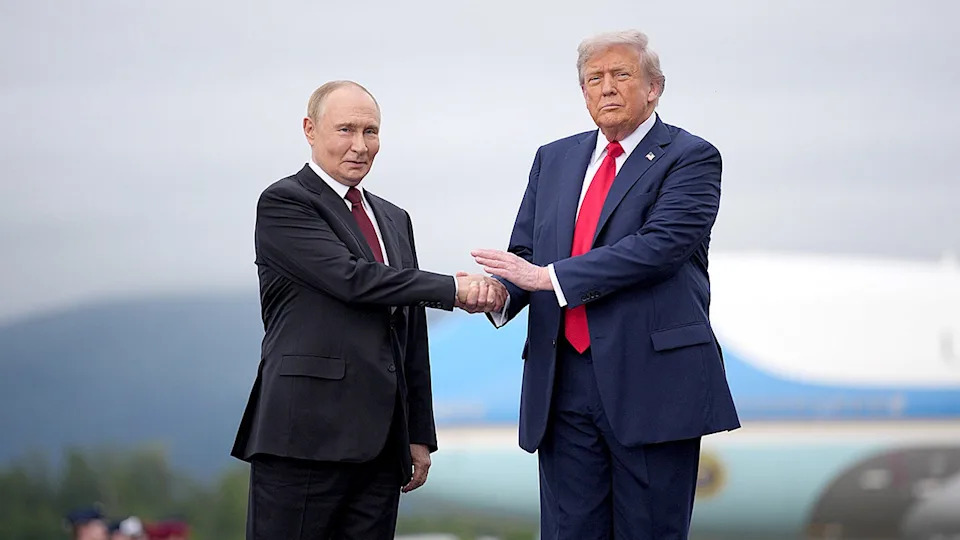
"I thought the Russia-Ukraine war was the easiest to stop but Putin has let me down," Trump said in September 2025.
With decisive territorial gains out of reach, Ukraine expanded strikes against Russian energy and logistics infrastructure — hitting refineries, fuel depots and other nodes, including sites deeper inside Russian territory. Russia continued strikes on Ukraine’s power and heating networks, contributing to a wider pattern of escalation that extended pressure beyond the front lines.
Sanctions, Economics and the Limits of Leverage
Western sanctions continued to raise costs for Moscow, constraining growth and access to advanced technology. Yet Russia adapted its economy and ramped up defense production well enough to sustain prolonged combat operations. Neither battlefield attrition nor economic pressure produced an immediate shock sufficient to force either side into major concessions.
Why Talks Stalled
The year’s experience showed why resolving the conflict remains so difficult: diplomacy can narrow options and clarify red lines, but without a decisive shift on the battlefield — or a sudden change in Moscow's political calculus — negotiations are unlikely to compel the compromises necessary for a lasting settlement. Channels stayed open throughout 2025, and positions were clearer than before, but the core disputes over territory and security guarantees persisted.
Outlook
Absent a major military breakthrough or a transformative political development, 2026 is likely to begin with continued negotiations running in parallel with attritional fighting. The 20‑point framework provides a starting point for more detailed bargaining, but bridging the remaining gaps will require external leverage or a shift in the costs that either side is willing to absorb.


