The Conservation Biology study finds queen conch breeding aggregations need a protective buffer of roughly 360 yards (330 meters) because these snails can "hop" and travel farther than expected. Researchers from Shedd Aquarium and the Wells National Estuarine Research Reserve combined diver surveys, biologgers on 42 conch and movement models across Florida and The Bahamas. The results provide a practical minimum radius for safe zones to reduce disturbance and targeted overfishing and inform local and regional conservation planning.
Give Them Space: New Study Finds Queen Conch Need 360‑Yard Buffer to Protect Breeding
© Andy Rough
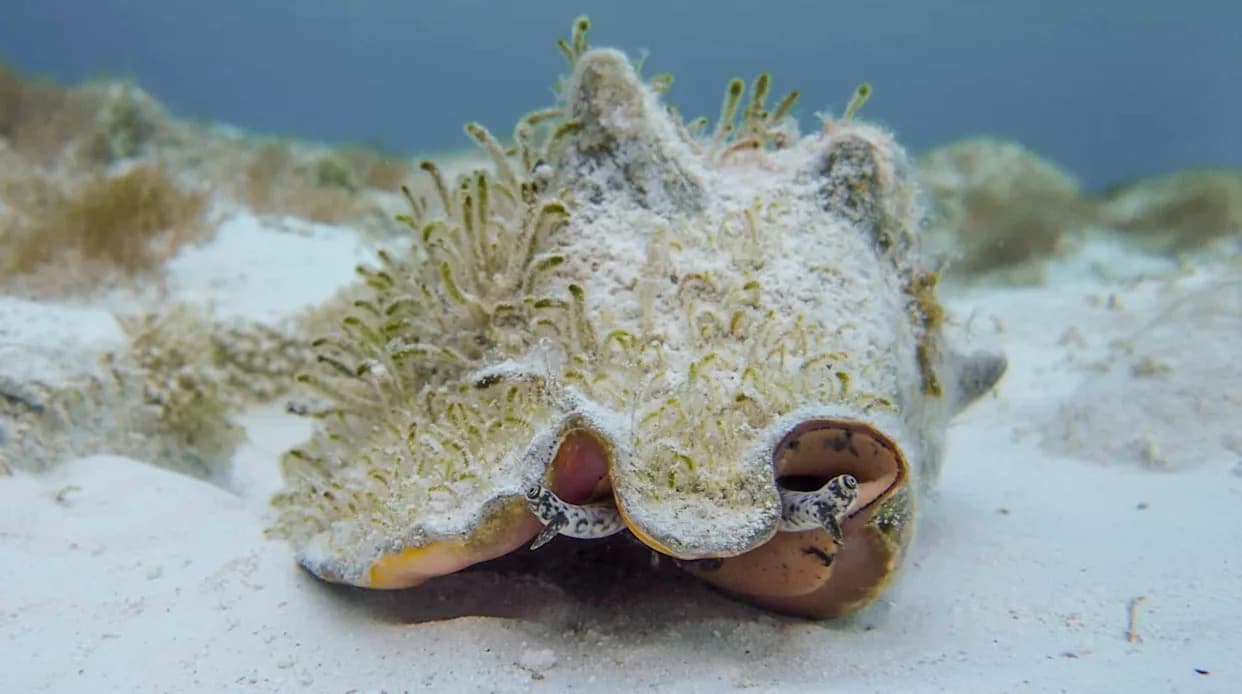
A new paper in Conservation Biology shows that protecting queen conch breeding aggregations effectively requires a far larger buffer than many managers assumed: roughly 360 yards (about 330 meters) around breeding groups. The finding gives conservation managers a clear, science-backed radius for “no-take” or disturbance-free zones aimed at promoting successful reproduction for this threatened marine snail.
Study Methods and Key Findings
Researchers from Chicago's Shedd Aquarium and the Wells National Estuarine Research Reserve combined diver surveys, custom biologgers and mathematical models to quantify how far queen conch move during breeding seasons. Teams worked off the R/V Coral Reef II and conducted extensive surveys across sites off Florida and throughout The Bahamas.
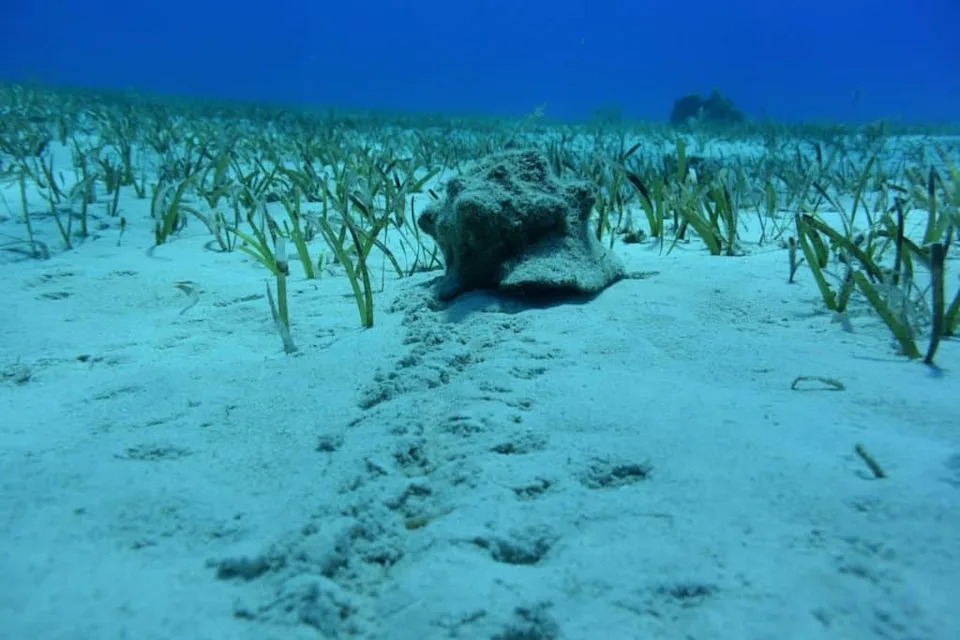
Because they can hop, queen conch move faster and further than other snail species.©Shedd Aquarium –Original/License(Shedd Aquarium)
At two Florida sites, scientists attached custom biologger devices to 42 individual conch. The devices recorded when conch were actively moving or hopping versus remaining stationary. Divers also timed and measured hundreds of observed hops, providing complementary observational data that fed into movement models.
Why 360 Yards?
Queen conch are unusual among large marine snails because they can “hop” using their large muscular foot. Hopping allows them to cover greater distances than sedentary snails, increasing the area needed to avoid disturbance during breeding activities. Based on the movement data and models, the researchers estimate a minimum protective radius of about 360 yards (330 meters) around breeding aggregations to reduce disruption and targeted overfishing.
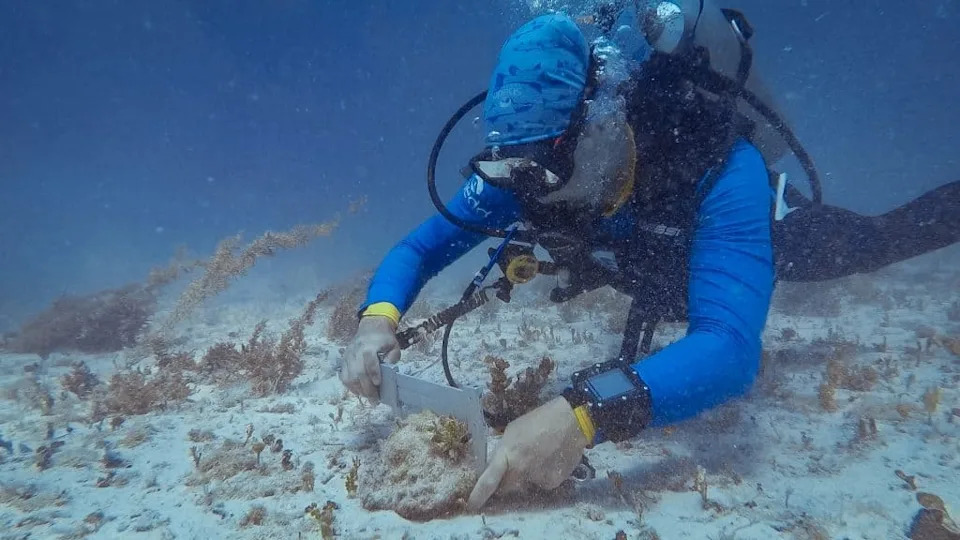
A Shedd Aquarium researcher measures queen conch off the Florida coast.©Shedd Aquarium –Original/License(Shedd Aquarium)
“I have been surveying queen conch for a decade, but the first time I watched a conch hop, it startled me,” said Dr. Andy Kough, lead author and research biologist at Shedd Aquarium. “We wanted to leverage this unique behavior to gather data and help inform conservation efforts, but we needed new tools to do so.”
Conservation Implications
Queen conch are listed as threatened under the U.S. Endangered Species Act and have declined regionally due to overfishing: they grow slowly, mature late and aggregate in shallow waters where they are easy to harvest. Florida banned commercial and recreational harvest in the 1980s after population collapses. Other Caribbean jurisdictions have adopted protections, but enforcement and resources vary.
The study’s 360‑yard recommendation gives managers a defensible, practical buffer size that is small enough to implement locally yet large enough to encompass typical breeding movements. The authors suggest these spatial buffers can be applied rapidly as adaptive tools to address threats such as targeted overfishing or habitat loss, and to coordinate protections across islands and jurisdictions.
Broader Program
This work is part of Shedd Aquarium’s Center for Conservation and Research, which supports field-based studies and partnerships addressing marine and freshwater conservation challenges. The Center’s programs include habitat restoration, fisheries sustainability, pollution reduction and community science that help connect people to nature while guiding management decisions.
Bottom line: By measuring hopping behavior and movement distances, scientists have provided a clear, evidence-based spatial guideline—about 360 yards—that can improve the design and effectiveness of safe zones to protect queen conch breeding aggregations.
Help us improve.