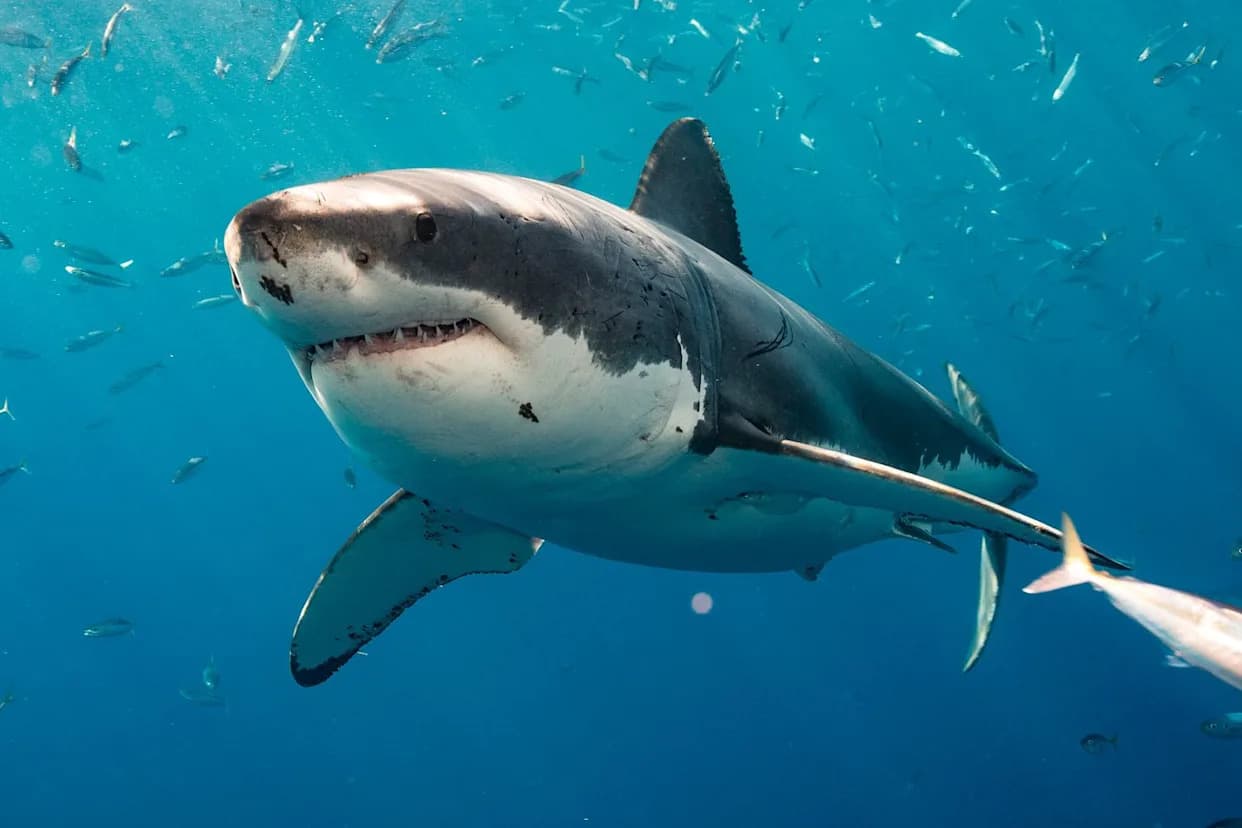
Contender, a 14-foot, 1,700-pound male great white, has returned to Florida coastal waters about one year after being fitted with a SPOT satellite tag on Jan. 17, 2025. The shark completed one of the longest recorded Atlantic migrations, reaching as far north as the Gulf of St. Lawrence and being detected near New Jersey, Nantucket, Cape Hatteras, and Jacksonville. OCEARCH expects the tag to return position data for about five years and will closely monitor Contender over the next 60–90 days to see if his movements coincide with mating activity. Scientists will pair tracking with biological sampling to learn more about great white reproductive behavior.
Massive Male Great White "Contender" Returns To Florida After Year-Long Atlantic Odyssey
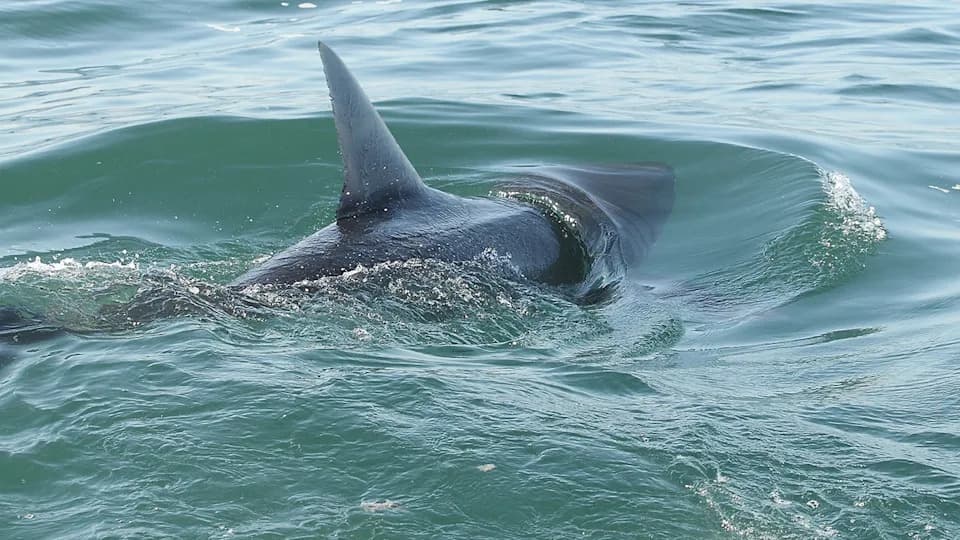
The researchers are interested in gaining more insight into the little-known reproductive habits of great white sharks.(iStock)
The largest recorded male great white shark in the Atlantic — a 14-foot, 1,700-pound animal nicknamed "Contender" — has reappeared in warmer Florida coastal waters roughly one year after researchers attached a satellite tag off the Florida–Georgia border.
Contender was fitted with a SPOT satellite tag on Jan. 17, 2025, and has since completed one of the longest known great white migrations in the Atlantic. During that journey he was detected as far north as the Gulf of St. Lawrence and recorded off the coasts of New Jersey and Canada, near Nantucket, and around Cape Hatteras and Jacksonville.
Why Researchers Are Watching
OCEARCH, the U.S.-based marine research organization leading the tagging effort, says the SPOT tag should continue to return useful, near-real-time location data for approximately five years, allowing scientists to map Contender’s broad migration patterns in detail. The timing of Contender’s return to warmer waters has prompted close monitoring because it may overlap with seasonal mating activity among great whites.
"Of the few clues we have, it seems like we need to be paying attention to the late winter and early spring area," said Chris Fischer, founder of OCEARCH, in comments reported by SWNS.
Looking For Mating Clues
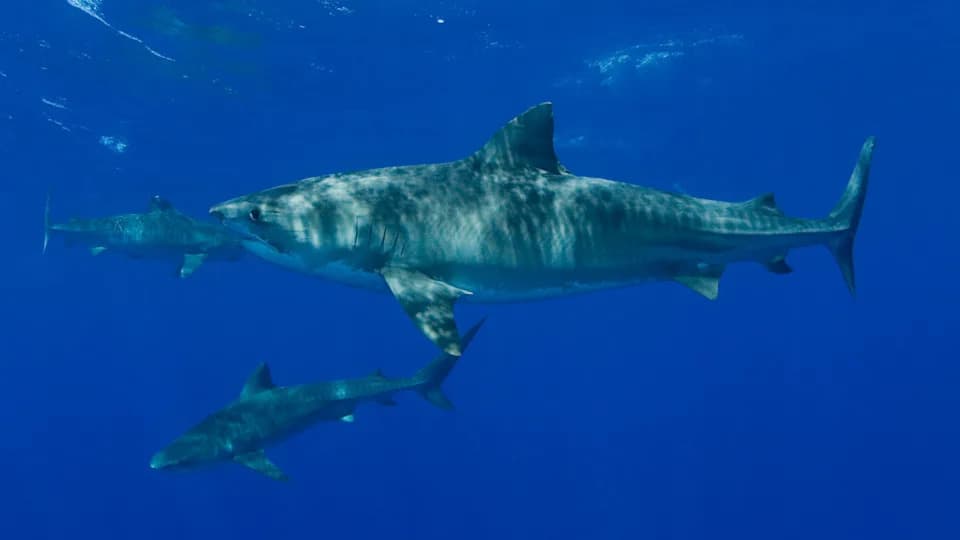
Researchers will watch whether Contender encounters other tagged sharks in the region, including animals known as Breton and Goodall. Observing spatial overlap between mature males and females could provide new insight into the species’ largely mysterious reproductive behavior.
To better understand reproduction, scientists combine satellite tracking with biological sampling — for example, blood collection and hormone analysis — that can indicate maturity and reproductive condition. The OCEARCH team says they will be paying close attention to Contender’s movements and interactions over the next 60 to 90 days.
Stepheny Price of Fox News Digital contributed reporting. The movement data and context reported here are based on statements from OCEARCH and coverage by SWNS and Fox News Digital.
Help us improve.