Summary: A juvenile humpback nicknamed "Oil Change" — about 32 feet long and weighing an estimated minimum of 20,000 pounds — was found dead Jan. 8 near Bethany Beach, Delaware. A MERR necropsy found subdermal hemorrhaging and a broken right jaw consistent with blunt-force trauma; the pattern of injuries suggests a likely ship strike while the whale was alive. Volunteers and state agencies assisted with the response, and the carcass was buried on the beach. Scientists warn that vessel strikes and fishing-gear entanglements remain major threats, while climate-driven shifts are changing humpback migration and distribution in the Gulf of Maine and Cape Cod Bay.
Beloved Cape Cod Humpback 'Oil Change' Found Dead; Necropsy Points to Likely Ship Strike
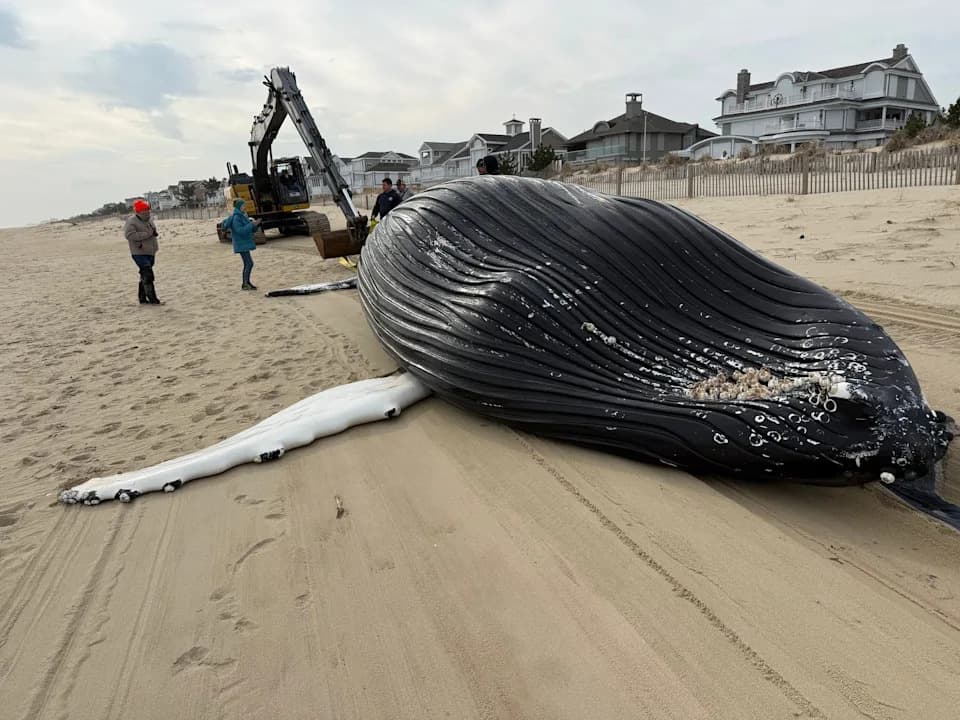
A young humpback whale that earned the Cape Cod-given nickname 'Oil Change' and thrilled whale watchers during 2025 was found dead on a Delaware beach on Jan. 8.
A charismatic juvenile humpback whale that became a favorite of Cape Cod Bay whale-watchers was found dead on Jan. 8 along Delaware's coast. Marine scientists say the animal — a male nicknamed "Oil Change" — likely died after a collision with a large vessel, based on injuries observed during a necropsy.
Identification and Local Connections
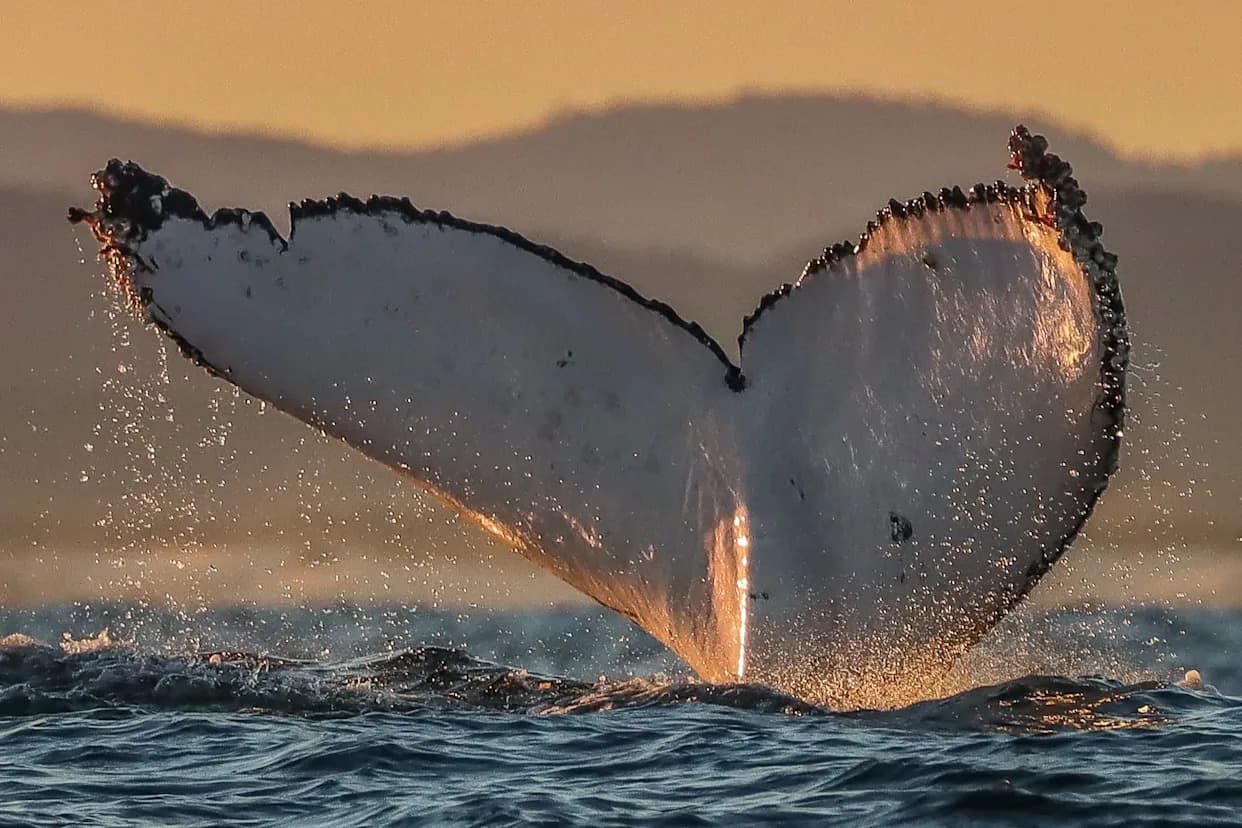
The whale, estimated at about 32 feet long and at least 20,000 pounds, was identified from photographs taken by Hyannis Whale Watcher Cruises during repeated summer encounters beginning in late July 2025. The eco-tour company said crew and passengers "fell in love" with the animal after seeing it breach and flipper-slap in Cape Cod waters. The boat crew gave him the nickname "Oil Change" for a distinctive large white marking on his tail fluke.
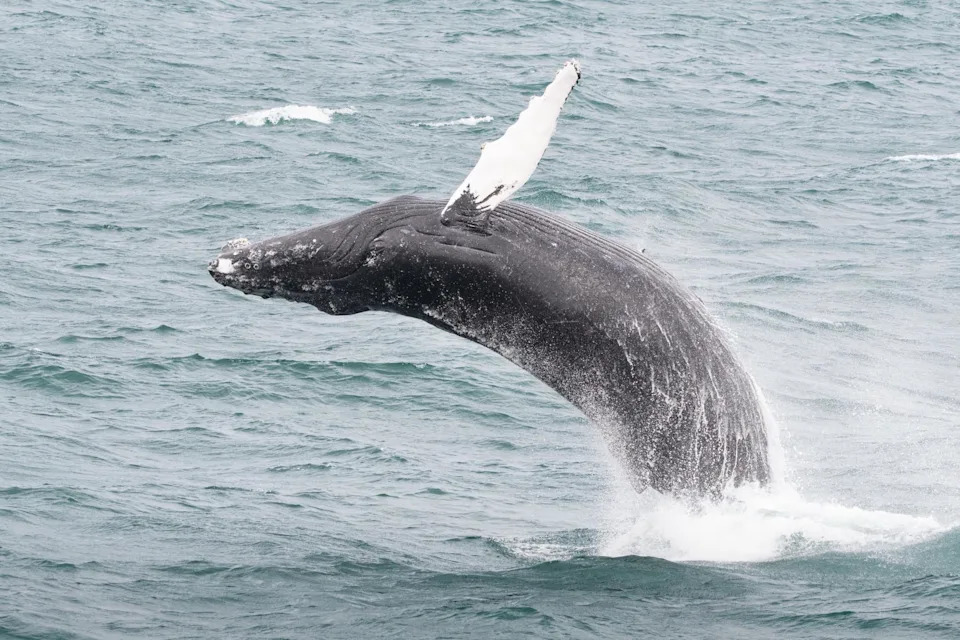
Over the summer, this young humpback whale made an impression with his breaches and other antics in Cape Cod Bay. The whale, which the crew of Hyannis Whale Watcher Cruises nicknamed 'Oil Change,' was found dead Jan. 8.
Discovery, Response and Necropsy Findings
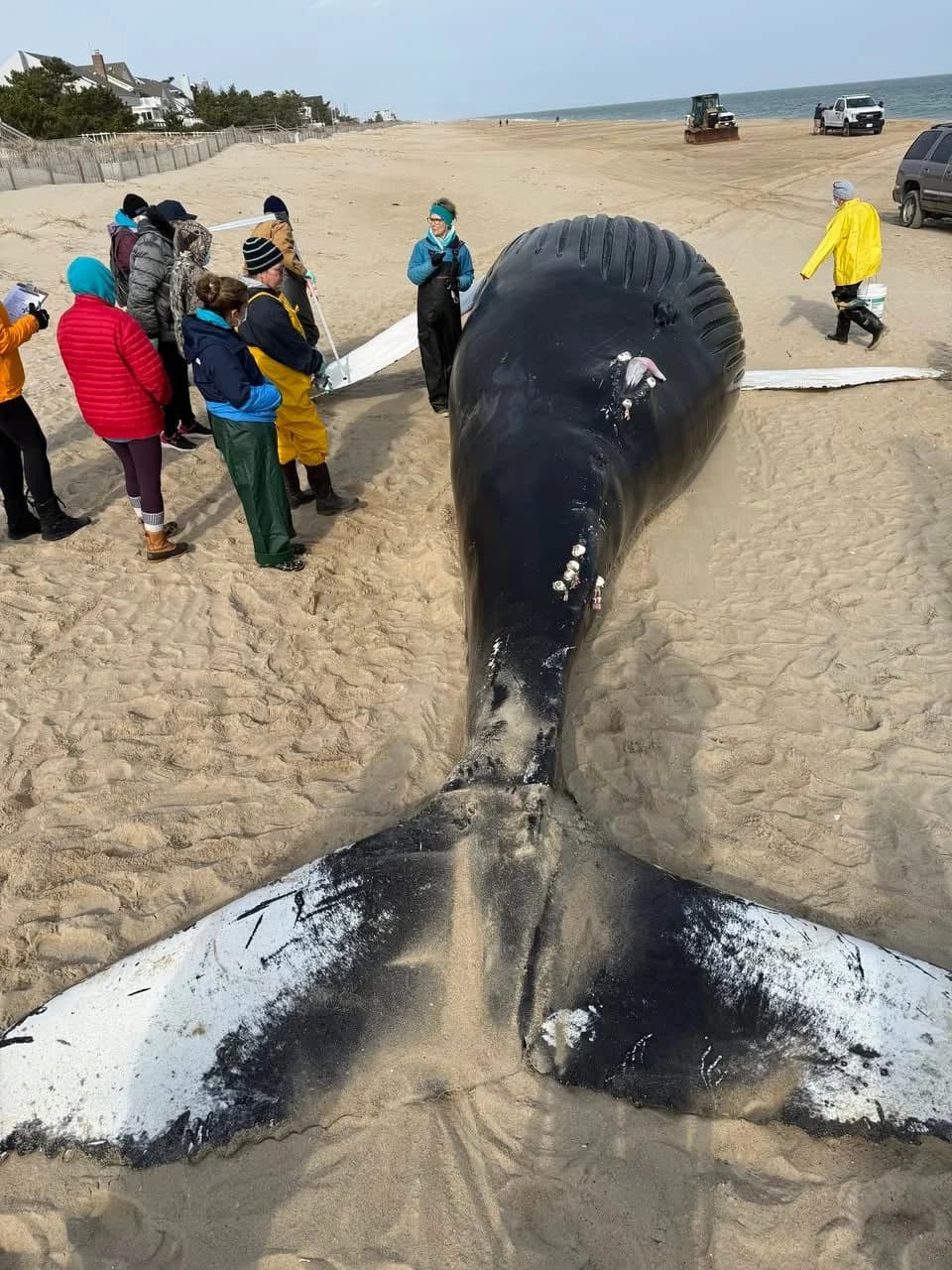
Responders discovered the carcass washed ashore near the Ocean Ridge community close to Bethany Beach, Delaware, after the whale had been observed floating roughly two miles off the Indian River Inlet two days earlier. Heavy equipment was brought in on Jan. 9 to move the remains onto the beach for a necropsy.
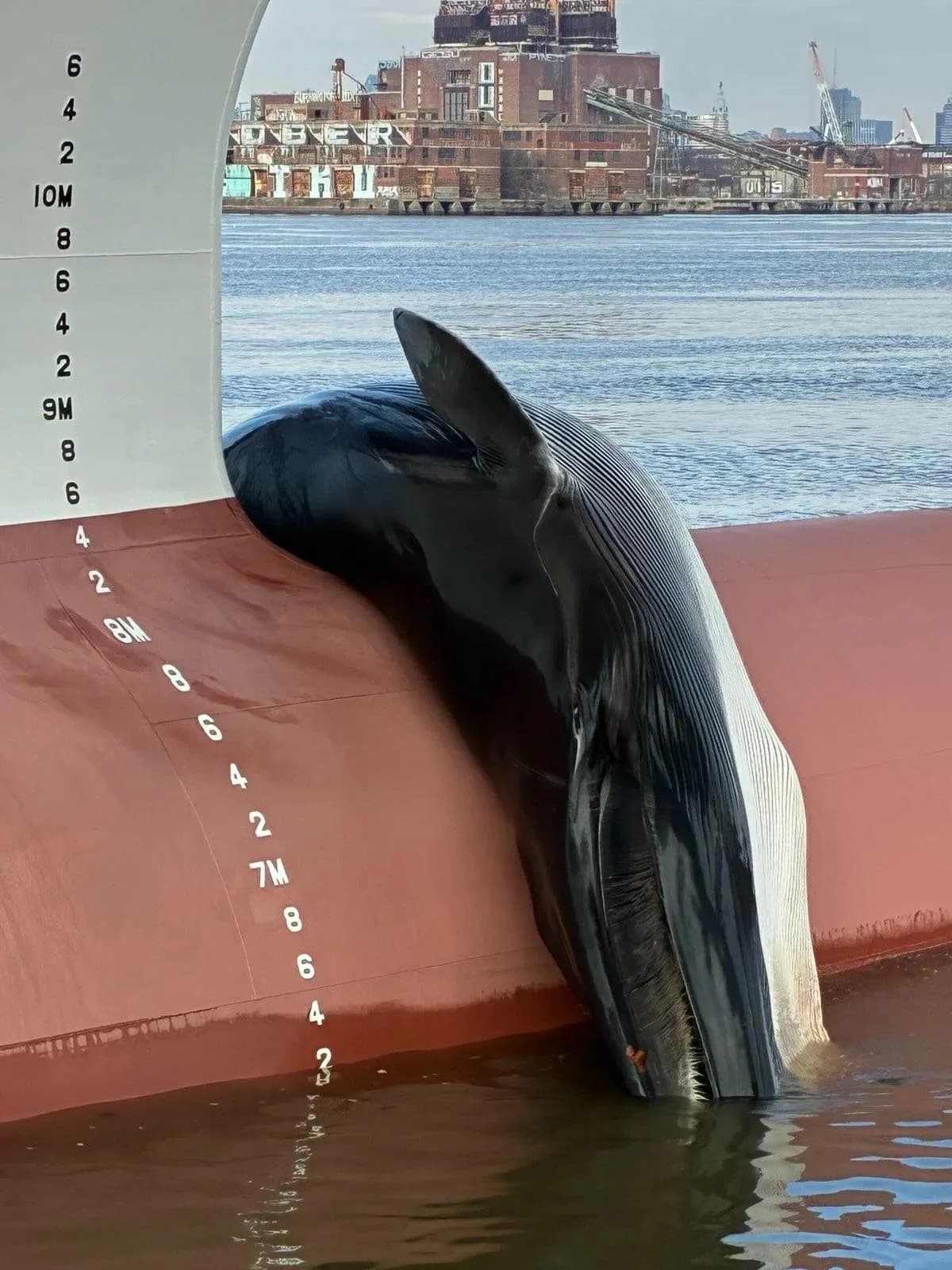
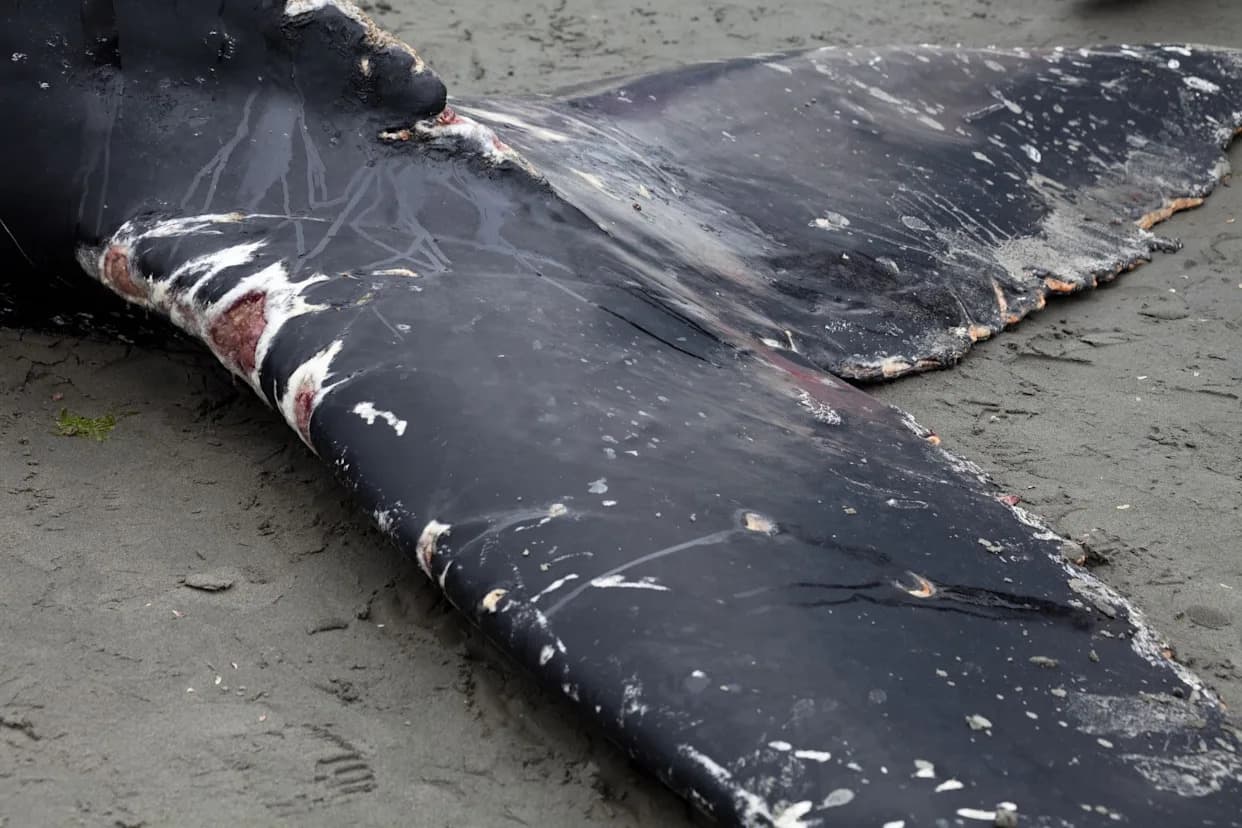
The Marine Education, Research and Rehabilitation Institute (MERR) reported subdermal hemorrhaging and a broken jaw on the right side — injuries consistent with blunt-force trauma. MERR Executive Director Suzanne Thurman said the pattern of wounds indicated the animal was alive at the time it was struck. While absolute confirmation can be difficult in stranded whale cases, Thurman noted these types of injuries are often associated with collisions with large vessels.
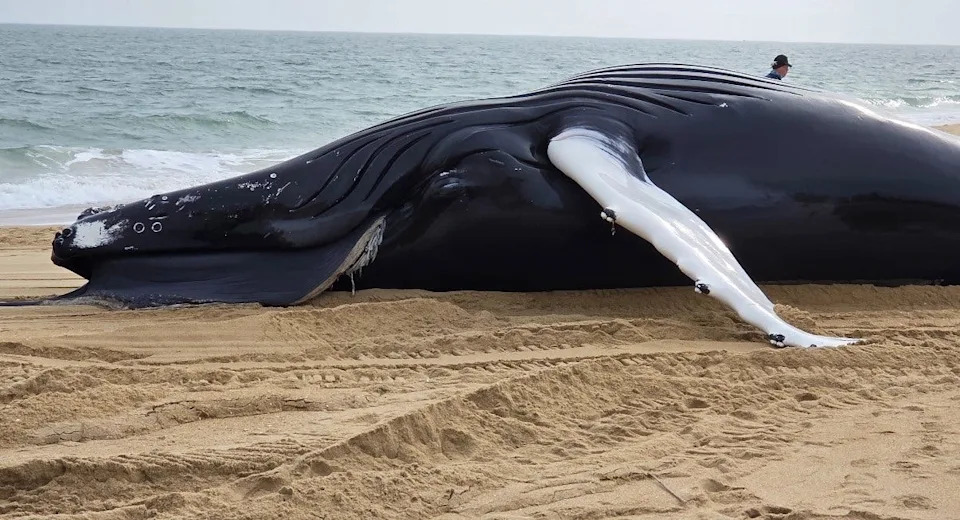
A young humpback whale that earned the Cape Cod-given nickname 'Oil Change' and thrilled whale watchers during 2025 was found dead on a Delaware beach on Jan. 8. Researcher believe it was killed in a collision with a large seagoing vessel.
"This one seemed especially so," Thurman said, referring to the whale's widespread recognition and the public connections it had made along the East Coast.
Community Effort and Aftercare
Volunteers and the Delaware Department of Natural Resources and Environmental Control assisted with the necropsy and logistics. Thurman praised local residents for supporting responders by providing refreshments and facilities. After the examination, the whale was buried on the beach — a standard practice for very large whales that cannot be safely towed offshore, allowing the carcass to decompose naturally and return nutrients to the coastal ecosystem.
Conservation Context
Hyannis Whale Watcher Cruises used the loss to urge stronger protection measures for whales, suggesting actions such as reducing fuel use, supporting sustainable fishing practices, cutting single-use plastics, and backing organizations involved in whale protection and rescue. The company cited groups including MERR, the Whale and Dolphin Conservation (WDC), the Center for Coastal Studies, and IFAW.
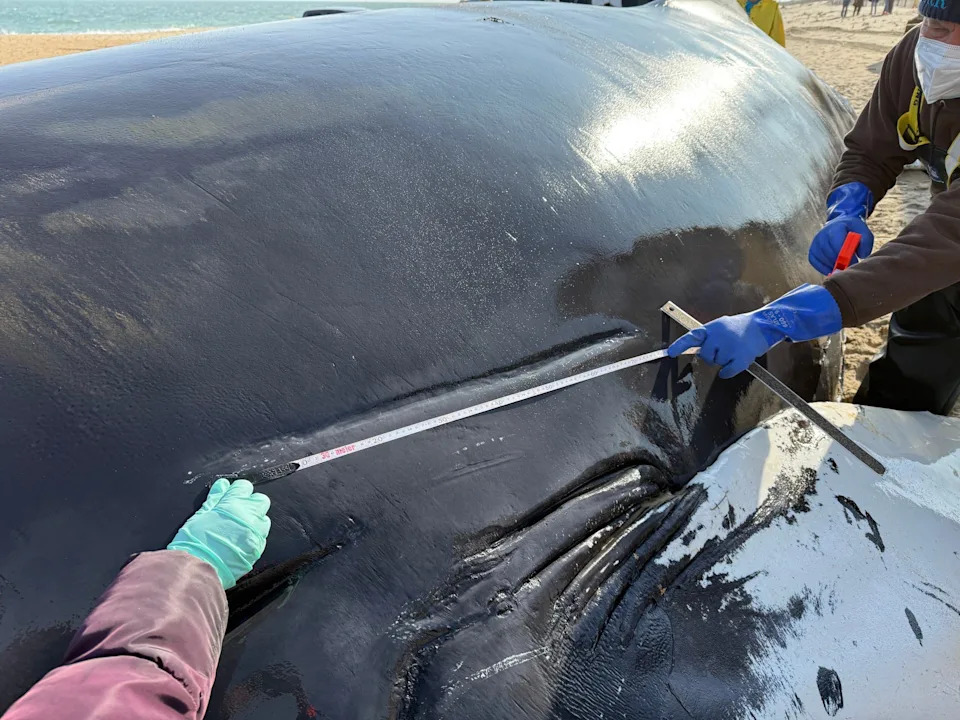
Responders in Delaware measure a mark found on a young humpback that washed ashore there on Jan. 8. The whale, known as 'Oil Change,' was likely killed in a collision with a large vessel. The whale had thrilled Cape Cod whale watchers during 2025.
Humpback whales are protected under the Marine Mammal Protection Act and are listed as endangered under the Massachusetts Endangered Species Act. Like the critically endangered North Atlantic right whale, humpbacks are most commonly killed by vessel strikes and entanglement in fishing gear.
Broader Trends and Research
NOAA declared an "Unusual Mortality Event" for humpbacks on the U.S. Atlantic coast in 2017 because of rising human-caused threats. As of 2025, authorities have documented 262 dead humpbacks; of 129 necropsied animals, roughly 45% were confirmed to have died from ship strikes or entanglement.
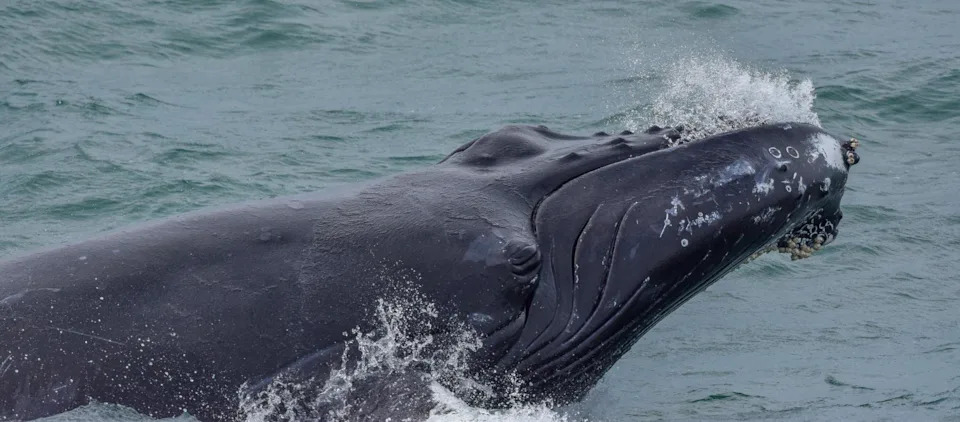
Over the summer, this young humpback whale thrilled whale watchers on Cape Cod Bay, including Hyannis Whale Watcher Cruises crew member Gina Maduri, who captured this image. The whale, which the crew nicknamed 'Oil Change,' was found dead Jan. 8.
Researchers report that humpback migration timing and distribution are shifting as ocean conditions change. The Massachusetts Division of Fisheries and Wildlife says humpbacks now arrive in Cape Cod Bay nearly three weeks earlier than two decades ago. A 2025 study from researchers at Duke University found distribution changes within the Gulf of Maine driven by warming waters, altered salinity and shifting prey — trends scientists expect to continue as oceans warm. Climate models indicate that by the end of the century between one-third and two-thirds of humpback breeding grounds could become warmer than the temperatures these whales currently use.
For those who watched Oil Change breach and roll in Cape Cod waters just months earlier, his death is a sober reminder of how narrow the margin can be between wonder and loss. "While this incident was more than likely a terrible accident, it serves as a reminder of the perils these animals face every day," Hyannis Whale Watcher Cruises wrote.
Reporter: Heather McCarron (hmccarron@capecodonline.com)
Help us improve.