California wildlife officials have reduced active search efforts for two juvenile wolves from the Beyem Seyo pack after weeks of unsuccessful capture attempts. The pack was linked to at least 92 cattle deaths or injuries over seven months in 2025; CDFW euthanized four wolves in October and had planned relocation for two more. UC Davis researchers described the pack’s depredations as unprecedented regionally, and ranchers are calling for stronger measures, including zones to remove wolves that repeatedly attack livestock.
California Scales Back Active Search for Two Juvenile Wolves After Devastating Sierra Valley Livestock Attacks
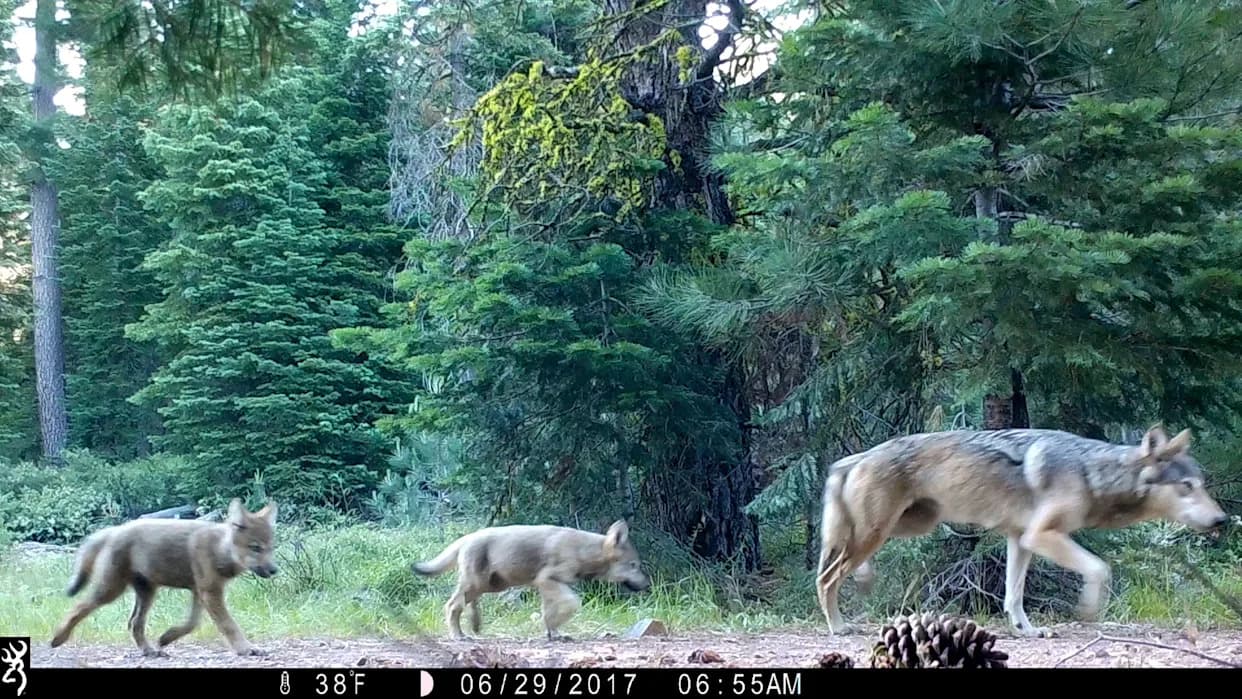
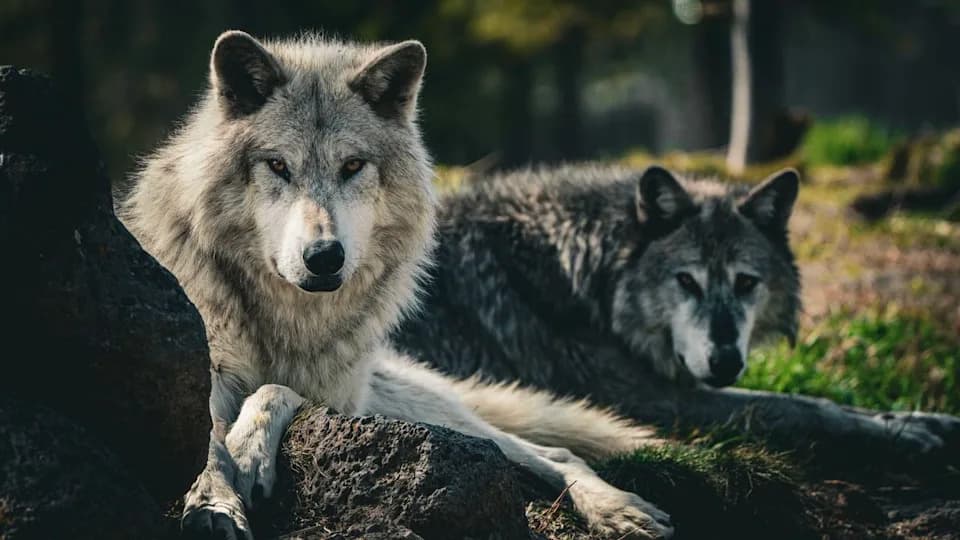
FILE - This remote camera image provided by the U.S. Forest Service shows a female gray wolf and two of the three pups born in 2017 in the wilds of Lassen National Forest in northern California on June 29, 2017. (U.S. Forest Service via AP, File)
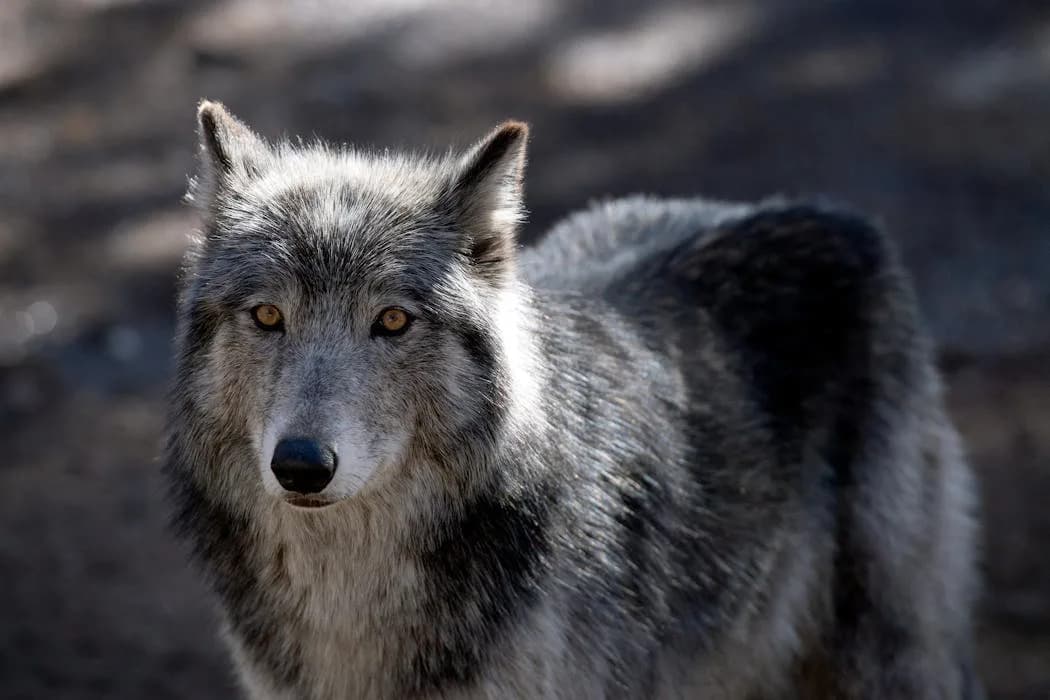
Wildlife officials have paused active efforts to capture two juvenile gray wolves believed to be part of the Beyem Seyo pack, which was linked to widespread livestock losses in Northern California’s Sierra Valley last summer.
Pack Responsible For Major Losses
A University of California, Davis report found the Beyem Seyo pack was responsible for the death or injury of at least 92 calves and cows over a seven-month period in 2025. Gray wolves in California are protected by state law and the federal Endangered Species Act, and state officials have been balancing conservation rules with urgent livestock-protection concerns.
State Response And Field Efforts
In October, the California Department of Fish and Wildlife (CDFW) said it had euthanized four gray wolves from the Beyem Seyo pack — three adults and one juvenile — after what the agency described as an "unprecedented level of livestock attacks across the Sierra Valley." Officials also announced plans to capture and relocate the two remaining juveniles to wildlife facilities to reduce the risk that cattle-preying behavior would spread.
After weeks of searches, CDFW has "reduced efforts to capture" the two juveniles, Deputy Director of Public Affairs Katie Talbot said. "Despite best efforts from CDFW’s expert wolf biologists and law enforcement officers, we have not been able to find or get close enough to these young wolves to safely capture them. We remain hopeful our continued remote monitoring will allow for sightings that will lead to safe capture of these juveniles," Talbot said.
Nonlethal Deterrence Tried—and Fell Short
Wildlife teams deployed a range of nonlethal measures to protect livestock and change wolf behavior, including drones, nonlethal bean-bag rounds, visual deterrents such as flags and ropes, and nearly continuous field presence. Officials say those tactics were unable to stop the Beyem Seyo pack’s attacks.
Broader Context And Impact
Wolves were essentially eradicated in California in the early 20th century amid conflicts with ranching; the last known native wolf was killed in Lassen County in 1924. After reintroductions in the mid-1990s in Idaho and Yellowstone, wolves gradually expanded their range. A pack was recorded returning to Northern California in 2015, and the recovering population has led to increasing encounters with ranching operations.
UC Davis economists and researchers note the Beyem Seyo pack’s depredations were exceptional: they caused more livestock losses than the entire wolf populations documented in Montana in 2024 and Wyoming in 2023. Specifically, CDFW data show about 70 gray wolves were linked to 175 livestock losses in California between January and October of last year, and the Beyem Seyo pack accounted for roughly half of those incidents.
"It was a horrible summer here for everybody and the emotional strain was probably worse than the financial strain for most people. They did the right thing. We couldn’t go on living the way we were living," said Rick Roberti, a Plumas County cattle rancher and president of the California Cattlemen’s Association, who lost several animals.
Many ranchers are calling for stronger responses. Some have urged state officials to consider designated areas where wolves that repeatedly attack livestock could be removed, arguing habituated wolves pose a persistent risk to communities and herds.
What’s Next
CDFW says it will continue remote monitoring of the juveniles and will seize any safe opportunity to capture them. The agency and researchers emphasize ongoing tensions between wolf recovery goals and protecting working ranchlands; resolving those tensions will likely require continued adaptive management, targeted deterrence, compensation and collaboration between wildlife managers and ranching communities.
Help us improve.