U.S. District Judge Mustafa Kasubhai dismissed the Justice Department’s suit seeking Oregon’s unredacted voter rolls, finding the department failed to state the required “basis and purpose” under the Civil Rights Act of 1960. Oregon officials offered only the publicly available voter file and argued the federal request violated privacy protections. The ruling is the latest in a string of judicial setbacks for the Justice Department’s multi-state effort to collect detailed voter data.
Federal Judge Dismisses DOJ Suit Seeking Oregon's Unredacted Voter Rolls
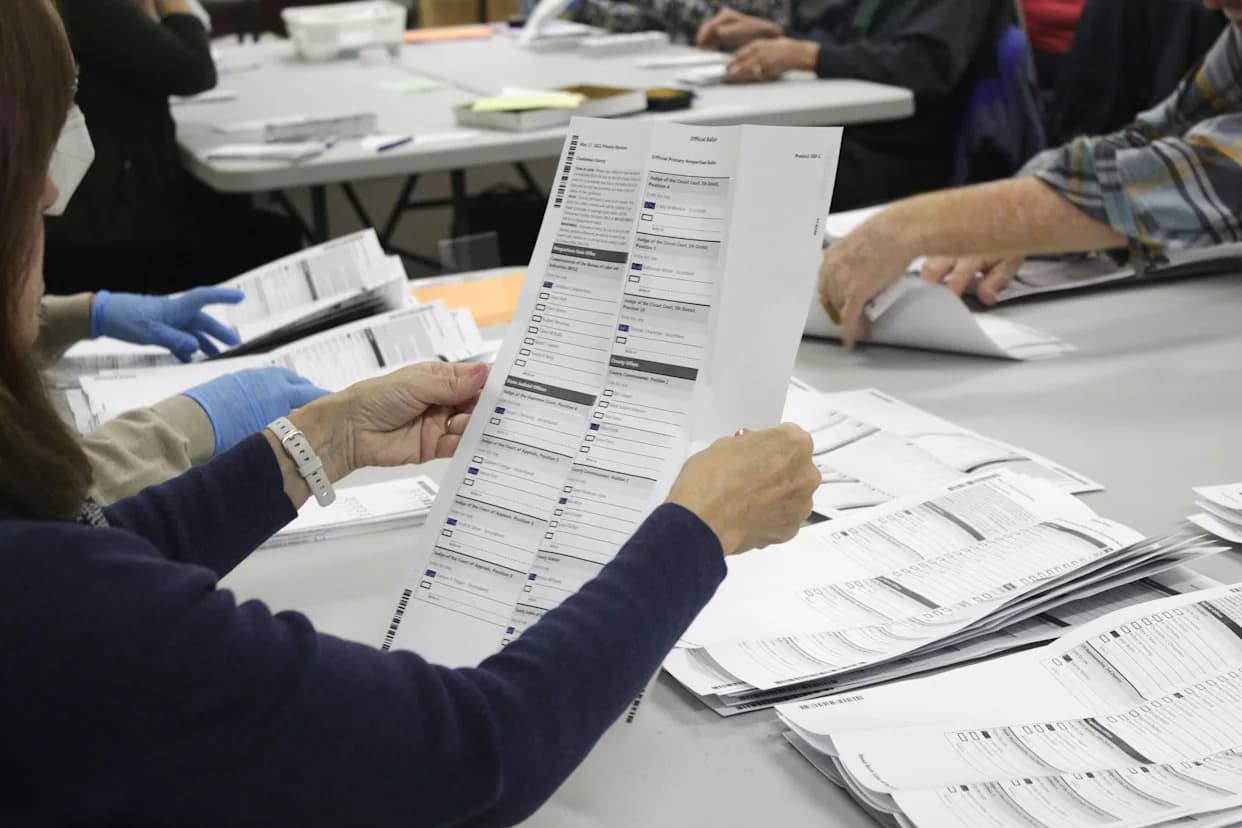
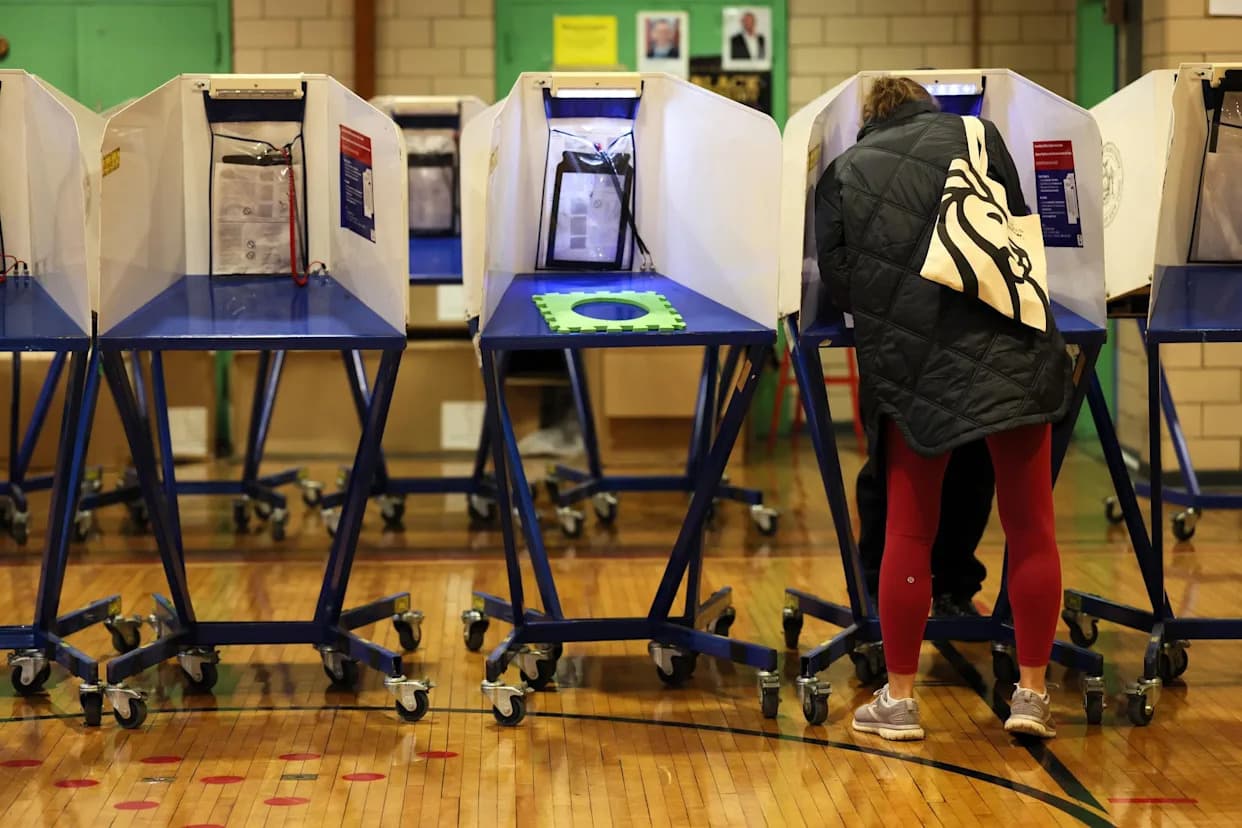
FILE - An election worker examines a ballot at the Clackamas County Elections office May 19, 2022, Oregon City, Ore. (AP Photo/Gillian Flaccus, File)(ASSOCIATED PRESS)
A federal judge in Oregon has dismissed a Justice Department lawsuit that sought the state's unredacted voter registration records, marking another legal setback for the administration's effort to obtain detailed voter data from multiple states.
U.S. District Judge Mustafa Kasubhai said at a Monday hearing that he would dismiss the case and promised a written opinion in the coming days; the court docket later reflected that Oregon’s motion to dismiss was granted.
Oregon Reaction. Oregon Attorney General Dan Rayfield welcomed the decision.
“The court dismissed this case because the federal government never met the legal standard to get these records in the first place,”he said in an emailed statement, adding that Oregonians deserve assurance that voting laws cannot be used as a backdoor to collect personal information.
Why the Lawsuit Was Filed. The Justice Department had sought detailed voter data — including full names, birth dates, residential addresses, driver’s license numbers and partial Social Security numbers — arguing it needed the records to assess whether state election practices complied with federal law. Many state officials responded that turning over such information would violate state and federal privacy protections.
Legal Basis and Ruling. The department relied in part on the Civil Rights Act of 1960, which requires that voter records be made available to the U.S. Attorney General upon a written demand that states the "basis and purpose" for the request. Kasubhai concluded the Justice Department’s August letter did not meet that statutory requirement. He said his review of the congressional record indicated the law was intended to allow access to records in the context of investigations into discriminatory practices in elections — a narrower purpose than the government had articulated.
Broader Context. The Oregon case is one of dozens of actions in which the Justice Department sought voter files from states; the department has filed suits against at least 23 states and the District of Columbia. Courts in other states recently rejected similar requests — including dismissals in Georgia and California — citing procedural or legal defects in the government’s approach.
Privacy and Separation of Powers Concerns. State and local election officials, along with privacy advocates, have expressed alarm that releasing sensitive voter information to federal agencies could violate privacy laws or be used for purposes beyond election-law compliance. They also note that the Constitution delegates the administration of elections to the states (with oversight by Congress), and courts have scrutinized the scope of federal authority in this area.
Next Steps. Kasubhai will issue a final written opinion detailing his reasoning. The Justice Department declined to comment on the ruling.
Help us improve.