Spain's government has approved a decree to regularise roughly 500,000 undocumented migrants who have lived in the country at least five months and applied for international protection before 31 December 2025. Applicants must have a clean criminal record, and children already in Spain are included. The application window is expected to run from April through June; the decree bypasses parliament and has drawn strong criticism from the right and praise from the Catholic Church and migrant-rights supporters.
Spain Approves Decree To Regularise About 500,000 Undocumented Migrants
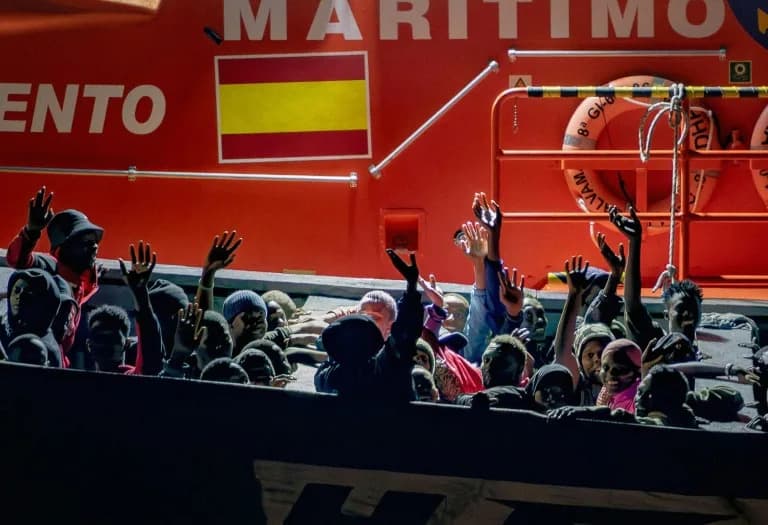
Spain is one of Europe's main gateways for migrants fleeing poverty, conflict and persecution (Antonio SEMPERE)(Antonio SEMPERE/AFP/AFP)
Spain's left-of-centre government has approved a decree to regularise roughly 500,000 undocumented migrants, a policy that departs from tougher migration approaches taken by some other European countries. The measure aims to provide legal work status and integration pathways to people who meet specific residency and protection-application criteria.
Who Is Eligible
The scheme applies to people who have lived in Spain for at least five months and who had filed an application for international protection before 31 December 2025. Applicants must have a clean criminal record. The regularisation will also extend to children who already live in Spain.
Process And Timing
Officials expect the application window to open in April and remain open until the end of June. The government will enact the plan by decree, which means it does not require parliamentary approval — a procedural choice that avoids a vote in a legislature where the Socialist-led coalition lacks a majority.
Government Rationale
Migration Minister Elma Saiz said beneficiaries will be able to work "in any sector, in any part of the country," and praised "the positive impact" of migration. Prime Minister Pedro Sánchez has argued the move helps plug labour shortages and counteract an ageing population that risks straining pensions and public services. Sánchez has also said migration accounted for roughly 80% of Spain's dynamic economic growth over the past six years.
Political Reaction
The conservative Popular Party and far-right groups condemned the decree, arguing it will encourage irregular immigration and strain public services. Popular Party leader Alberto Núñez Feijóo wrote on X that the plan was "ludicrous" and warned it would "overwhelm our public services," pledging to overhaul migration policy if his party takes power.
"In Socialist Spain, illegality is rewarded," Feijóo wrote, reflecting the opposition's sharp criticism.
Support And Context
The Spanish Catholic Church and some civil-society groups praised the decision, describing it as "an act of social justice and recognition." Official labour data released around the same time showed that of the 76,200 people who boosted employment in Spain in the final quarter of last year, 52,500 were foreigners — contributing to the country's lowest unemployment rate since 2008.
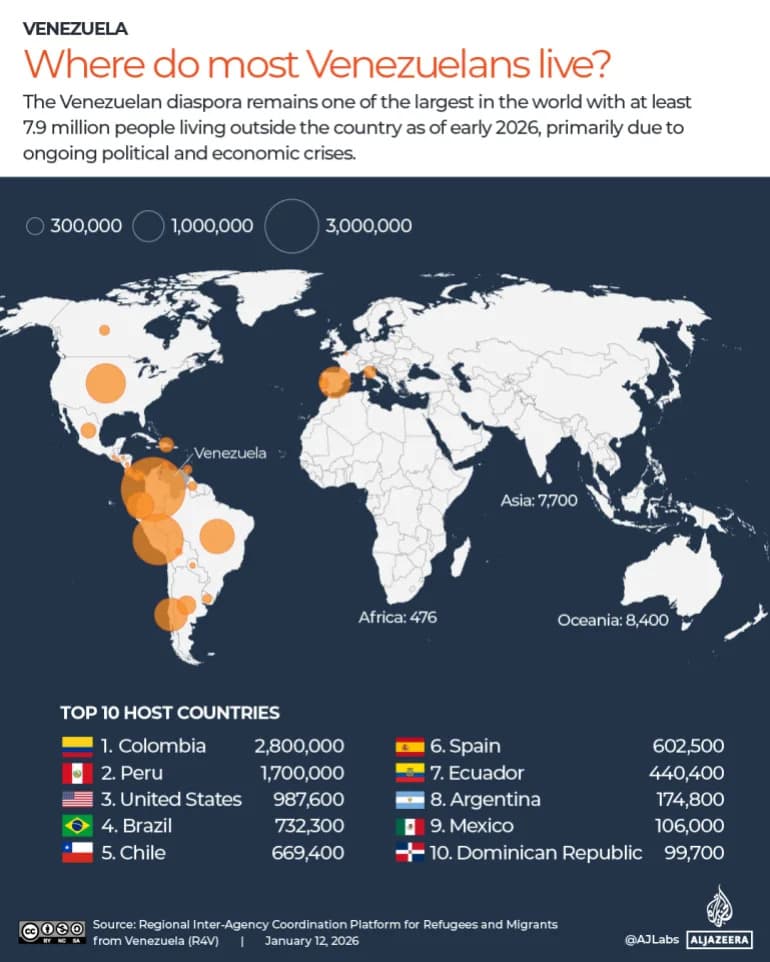
According to the Funcas think-tank, about 840,000 undocumented migrants were living in Spain at the start of January 2025, most from Latin America. Spain remains a major entry point for people fleeing poverty, conflict and persecution, with tens of thousands — primarily from sub-Saharan Africa — arriving via the Canary Islands. The National Statistics Institute reports that more than seven million foreign nationals live in Spain, within a total population of 49.4 million.
The decree marks a significant policy decision with economic and social implications, and is likely to feature prominently in political debate ahead of future elections.
Help us improve.