Japanese Prime Minister Sanae Takaichi's approval ratings have slipped in fresh polls ahead of the Feb. 8 lower-house election, with support reported at 67% (Nikkei), 63% (Kyodo) and 57% (Mainichi). Voter scepticism is rising over her proposed $793 billion stimulus, and markets have reacted to debt concerns by pushing up government bond yields. The LDP polls near 30% while having lost Komeito's support, making the election unpredictable and pivotal for the party's future.
Japan PM Sanae Takaichi's Approval Dips Ahead Of Feb. 8 Election; LDP Trails

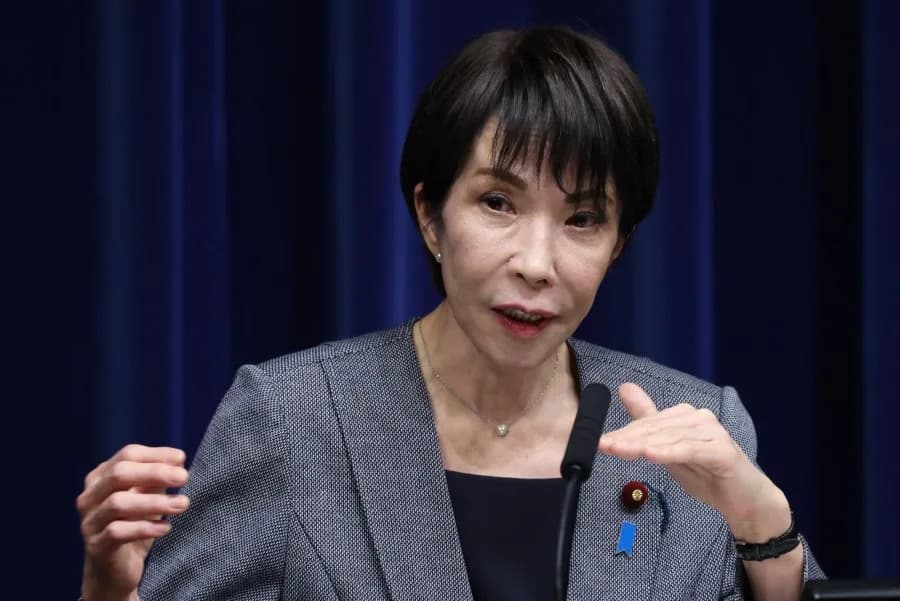
Japanese Prime Minister Sanae Takaichi speaks during a press conference at the prime minister's official residence on January 19, 2026, Tokyo, Japan. Rodrigo Reyes Marin/Pool via REUTERS
Tokyo — Japanese Prime Minister Sanae Takaichi's public approval ratings have softened in new polls released ahead of the Feb. 8 lower-house election, a vote she has presented as a referendum on her economic stewardship.
The Nikkei survey, published Monday, showed support for Takaichi's administration fall below 70% for the first time since she became Japan's first female prime minister in October, slipping to 67% from 75% in December. A Kyodo survey put approval at 63% (down from 68%), while a Mainichi poll reported a ten-point drop to 57%.
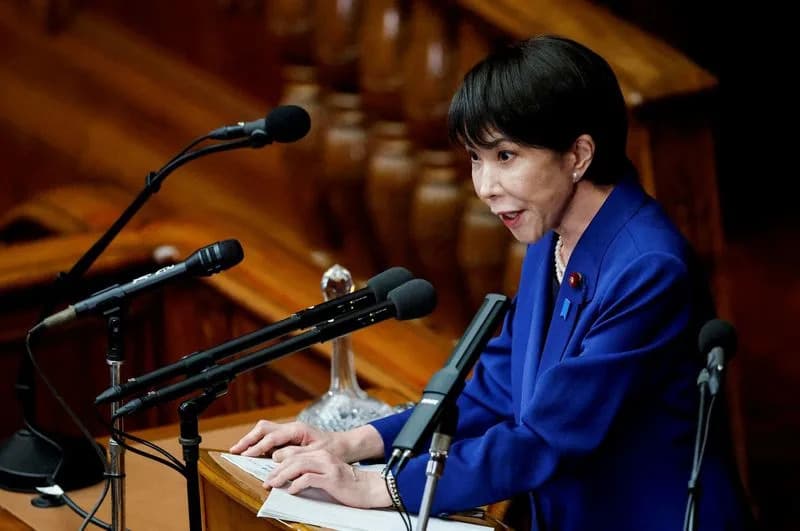
By calling a snap vote for all 465 seats in the lower house, Takaichi aims to convert her personal popularity into backing for expansionary fiscal policies and to solidify control of the ruling Liberal Democratic Party (LDP). The LDP and its coalition partner, the Japan Innovation Party (Ishin), currently hold only a one-seat majority in the chamber.
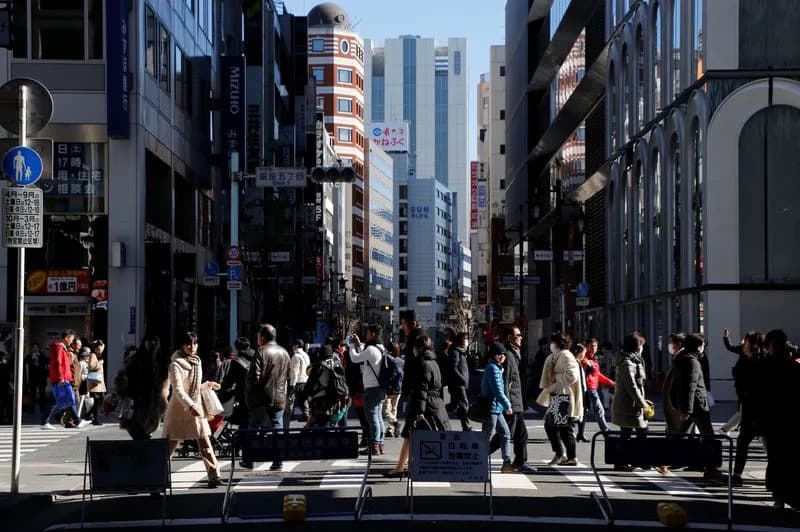
Polling suggests growing voter skepticism about her economic plans. In the Nikkei poll, 56% of respondents said they did not believe Takaichi's proposed stimulus package would ease the burden of rising living costs. Market concerns that Japan may need to issue additional debt to finance the measures have contributed to a rise in government bond yields.
Opponents have criticised Takaichi for calling the election before lawmakers approved the record $793 billion national budget, describing the timing as political opportunism. In the Mainichi survey, two-fifths of respondents said they were unhappy with the timing, while fewer than a third approved of it.
While Takaichi's personal approval remains relatively strong, the LDP as a party polls much lower — around 30% in several recent surveys. The party's position was further weakened when the centrist Komeito party ended its 26-year alliance with the LDP last year and aligned with the main opposition, the Constitutional Democratic Party of Japan, costing the LDP a key urban vote-getter.
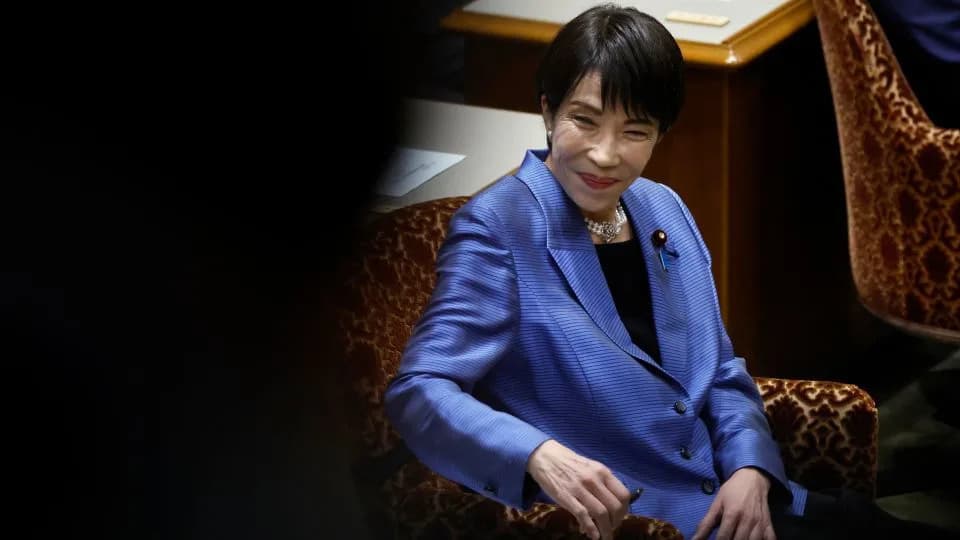
"It will be the most unpredictable election in years," said Tobias Harris, founder of political risk advisory firm Japan Foresight. "LDP's backbenchers know that their fates will rest in Takaichi's hands."
Analysts say the election outcome could hinge on whether Takaichi can translate strong personal support into broader backing for the LDP across constituencies. The vote will be closely watched for its implications on Japan's fiscal direction and political stability.
Exchange Rate: ($1 = 154.2200 yen)
(Reporting by Leika Kihara, Tim Kelly and John Geddie; Edited by Jamie Freed and Raju Gopalakrishnan)
Help us improve.