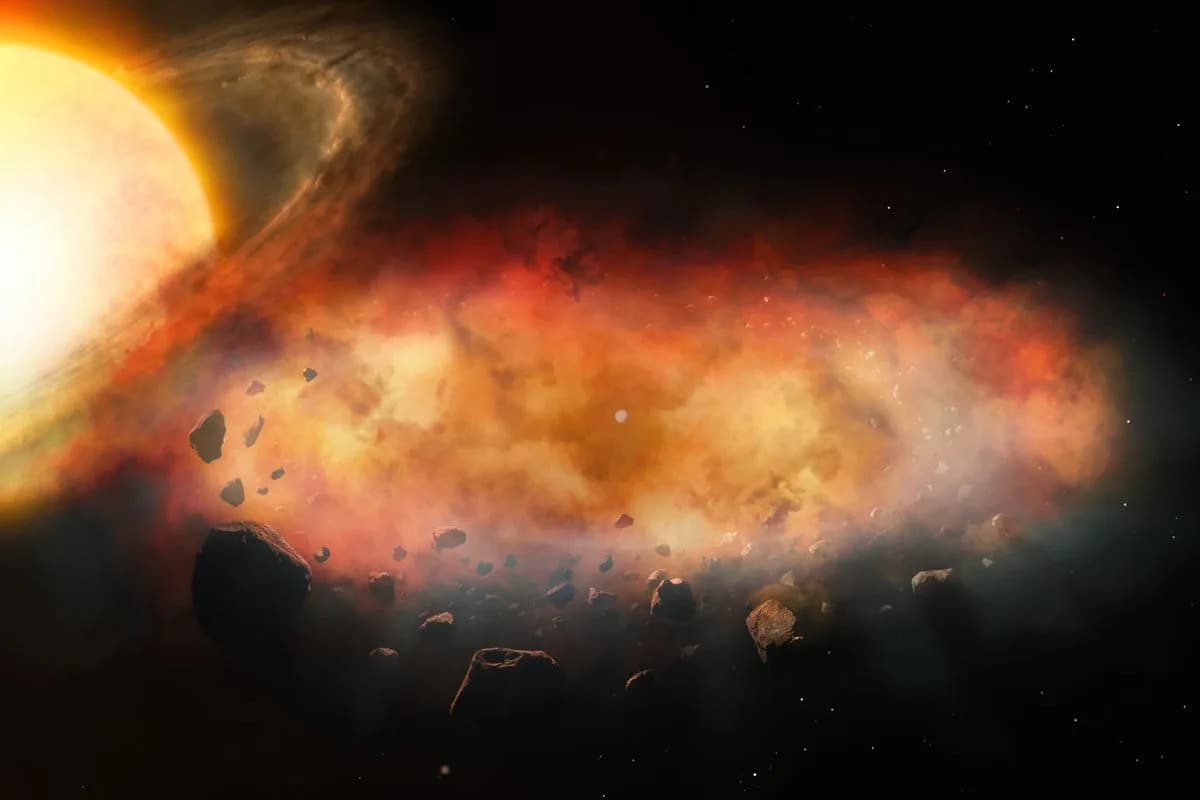
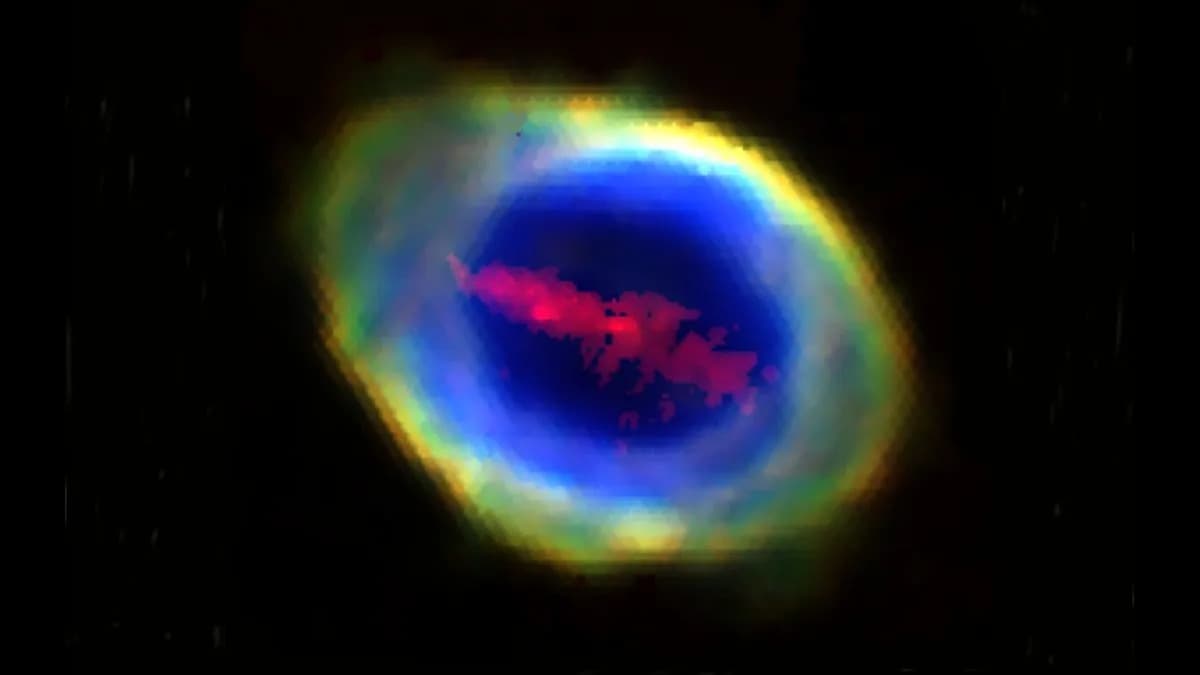
The Ring Nebula contains an unexpected, narrow bar of glowing, ionized iron discovered with WEAVE’s LIFU mode on the 4.2-m William Herschel Telescope. The bar holds roughly 14% of Earth’s mass in iron and displays kinematics and a location inconsistent with simple jet or disrupted-planet scenarios. JWST imagery shows dust flanking but not overlapping the bar, yet the central nebula lacks the shocks or extreme temperatures normally required to free and ionize iron. Astronomers will survey more nebulae to find similar features and solve the mystery.
Mysterious Glowing Iron Bar Found Crossing The Ring Nebula — Astronomers Stumped
A Glowing Bar of Iron Is Haunting The Ring Nebula – And No One Knows Why
A striking, linear cloud of glowing, ionized iron atoms has been discovered threading the heart of the Ring Nebula — a feature unlike anything seen before in a planetary nebula and one that defies easy explanation.
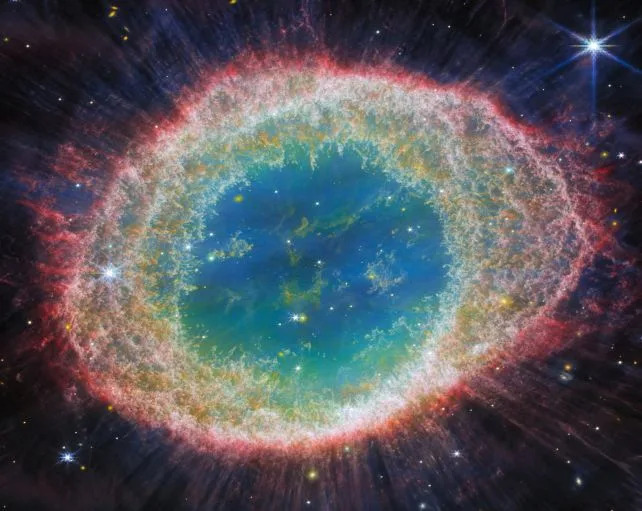
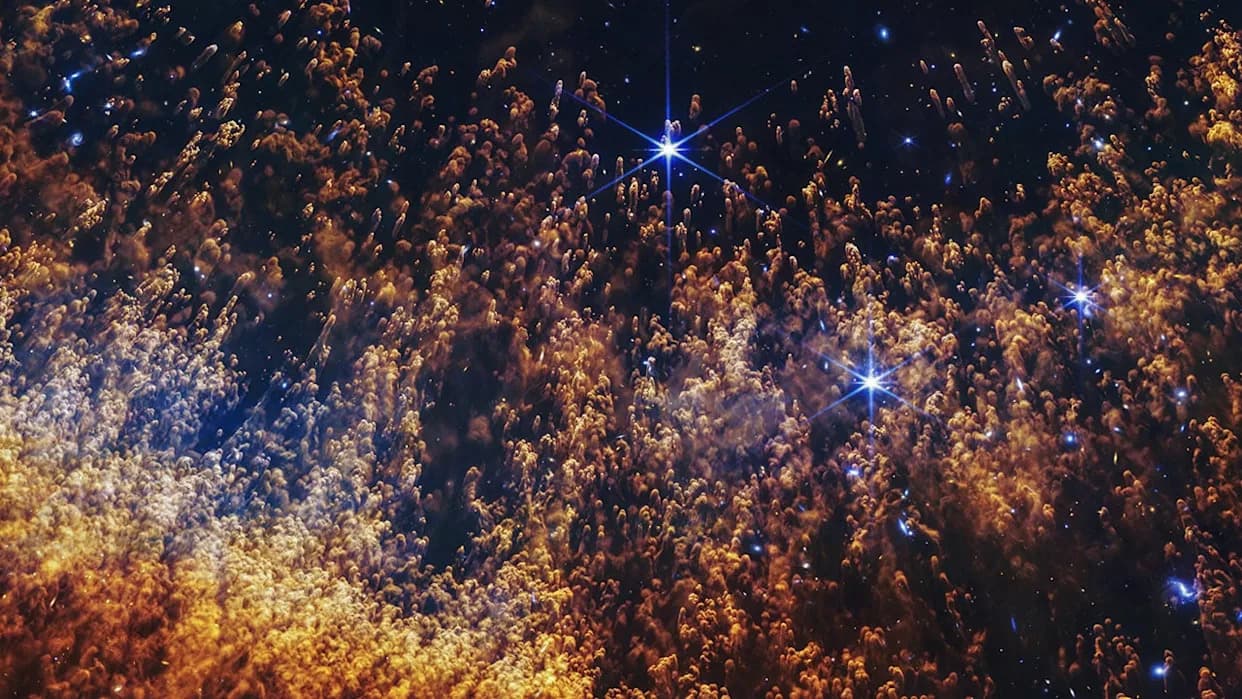
JWST image of the Ring Nebula. (ESA/Webb, NASA, CSA, M. Barlow, N. Cox, R. Wesson)
The structure was revealed in new full-field spectroscopic maps from the Large Integral Field Unit (LIFU) mode of the WEAVE (WHT Enhanced Area Velocity Explorer) instrument on the 4.2-m William Herschel Telescope. Because previous studies used slit spectroscopy (sampling only narrow slices), this bar escaped detection until WEAVE delivered a complete, high-detail spectral image of the nebula.

Audition now for ScienceAlert's Casting Call
What Was Found
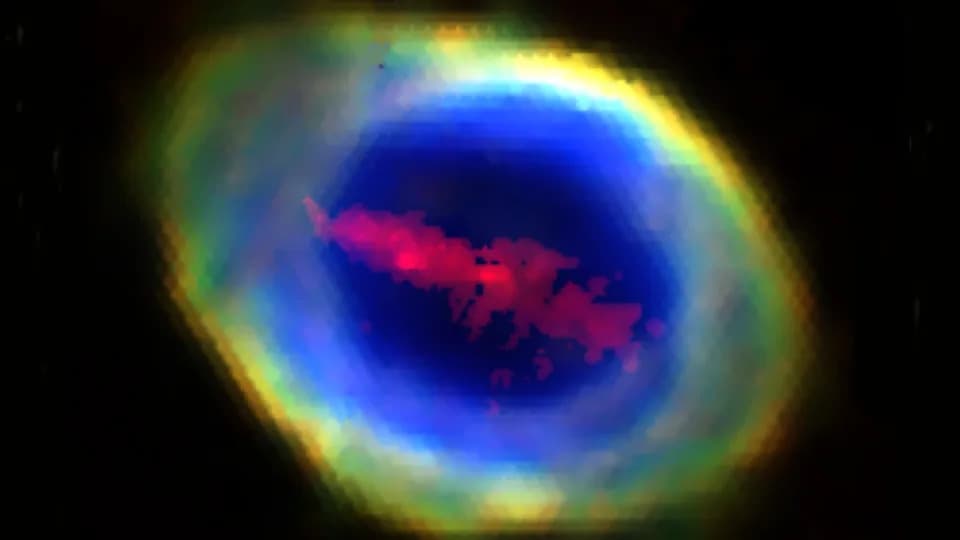
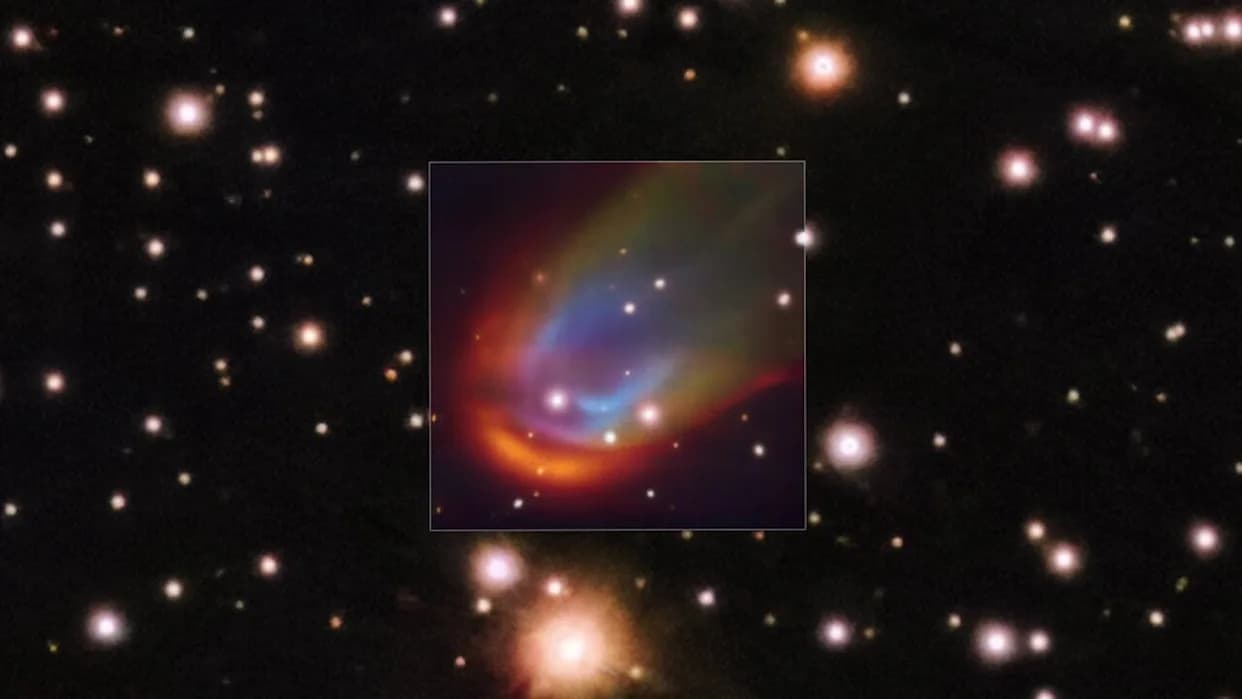
The discovery team, led by Roger Wesson of Cardiff University, found a narrow, linear “bar” of ionized iron crossing the Ring Nebula’s center. The emission indicates a very large iron mass — roughly 14% of Earth’s mass (an amount larger than Mars) — concentrated in this unusually straight feature. No comparable linear emission from other elements is seen in the same shape.
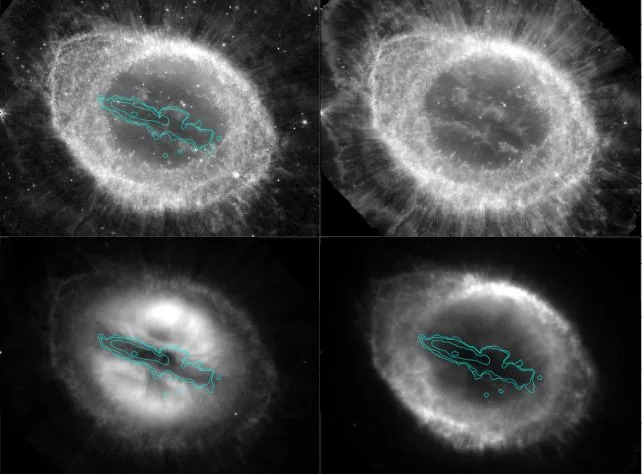
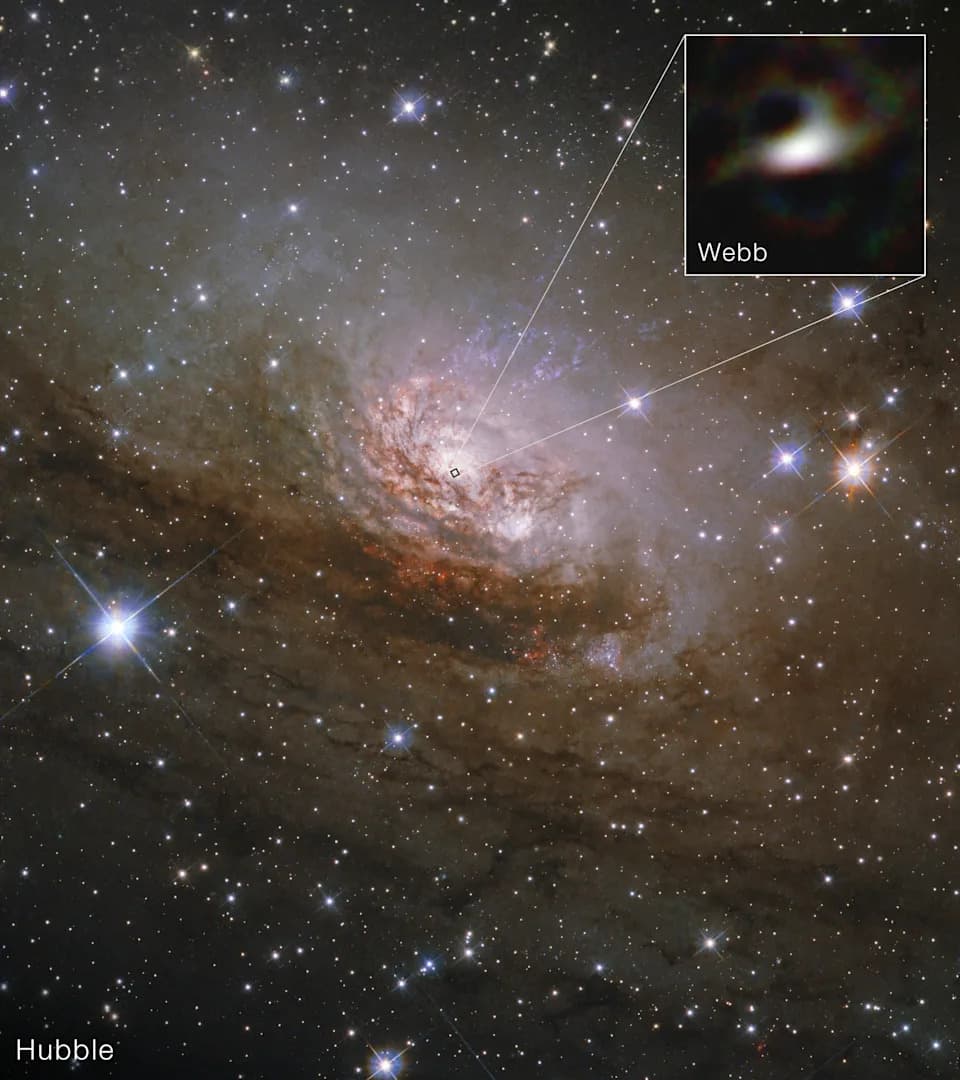
JWST observations of the nebula, with the iron outlined in blue, except in the top right, where it is omitted to show the dust. (Wesson et al.,MNRAS, 2026)
Why It’s Surprising
Iron in nebulae is normally locked up in dust grains, not present as free, ionized atoms. To liberate and ionize such a large quantity of iron typically requires either strong shocks or very high temperatures, yet the Ring Nebula’s center shows no clear signs of those conditions. The nebula’s central white dwarf is also offset from the bar, and velocity measurements along the bar show the whole structure receding from us rather than displaying the opposing velocities expected from bipolar jets.
Possible Explanations — And Their Problems
Scientists have considered several scenarios, each with challenges:
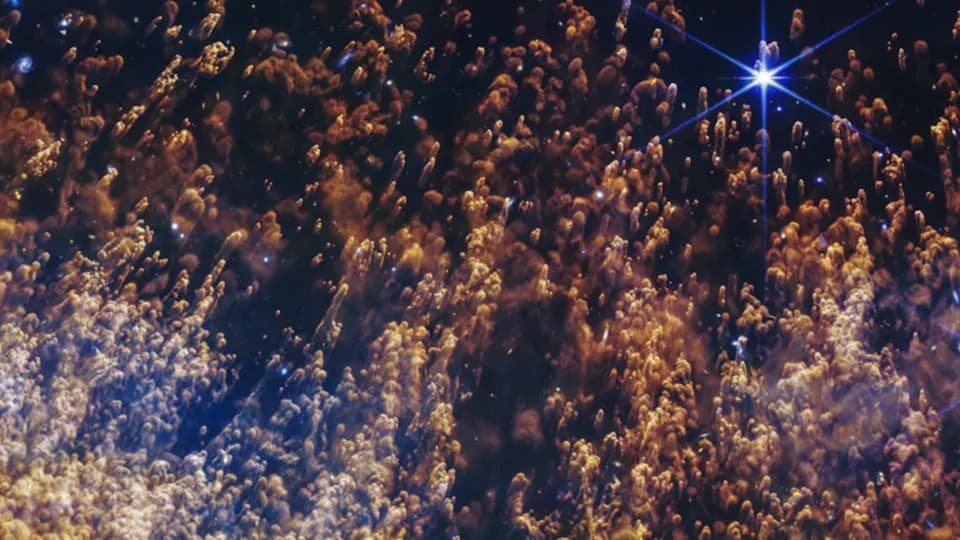
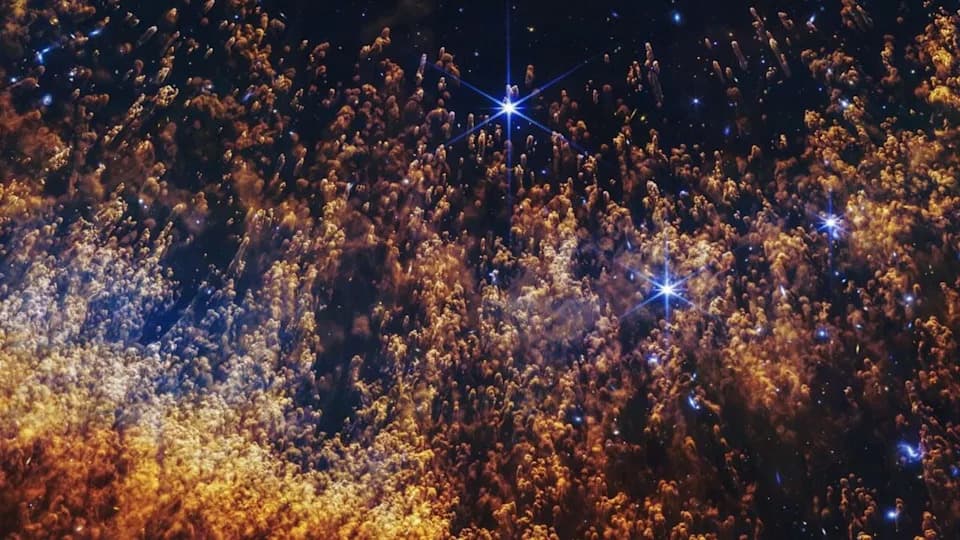
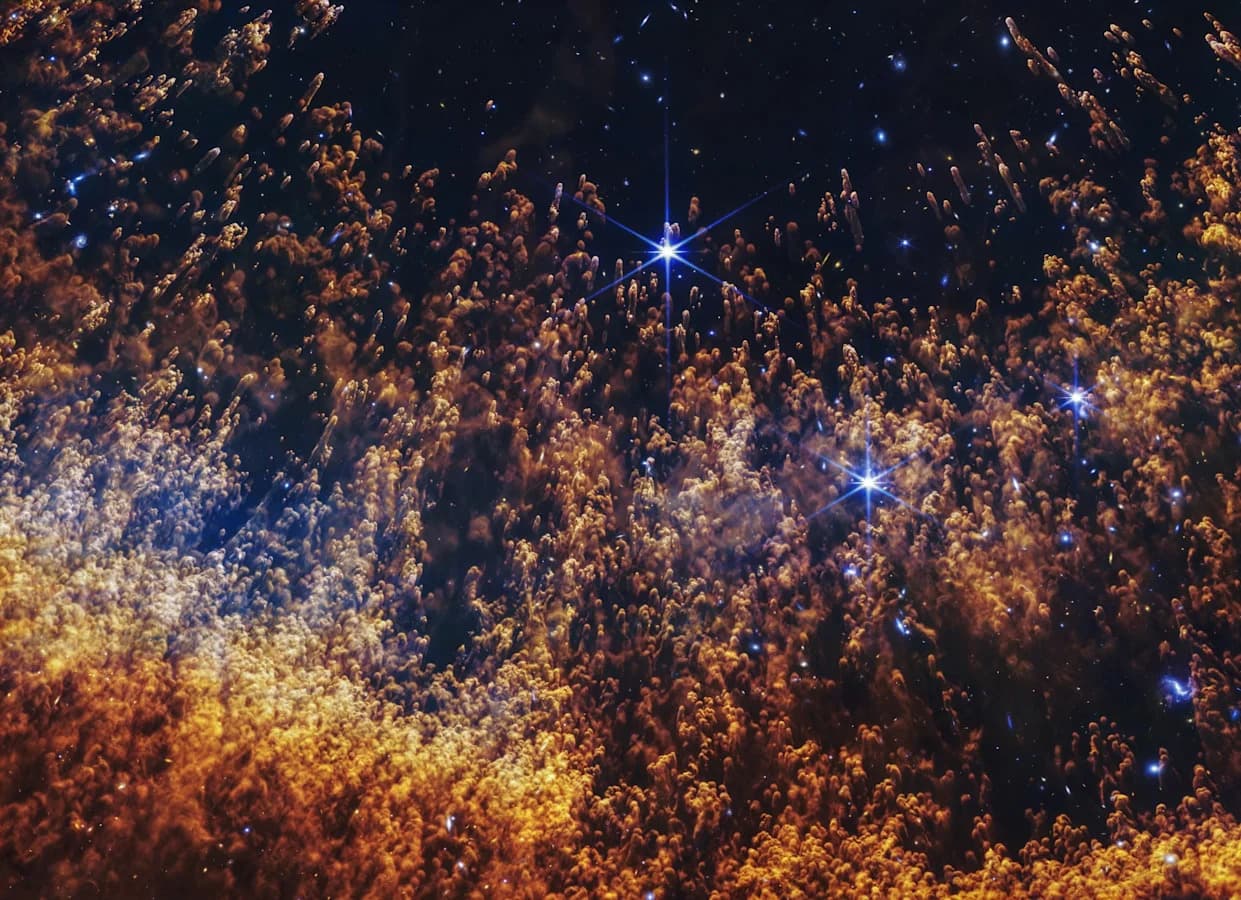
- Dust Destruction: A large dust reservoir might have been destroyed, releasing iron. JWST images do show dust flanking the bar but not overlapping it, which is consistent with dust having been removed along the bar’s line. However, the necessary shocks or temperatures to fully liberate and ionize the iron are not evident in current observations.
- Disrupted Planet: The press release mentions a torn-apart planet as a possibility. But planet disruption typically produces messy debris with a mixture of elements (e.g., magnesium, silicon) and clear velocity signatures — neither of which match the neat, straight iron bar or its kinematics.
- Projection Effects: The bar may not be a thin rod but a larger plank- or ribbon-like structure viewed nearly edge-on, complicating interpretation of its true three-dimensional shape.
What Comes Next
“It would be very surprising if the iron bar in the Ring is unique,”
Wesson and colleagues plan to search other planetary nebulae with WEAVE and similar instruments to find additional examples. Finding more cases would help astronomers determine whether this is a rare fluke or a previously overlooked but common stage in nebular evolution.
The study is published in the Monthly Notices of the Royal Astronomical Society. Until follow-up observations and theoretical work clarify the origin of this iron bar, it remains one of the more unexpected puzzles emerging from a century of nebular astronomy.
Help us improve.